Rezervovat vstupenky
 Skyshop
 Hotel
Hotel
 E-Voucher
 E-Sim
E-Sim
 E-Visa
 Nákup cizí měny
 Pojištění
 Skyjoy
Filipino cuisine is a fusion of local ingredients and various cultural influences throughout history. Therefore, in addition to flavorful dishes like Adobo, lechon, or sisig, travelers can also find many desserts and packaged specialties suitable for bringing home as gifts. If you're wondering what specialties the Philippines has, here are 15 suggestions worth trying on your trip.
1. 10 Filipino specialties to try
If you want to explore the distinctive local cuisine, travelers can start with popular dishes in Manila, Cebu, and major tourist spots. Some dishes have many regional versions, so the actual taste may vary depending on where you enjoy them.
1.1 Adobo
When it comes to Filipino specialties, Adobo is almost one of the first names mentioned. In fact, "Adobo" is not just a specific ingredient but a method of braising food with vinegar, pepper, and bay leaves. Modern versions often use soy sauce as well.
The most popular are chicken and pork Adobo, but there are also versions with squid or vegetables. The meat is cooked until tender and absorbs the characteristic sour-salty sauce, usually served hot with white rice. Depending on the region, the dish may also include coconut milk, turmeric, or pineapple.
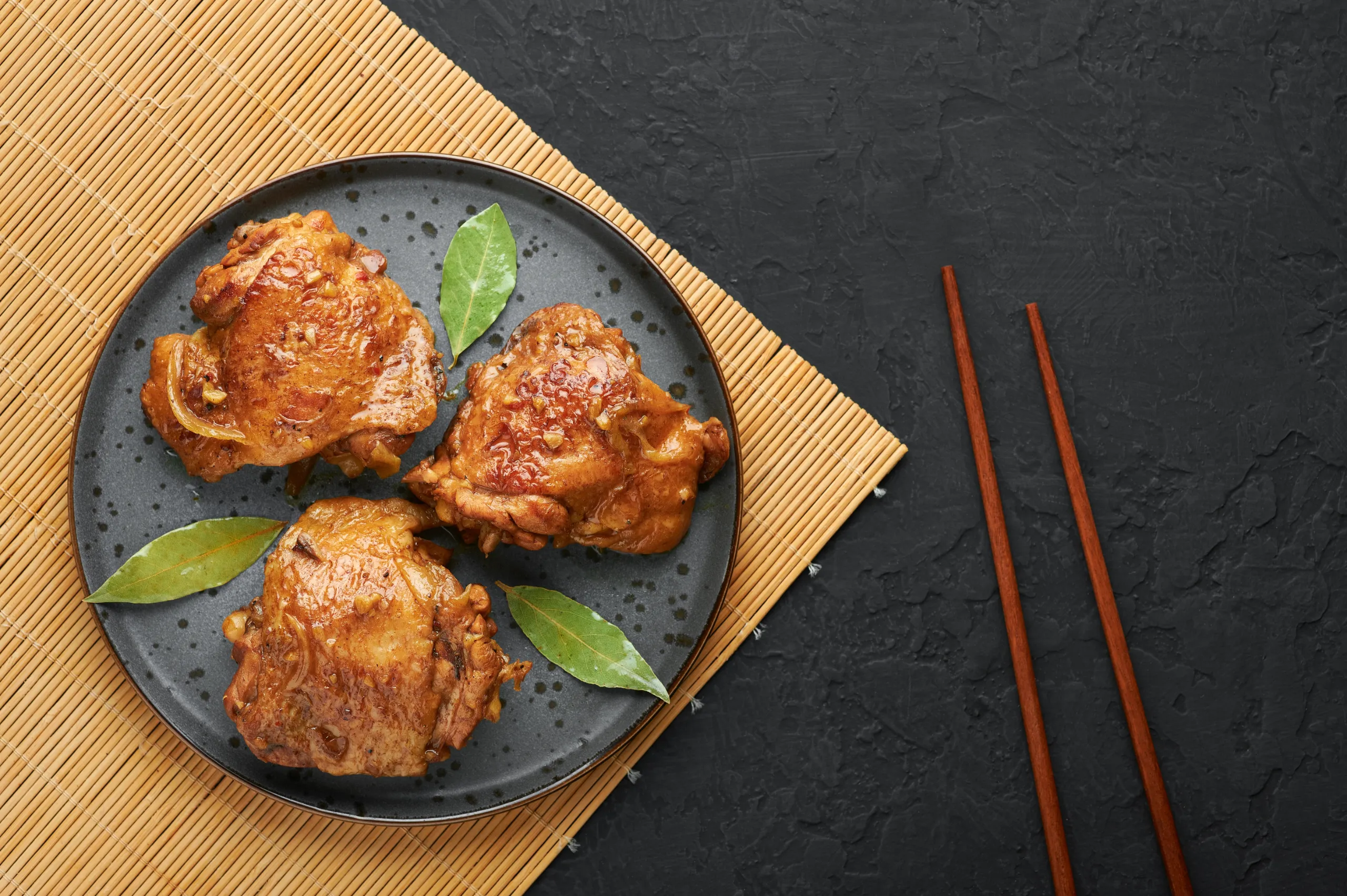
Adobo impresses with tender meat braised with vinegar, soy sauce, and distinctive spices.
1.2 Lechon
Lechon is a whole roasted pig often seen at festivals, parties, and large gatherings of Filipinos. Among them, Cebu lechon is a particularly famous version for tourists.
The pig is stuffed with spices like lemongrass, onion, and garlic and then slowly roasted over charcoal. The result is a brown, crispy skin while the meat inside remains tender and juicy. When in Cebu, travelers can easily find restaurants specializing in this dish.
1.3 Sinigang
If Adobo impresses with its rich salty-sour flavor, sinigang is a soup with a quite distinct sour taste. The broth can be flavored with tamarind, kamias, or some other sour fruits and leaves depending on the region.
The main ingredients of sinigang are quite diverse, from pork, beef to shrimp or salmon, combined with water spinach, radish, green beans, tomatoes, and onions. The dish is usually served hot with rice, especially easy to eat during family meals.
1.4 Sisig
Sisig originated from Pampanga and has now become one of the popular Filipino specialties. The familiar version uses boiled, grilled pork parts that are chopped, then mixed with onion, chili, and calamansi.
The interesting point of sisig lies in the combination of tender meat, some crispy pieces, and the light sourness of calamansi. The dish is often served on a hot cast iron plate, and can be eaten alone or with rice.
1.5 Kare-kare
Kare-kare is a stew highlighted by its thick, rich sauce with a peanut flavor. The traditional dish usually uses oxtail or other beef parts, cooked with vegetables like eggplant, green beans, and cabbage.
Due to the relatively mild flavor of the sauce, kare-kare is often served with bagoong to enhance the salty and umami taste. The contrast between the rich peanut sauce and fermented shrimp paste creates a flavor quite different from many familiar Southeast Asian dishes.
1.6 Pancit
"Pancit" is a general term for many types of noodles in the Philippines and clearly shows the influence of Chinese cuisine. Depending on the locality, the type of noodles and cooking methods may vary.
Pancit Canton uses egg noodles stir-fried with meat and vegetables, while Pancit Bihon uses rice vermicelli. Other versions like Pancit Malabon or Palabok are served with sauce and seafood. Filipinos often add a bit of calamansi juice (pressed from calamondin) before eating to create a refreshing sour taste.
1.7 Chicken Inasal
Chicken inasal is a grilled chicken dish characteristic of the Bacolod area and the Western Visayas region. The chicken is usually marinated with vinegar, calamansi, and various spices before being grilled over charcoal.
During the grilling process, the meat is brushed with marinade multiple times, resulting in an attractive yellow color and distinctive aroma. Chicken inasal is often served with rice and dipping sauce, suitable for travelers wanting to try a relatively easy-to-eat Filipino dish.
1.8 La Paz Batchoy
La Paz Batchoy is a famous noodle soup from Iloilo City. A traditional bowl of batchoy usually includes egg noodles, pork, beef, liver, and some offal, served with broth simmered from meat.
On top, there are fried garlic and chicharon - crispy pork skin to add aroma and crunch. If you have the chance to visit Iloilo, La Paz market is one of the places associated with this dish.
1.9 Halo-halo
Halo-halo is a very popular dessert in the Philippines, especially suitable on hot days. The name "halo-halo" means close to "mix, mix", which is also how to enjoy this dish.
A serving of halo-halo usually includes shaved ice, condensed milk or evaporated milk along with many toppings like saba bananas, sweet potatoes, beans, coconut jelly, tapioca pearls, and purple yam (ube). Some places even add ube ice cream or leche flan on top. When eating, travelers mix all the components so that the ice, milk, and toppings blend together.
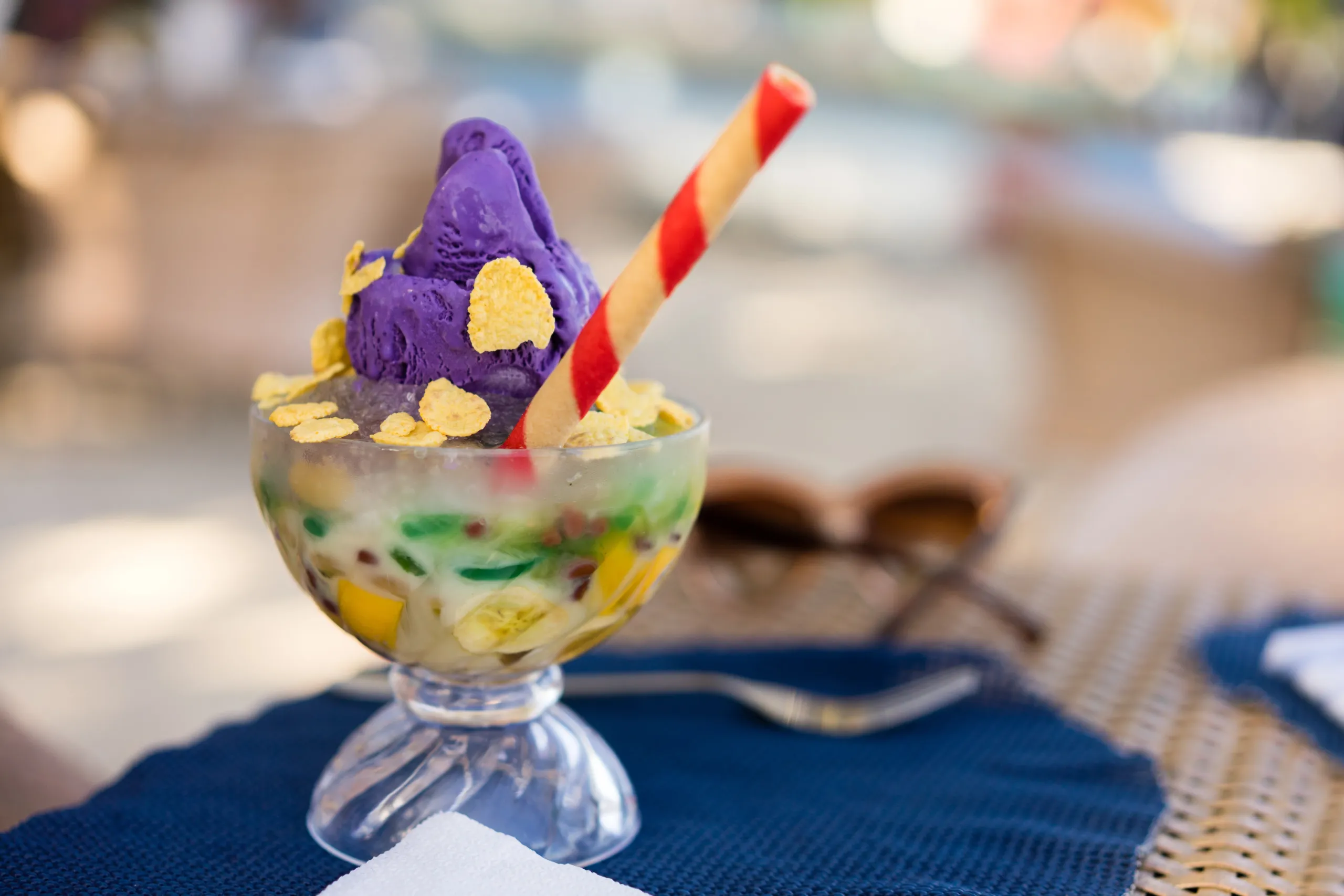
Halo-halo combines shaved ice, milk, and many colorful toppings, making it a popular dessert in the Philippines.
1.10 Banana Cue
Banana cue is a simple yet quite popular street food in the Philippines. Saba bananas are fried with sugar until a golden brown caramel layer forms on the outside and then skewered.
The crispy sugar layer outside combined with the soft banana inside creates a quite distinctive sweetness. Thanks to the serving on a skewer, banana cue is also convenient to enjoy while strolling through markets or exploring neighborhoods.
2. What to buy as gifts in the Philippines? 5 specialties easy to bring back
In addition to dishes to enjoy on-site, the Philippines also has many types of candies, processed fruits, and canned specialties that are convenient to bring back to Vietnam. When choosing Filipino specialties as gifts, travelers should prioritize products that are still in their original packaging, have a long shelf life, and are easy to store in luggage.
2.1 Dried Mango
If you don't know what to buy as gifts in the Philippines, dried mango is quite an easy choice. The Philippines has many regions that grow mangoes, among which Cebu and Guimaras Island are often known for this fruit.
Ripe mangoes are sliced and then dried, retaining a sweet and slightly sour flavor, more convenient to store than fresh fruit. Dried mango packages come in various sizes and are often sold in supermarkets, specialty stores, or duty-free areas, suitable for buying in large quantities as gifts.
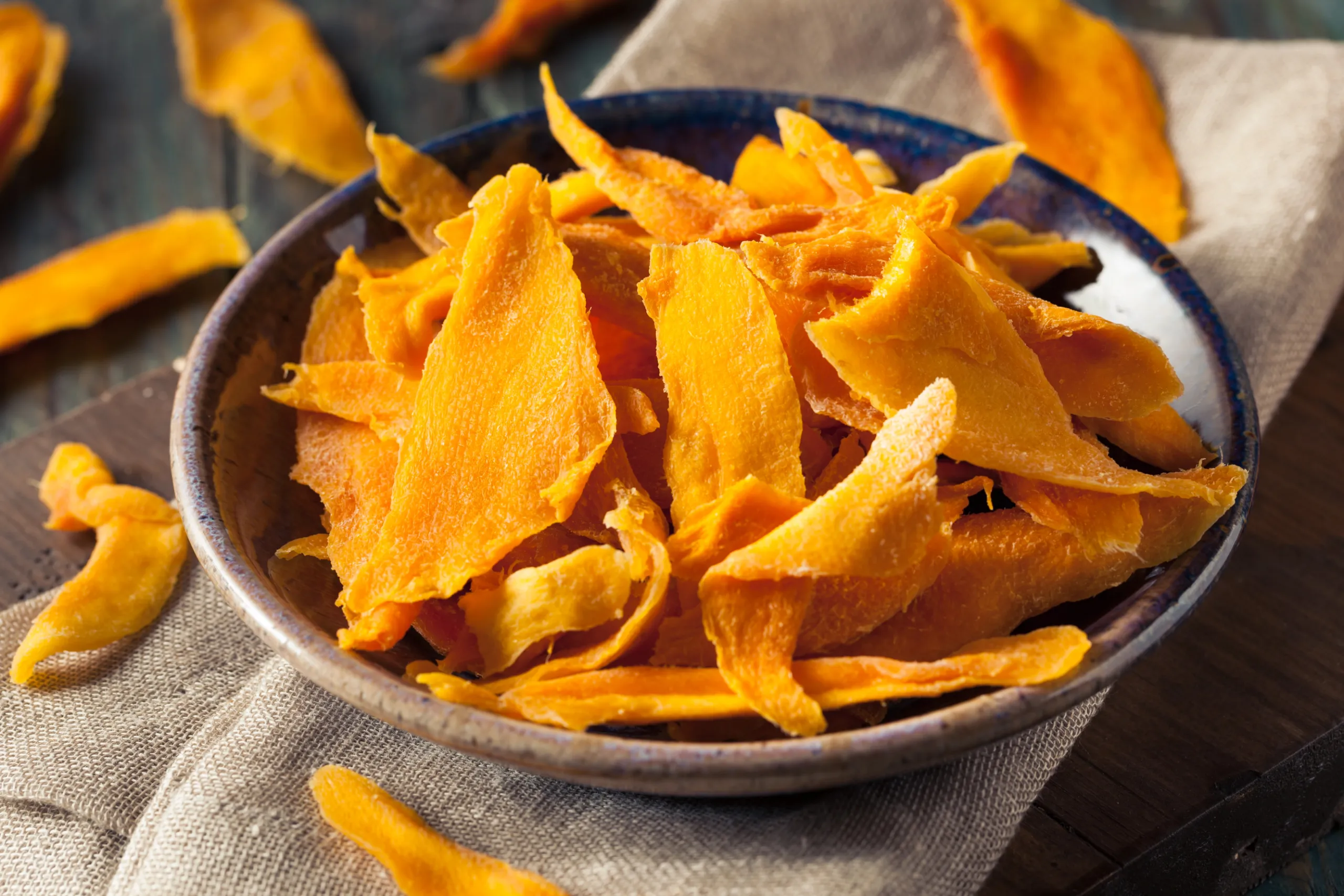
Dried mango has a sweet and sour taste that is easy to eat, packaged compactly, so it is chosen by many travelers to buy as gifts after their trip to the Philippines.
2.2 Ube Jam
Ube is purple yam, an ingredient found in many Filipino desserts. Ube jam or ube halaya is made by cooking the yam with milk and sugar until it forms a thick, smooth mixture.
The product has a distinctive purple color, sweet and rich flavor, and can be eaten directly, spread on bread, or used as an ingredient for desserts. Baguio is one of the famous destinations for ube jam products.
2.3 Polvoron
Polvoron is a type of sweet cake with a soft, crumbly texture, usually made from toasted flour, milk powder, sugar, and butter. Besides the traditional flavor, there are now many versions combining ube, cashew nuts, cookies & cream, or various nuts.
Each piece is usually individually wrapped, making it quite convenient to divide into many small gifts. This is also a worthy option if you want to find a lightweight Filipino specialty as a gift that doesn't require refrigeration.
2.4 Dried Banana
Kromě manga se banány také zpracovávají na různé druhy občerstvení na Filipínách. Banány se obvykle nakrájejí na tenké plátky, smaží nebo suší, dokud nejsou křupavé, a poté se posypou cukrem nebo medem podle produktu.
Výhodou tohoto jídla je, že je kompaktní, snadno přenosné a lze je uchovávat po relativně dlouhou dobu. Cestovatelé je mohou zakoupit v supermarketech a obchodech se specialitami v Manile, Cebu a mnoha turistických městech.
2.5 Káva z Filipín
Filipíny jsou jednou z mála zemí, které pěstují čtyři běžné odrůdy kávy, a to Arabica, Robusta, Liberica a Excelsa. Z nich je Barako - obvykle spojený s odrůdou Liberica - poměrně známé jméno, když se mluví o místní kávě.
Pokud hledáte dárek pro milovníka kávy, můžete si vybrat balenou kávu v zrnech nebo mletou kávu. V Baguio a v oblasti severního Luzonu je mnoho obchodů, které prodávají kávu z Benguet a Sagada.
3. Často kladené otázky o specialitách Filipín
Jaké známé speciality Filipín existují?
Mezi některé známé speciality Filipín patří Adobo, lechon, sinigang, sisig, kare-kare, pancit a halo-halo. Co se týče suvenýrů, sušené mango, ube jam, polvoron, sušené banány a káva jsou relativně pohodlné možnosti.
Které speciality Filipín jsou pro Vietnamce snadno přijatelné?
Adobo, chicken inasal, pancit a lechon jsou relativně snadno přístupné díky použití surovin jako kuřecí maso, vepřové maso, nudle a rýže. Nicméně, způsob ochucení na Filipínách obvykle směřuje k výraznějším kyselým, slaným nebo sladkým chutím, takže chuť je stále poněkud odlišná.
Co si vzít z Filipín jako dárek pro rodinu?
Sušené mango a sušené banány jsou vhodné, pokud potřebujete dárek, který se snadno dělí a uchovává. Polvoron je vhodný pro milovníky sladkého pečiva, zatímco káva z Filipín může být určena pro milovníky nápojů. Ube jam je také charakteristickou volbou, ale je třeba věnovat pozornost způsobu balení a uchovávání.
Od výrazného Adobo, křupavého lechonu až po osvěžující halo-halo, filipínská kuchyně nabízí mnoho různých zážitků mezi jednotlivými regiony. Po cestě ochutnávání místních pokrmů si cestovatelé mohou také zakoupit sušené mango, polvoron, ube jam nebo kávu jako dárek pro své blízké a přátele.
Pokud plánujete cestu na Filipíny, nezapomeňte rezervovat letenku na Filipíny již od 90 000 Đồng s Vietjet. Program „lov“ letenek za 0 Đồng od 12:00 do 14:00 nabízí příležitost ušetřit na cestovních nákladech jako nikdy předtím zde.
Sledujte informace o letech, propagačních akcích a turistických průvodcích na oficiálních kanálech Vietjet: