
- My booking
- Online Check-in
- Flight extras
- Financial services


 Booking
 Skyshop
 Hotel
Hotel
 E-Voucher
 E-Sim
E-Sim
 E-Visa
 Buy foreign currency
 Insurance
 SkyJoy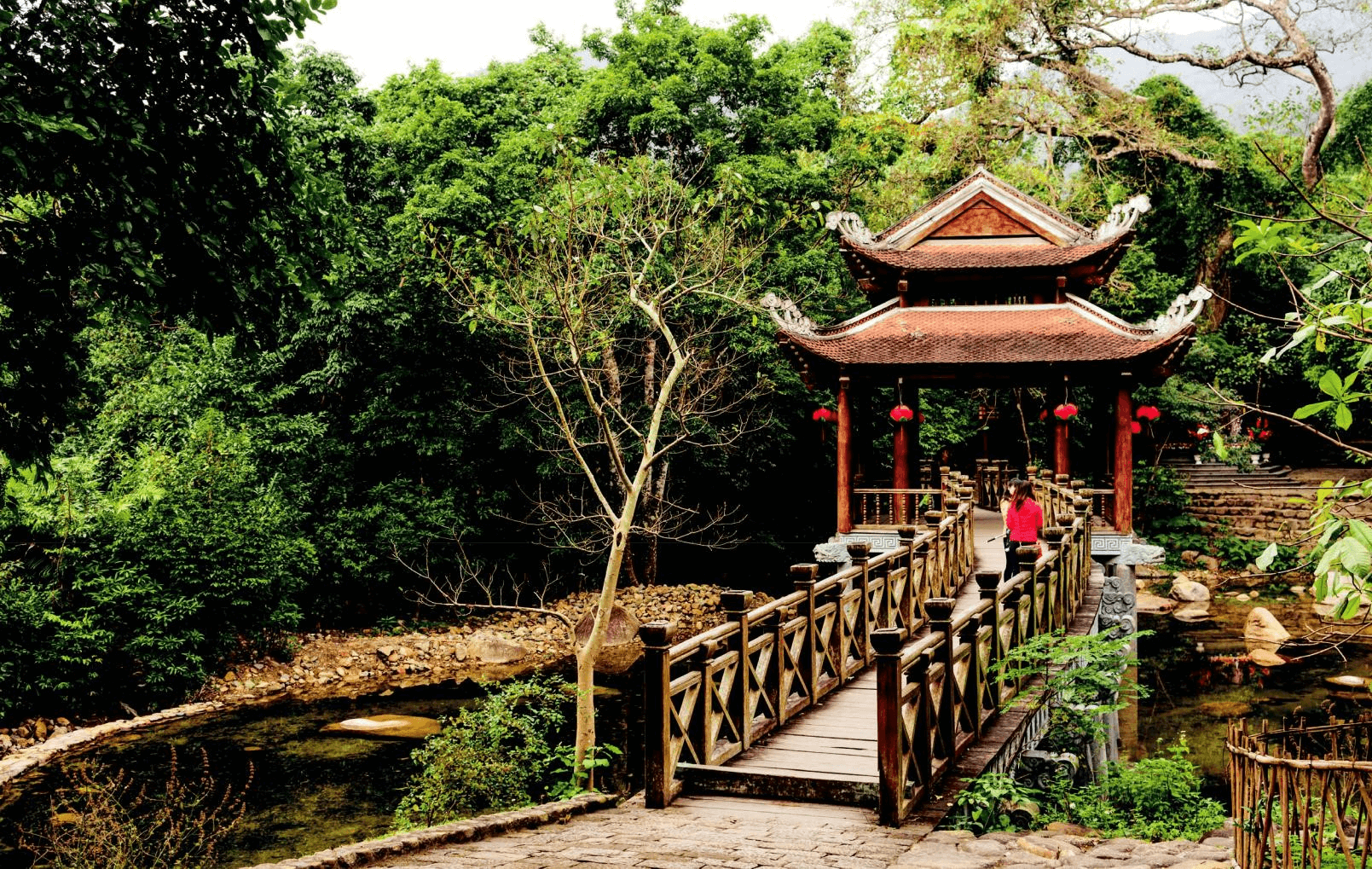




Departure date

Return Date

Quang Ninh
The scared beauty and absolute purity of Yen Tu Mountain
Located 130km far from Hanoi to the northeast, Yen Tu is the highest mountain in the Dong Trieu mountain range, situated in Thuong Yen Cong Commune, Uong Bi District, Quang Ninh Province. At a height of 1,068m above sea level, the road to Yen Tu peak is a challenging climb, but pilgrims and visitors will be rewarded by extraordinary beauty and fascinating Buddhist heritage.
The ancestral land of Buddhism in Vietnam
More than 700 years ago, after pacifying all the domestic rebels and foreign enemies as well as liberating our country, King Tran Nhan Tong gave up his throne at the age of 35 then ascended Yen Tu mountain to practice and establish "Truc Lam Zen Buddhism", a religion which he wished to have a very new and progressive spirit of the incarnation of Vietnamese people, for Vietnamese people.

Truc Lam Zen Buddhism inherited the quintessence of Indian Buddhism and Chinese Buddhism, but it was still imbued with the Vietnamese identity and culture. The religion respected personal values and emphasized the importance of self-awareness and the self-enlightenment of everyone.
Some of the basic tenets were: “A special transmission outside the orthodox teaching of the scriptures; no dependence on sacred writings; directly pointing to the heart and mind; seeing into one's original nature, and realization of Buddhism.”
Truc Lam Yen Tu advocates educating people to realize a profound sense of Zen with close and simple actions. It uses short, easy-to-understand sermons to help disciples and students to understand correctly and deeply the scriptures. It also attempts to transform the dead scriptures and ancient legends into thoughts and attitudes of "loving-kindness, compassion, joy, equanimity" that can be used in daily life.
With a spirit of incarnation, Tran Nhan Tong gradually brought the Zen sect to positively participate in the society, to reassure the country and the people through the compassion, wisdom, and morality of Buddhism. The Truc Lam Zen sect viewed the nation and individual human beings as basic factors in each person's practice. Purifying the mind is the first requirement of meditating, so the meditators must have a pure mind.
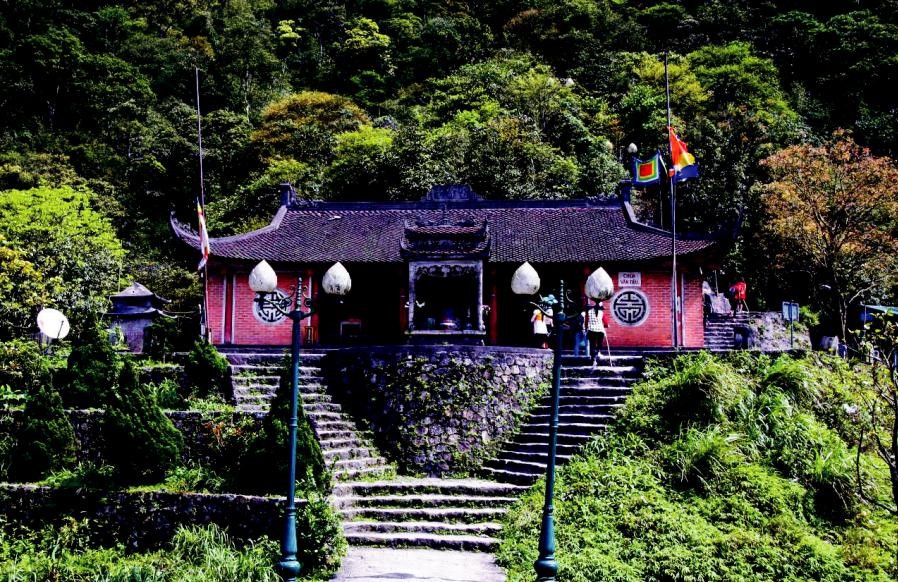
Over many generations, from when it was a small and simple temple to its most prosperous period, the sacred Yen Tu mountain has formed a system of Buddhist architectural works including dozens of pagodas, temples, towers, and thousands of precious ancient relics. Considered "the ancestral land of Vietnamese Buddhism" from the Dai Viet dynasty onward, today Yen Tu is also one of the most attractive spiritual tourist sites in Quang Ninh province in particular and in the northern region in general.
Previously, before a cable car system was developed, the only way to reach Yen Tu Mountain was by climbing on foot. To walk along the ascending trails, right on the mountainside, under the canopy of bamboo and pine forests, through the foggy weather is an arduous experience. However, if you are healthy and confident in your tough legs, you should choose this method of going to the top so you can fully experience the beauty and power of this spiritual landscape.
The trail is over a 6km road and you will see mountains, cascading waterfalls, flowing streams, and centuries-old trees on the cliffs while in the distance you will have a glimpse of ancient, serene, peaceful, and mossy pagodas. Far above the top of the mountain, you will see clouds of many colors. You will feel you are entering a fairytale setting. If you just reach out your hands and say “Amitabha Buddha”, you can touch the intersection between earth and heaven, and reach the place where Buddha's mind and the human heart are merged into one.

In recent times, the road has been reinforced by thousands of folded stone steps, so it is very sturdy and safe, but this meditative journey is still a big challenge because of the steep slope. However, the challenge that you experience during the journey and what you feel will only bring you closer to this spiritual land.
The journey starts from the sacred Giai Oan stream, where hundreds of concubines and beauties once committed suicide to show their loyalty to King Tran Nhan Tong when he first went to Yen Tu to practice. Being moved, and grateful for them, King Tran Nhan Tong established a transcendent pagoda beside the stream, named Giai Oan Pagoda.
Keeping walking on the rugged stone road to admire the 700-year-old "Cedrus Road" where you will see craggy old trees with prominent tree roots which are sinewy and firmly clinging to the rock crevices and foundations, helping your footsteps more stable. With a little more effort when climbing over Lo Ren slope, you will come to Tower Garden, where people worship "relics" from bygone generations of highly virtuous Zen masters who practiced in Hoa Yen through the Tran and Le Dynasties. Hue Quang Tower is where you will find the Buddhist King tomb within the Quy Duc Tomb at the center of Tower Garden which has six tiers and a foundation made of large squared blue stones that look incredibly majestic. This is where many of King Tran Nhan Tong's relics are preserved.
Leaving Tower Garden, you will next pass "Cedrus Road" to reach Hoa Yen Pagoda, the central complex part of Yen Tu. Hoa Yen Pagoda was once known as Van Yen Pagoda, and is popularly known as Ca Pagoda, Chinh Pagoda or Yen Tu Pagoda. Hoa Yen Pagoda was originally just a small shrine called Van Yen, which was built by the monks of the Ly Dynasty in 1220. They built it perched up high on the high mountain, so it enshrouded by clouds all year around. Van Yen Shrine was the place where King Tran Nhan Tong ordained, practiced and founded the Truc Lam Zen Monastery. He subsequently became Truc Lam First Ancestor. This is also the place where he regularly held classes to transmit the principles of Zen Buddhism to disciples such as Phap Loa, Huyen Quang, Bao Sai, Phap Khong, and other disciples here.
In 1317, when Phap Loa was given a bowl and costume and became the second of three ancestors, Hoa Yen Pagoda was built up magnificently to form a large architectural complex. This pagoda features a forecourt, an upper house to worship Buddha, as well as a drum floor, a bell floor, a guest house, a preaching house, and a monk nursing house. When King Le Thanh Tong (1442-1497) visited the pagoda, he saw the lush scenery, blooming flowers, and renamed it Hoa Yen Pagoda. During the Nguyen Dynasty, a fire broke out in the pagoda, leaving the pagoda in ruins.

At the end of 2002, Hoa Yen was rebuilt on the foundations chosen under the Tran Dynasty. Homes for monks and nuns are on both sides of the pagoda. All of the horizontal lacquered boards, fresco-painted doors, and the statues of the temple and the bronze incense floor in front of Tam Bao were built with donations by people responding to the call of the Venerable Thich Quang Tung of Phuc Lam Pagoda. Currently, in front of Hoa Yen pagoda, there is still an ancient tree that's roughly 700 years old. It has a strange, well-aged stem that still blooms with very lush buds and leaves every year.
Hoa Yen Pagoda’s profound Yin-Yang philosophy
Behind Quy Duc Tomb, the road from Tower Garden to Hoa Yen Pagoda is paved with 84 chrysanthemum imprinted bricks from the Tran dynasty. This type of brick was only used for important constructions developed by the Tran court or royal family. The chrysanthemum-imprinted bricks are made of terracotta and used for floor paving or wall cladding (not for construction), They are square, 7cm thick, 40x40 size, decorated with a patterned system on the main surface. The large square represents the earth (containing yin) while the four corners of the square have four chrysanthemums that symbolize air, water, fire, and earth.
The large circle in the center of the brick represents heaven (containing yang) and features eight chrysanthemums, representing eight monsters. The small circle in the center has two small chrysanthemums, representing yin and yang. Around the square brick are intricate patterns. The patterns on the chrysanthemum brick reveal that during the Tran dynasty, the Dai Viet people deeply understood the philosophy of Yin Yang and recognized the world as a harmonious whole. Yin and yang create heaven and earth; heaven and earth create four objects, four objects create eight monsters, which create all things in society. The structure of this constant transformation is mutual inhibition, mutual help, mutual support, and mutual promotion that results in a constant transformation that creates a co-existing and sustainable world.
Behind Hoa Yen Pagoda is Mot Mai Pagoda, a place for worshiping Avalokiteśvara Bodhisattva, and Bao Sai Pagoda, where the Buddhist King entered nirvana. You will also find Van Tieu Pagoda, where monks train, and An Ky Sinh stone statue, which looks like a Taoist character putting his hands together to respectfully practice his religion.
Majestically located on a mountain slope, the statue of Buddhist King Tran Nhan Tong is behind the An Ky Sinh stone statue. The king is in a sitting meditation position on the lotus, facing south. The statue is cast in monolithic copper with a height of 12.6m and a weight of 138 tons. This is also the largest copper Buddhist statue of King Tran Nhan Tong in Vietnam. From the Buddhist King statue, keep climbing for about 200m, up a steep and rugged rocky slope, and you will reach Dong Pagoda, the highest and most sacred place of Yen Tu peak.
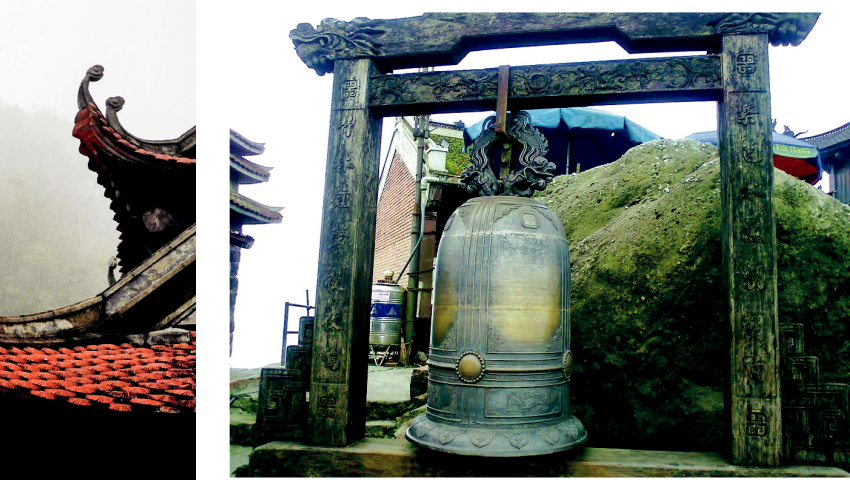
Dong Pagoda is also called Thien Truc Tu (Pagoda of the Buddha), was built in the Later Le dynasty, but it was restored and embellished many times through the years. The pagoda is cast in bronze, 4.6m long, 3.6m wide, 3.5m high and has a weight of 70 tons. The pagoda is for worshiping Gautama Buddha and the three ancestors of Truc Lam Yen Tu. The pagoda has a distinct structure with four heads as upturned roofs and looks like a blooming bronze lotus.
After all the difficulties and challenges you will face to reach Dong Pagoda, you should not forget to respectfully rub your hands on the plaque and the bell to pray for the best. According to legend, there is a lot of pure gold inside the bell and the plaque at Dong pagoda is also filled with gold items. On the day of casting the bell, a large number of tourists from all over the world joined the event. Many people have dropped tens of kilograms of pure gold into the casting batch, people who were wearing bracelets or golden rings also directly put them into the bells and the plaque. This is done so following generations believe that the blessings will be passed down to them and following generations. When they touch the plaque and the bell they will "earn whatever they pray for”.
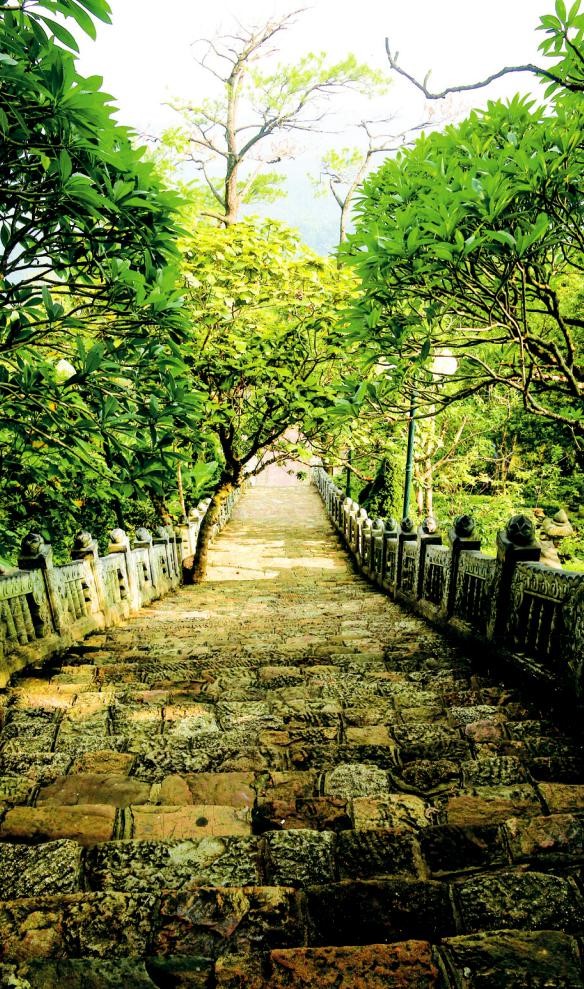
Standing amidst this vast and magical scene, under the clouds, feeling the breeze, you should put your hands together respectfully in front of Dong pagoda as you pay tribute to this "holy land" on the sacred Yen Tu mountaintop. Here, your soul will be cleansed of strong and distracting emotions - jealousy, love, anger, and so on. Instead, your mind will be clear and pure while in your heart you will feel strong and brave.
Text - Photo: Thanh Vien & Dac Loc



Hot news





Buy Baggage, meals, choose seats and more…
Luxury service
About Vietjet
Contact Center
Where to buy ticket?
Cargo
Privacy policy
Cookie Policy


