
- My booking
- Online Check-in
- Flight extras
- Financial services


 Booking
 Skyshop
 Hotel
Hotel
 E-Voucher
 E-Sim
E-Sim
 E-Visa
 Buy foreign currency
 Insurance
 SkyJoy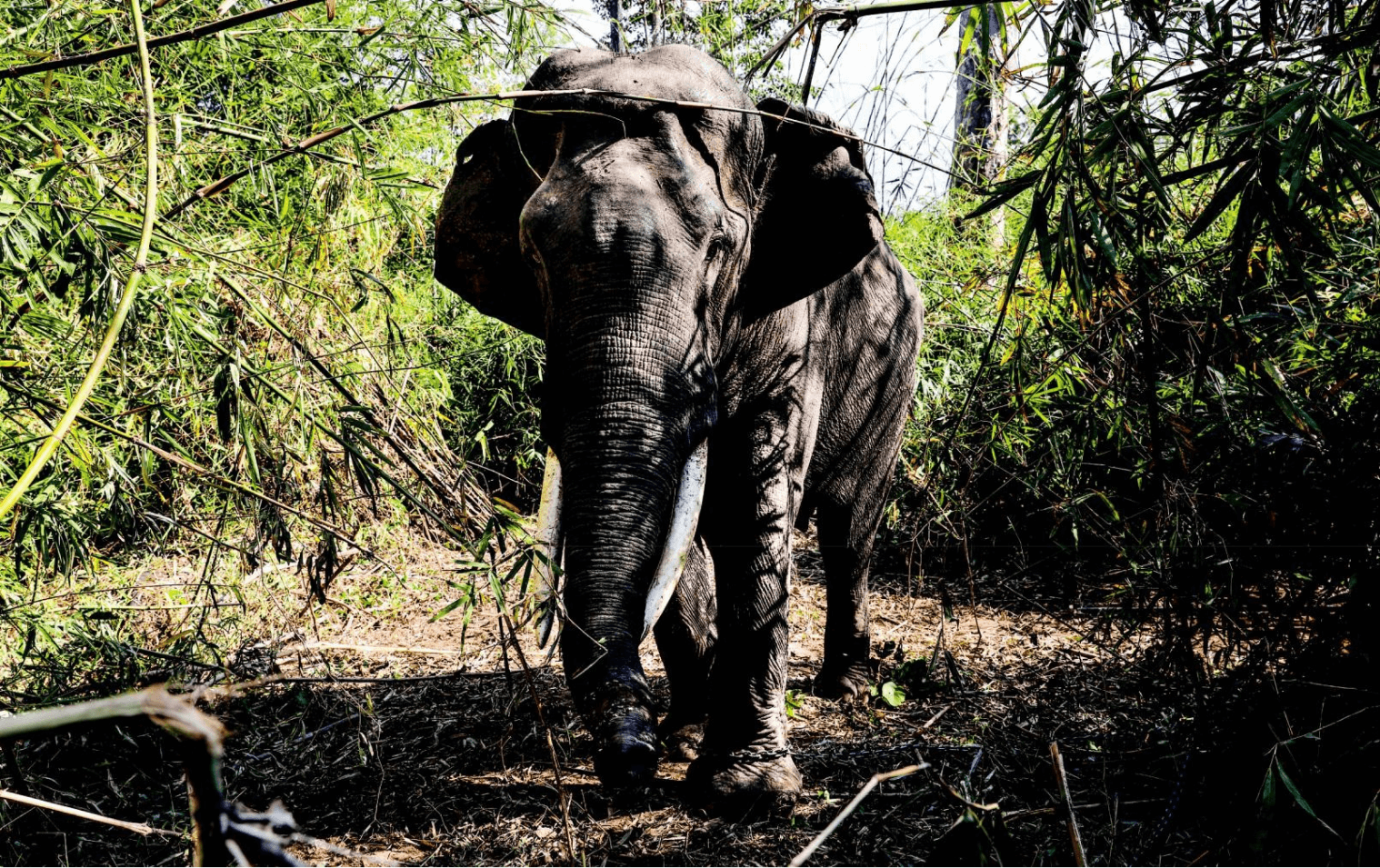




Departure date

Return Date

Buon Me Thuot
THE LEGENDARY TALES OF DON VILLAGE
In olden times, traders from all over Indochina came to Don Village along the Serepok river, also known as the Srepok river. I have been told that many Laotians fell in love with this charming highland area so they decided to stay. Alongside the local hill tribes (M'Nong and E-de people), the Laotians built a village by the majestic Srepok river.
The village was known to the Lao people as Bang Don, which means "Island Village". The E-de ethnic people called the village Keng Apa while the M’Nong ethnic people called it Bun Rkau and Kinh people called it Buon Don, or Ban Don.
In October 1995, Buon Don was separated from Easup district to form a new district which quickly became a famous destination for intrepid tourists traveling to Buon Ma Thuot City in Daklak province.
Where is Don village?
Don village is located 42km west of Buon Ma Thuot city center. It takes about one hour to travel from the Buon Ma Thuot and its a scenic and beautiful drive, especially when the road runs through rice fields or curves around a village.
Sitting in the car, you can see the old stilt houses sitting under Kơ-nia trees and the blooming Po-lang trees. Outside the ethnic people sit by the main door frame while little pigs play with each other in an empty area without a barn. Being here you will experience a truly indigenous cultural space and see how the ethnic minorities live.
Don village is not only the land of many ethnic peoples but also the only area in Vietnam where you find homes built within a forest of deciduous dipterocarp. These unique homes have attracted tourists from all around the world.
The mysterious deciduous dipterocarp forests
The area around Don village has two distinct seasons. Rainy season lasts from around late June to the end of December while dry season runs from around January onwards. So, if visiting Don village during the first months of the year, don't miss the opportunity to roam through, or even camp in, the deciduous dipterocarp forest (DDF) typical in Don village. The DDF is a truly unique forest ecosystem which harbors a vast variety of important and endemic species. They characteristically feature an open canopy and abundant low grassland. As they are deciduous, the trees here lose their leaves annually in dry season. When wet season comes with its heavy levels of precipitation, everything revives quickly.
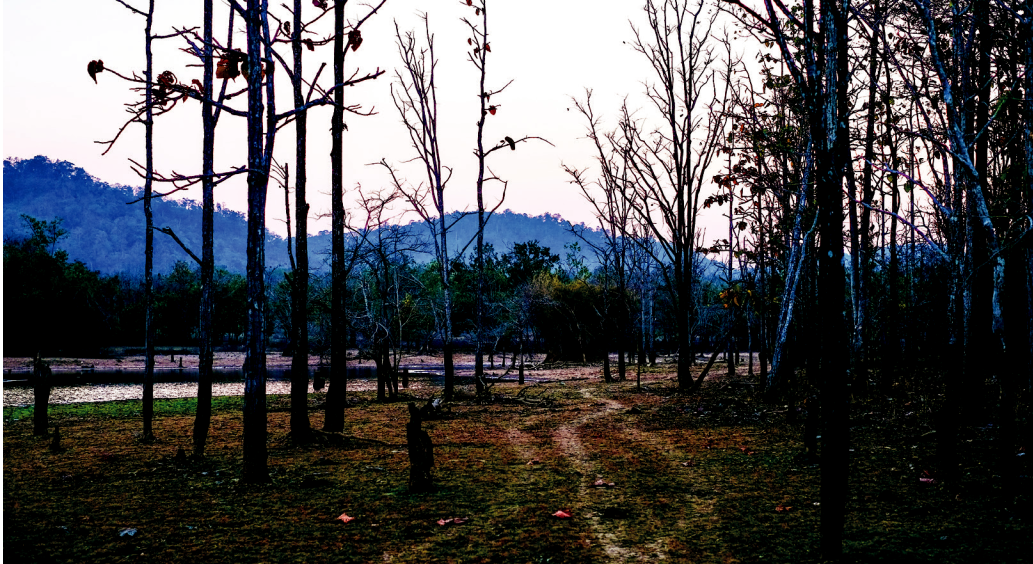
As Don village comes to the end of the annual dry season, the trees in the forest have gradually change from bright green to a color tone with yellow and red leaves. When I visited, I felt like I was wandering in a forest in Europe.
Occasionally, you will even see a few tall and bare trees that shoot straight up into the sky and create mysterious feelings. Sometimes the dry leaves left on trees are blown into the air by strong gusting winds to create a charming highlight for the forest. When rainy season comes, the whole forest starts to revive and a variety of beautiful forest orchids and pristine buds start to bloom.
Unlike many other tropical forests with about three layers, the dipterocarp forest has only two layers: the tree layer and the shrub layer. When the dry season comes, the leaves of the upper trees begin to fall off and the lower vegetation gradually withers, except for bamboo trees, foxtail fern, cogongrass, and Pennisetum purpurrerum which are elephant's favorite food. Under these conditions, the dipterocarp forest is considered the ideal environment for elephants to live, when their vision is not obscured by trees. The distance between the trees is sparse enough to allow elephants to move easily.
In the ecology of dipterocarp forest, elephants actually play an important role as "agricultural engineers", maintaining and enriching their living environment through their activities. Elephants eat a lot of plants but do not fully digest everything, which means they release hard, small seeds in their feces. Elephants have no stomach so their food goes straight to the intestines and is then excreted.
From there, the undigested seeds, which fall to the ground, will develop into a tree (in the right conditions) and gradually grow, helping to foster a large and diverse ecosystem. The elephant often walking through the forest also form paths. The elephant’s footprints on path or holes elephants dig with their ivory, also become pools of water for small animals and "irrigation ditches" for trees. Elephants even knock down trees and create hiding spots for insects, snakes, reptiles...
Elephants on the run
In recent years, as human society encroached on the elephant’s habitat here, the creatures have gradually lost living space, food sources, and freedom of movement. This means elephants in Don village in particular (and in Vietnam in general) are often short of food and feel stressed. This can lead to elephants migrating across the border into other countries, depleting the number of elephants in Vietnam.
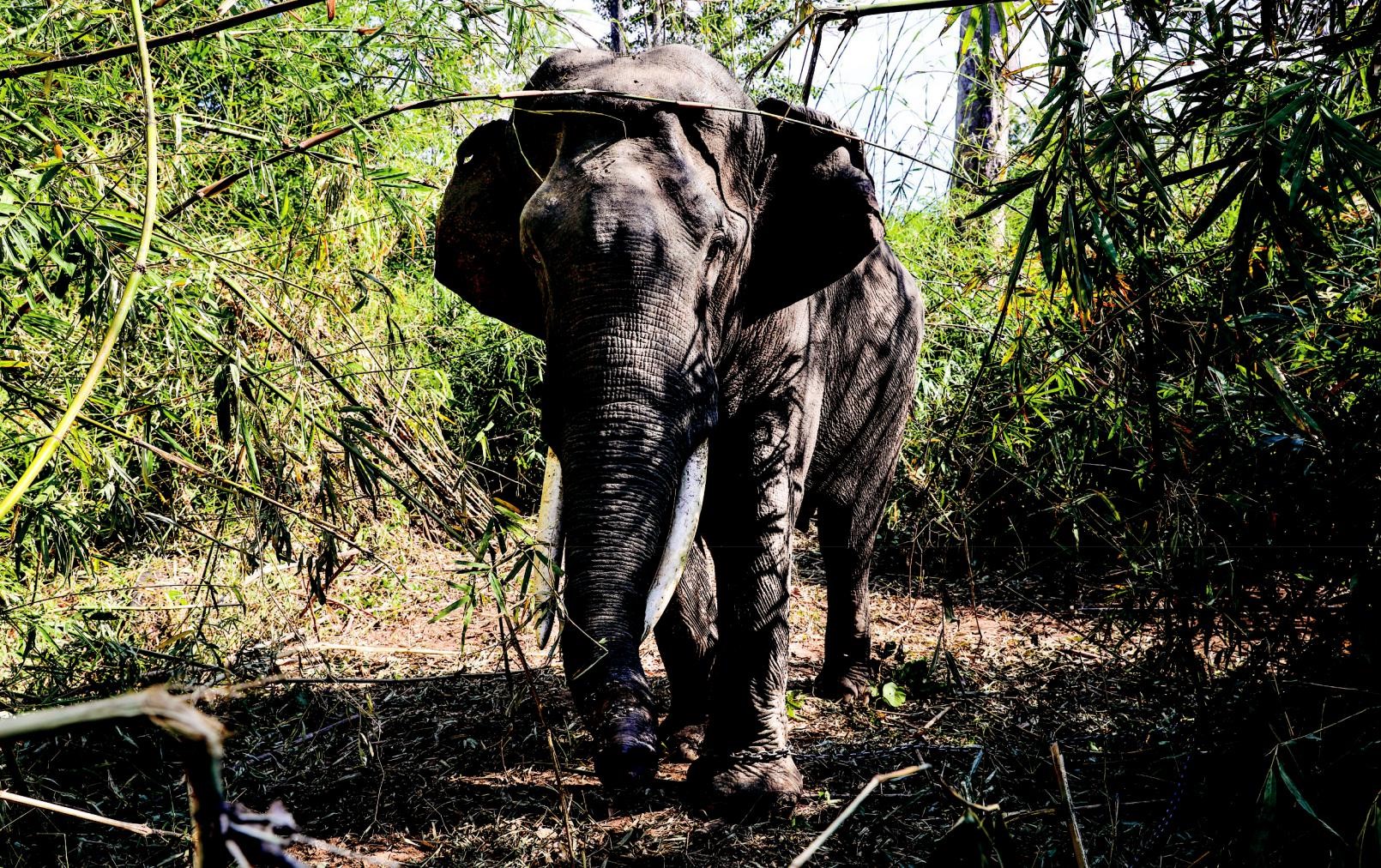
In addition, in order to survive, elephants are forced to enter farming areas and gardens in search of food, causing damage to crops of vegetables, and endangering humans as well as themselves. Even tamed elephants that are reintroduced to the wild find it difficult to adapt as they may be attacked by wild elephants or lack the skills to take care of themselves. According to statistics in 2018, Dak Lak province, which is considered the "capital of the Elephant", has only about 80-100 wild elephants left and about 45 domesticated elephants, a decrease of nearly 100 individuals compared to the year 2000. This is an alarmingly low number that underscores how crucial it is to take action to try and conserve the small number of remaining elephants.
How to treat an elephant
It is important for all of us to know how to treat elephants. For example, change the actions to show your love when coming into contact with elephants. Instead of riding on an elephant's back, you can stand and play with the elephant, bathe the elephant, feed the elephant, and learn about the cute elephant’s behaviors.
To see elephants in Don village is very easy. You can visit tourist zones around Don village, such as Ban Don Thanh Ha ecotourism, Buon Don tourist center, and Ban Don Anh Duong ecotourism, where you will see many large elephants. Don’t worry, elephants are very safe as they are used for tourism purposes. They are actually “semi-wild”. After "work is over", at around 4 pm, the elephants will be sent back into the forest by the mahouts so that they can live in their favorite environment. Then in the early morning, the mahouts go back to the forest to bring the elephants back to the village to “go to work". If you visit the Bay Nhanh waterfall early in the morning, you will see the elephants going through the forest and wading through the stream to return to the village.

Of these large elephants, the “adult age” of elephants is similar to that of humans, around the age of 20. Adult female elephants still live in groups meanwhile male elephants will be separate and live a little away from the herds to create a protective outer ring for the herd. When they are of breeding age, the male elephant will come closer to the female. When the breeding season is over, they return to their independent life. Another interesting thing is while elephants do not mate for life, a female may repeatedly choose to mate with the same bull, and bulls are sometimes seen being protective of females. When they obviously love each other, the owner of the elephant must hold a ceremony called an "Elephant Wedding".
However, under current living conditions, it is very difficult for elephants to get pregnant and reproduce. For most of their life, females only give birth once or twice, and usually carry only one baby elephant each time. The gestation period lasts about two years so that the baby elephant's brain can develop comprehensively. The newborn baby elephant weighs about 100 to 120 kilograms and can walk immediately.
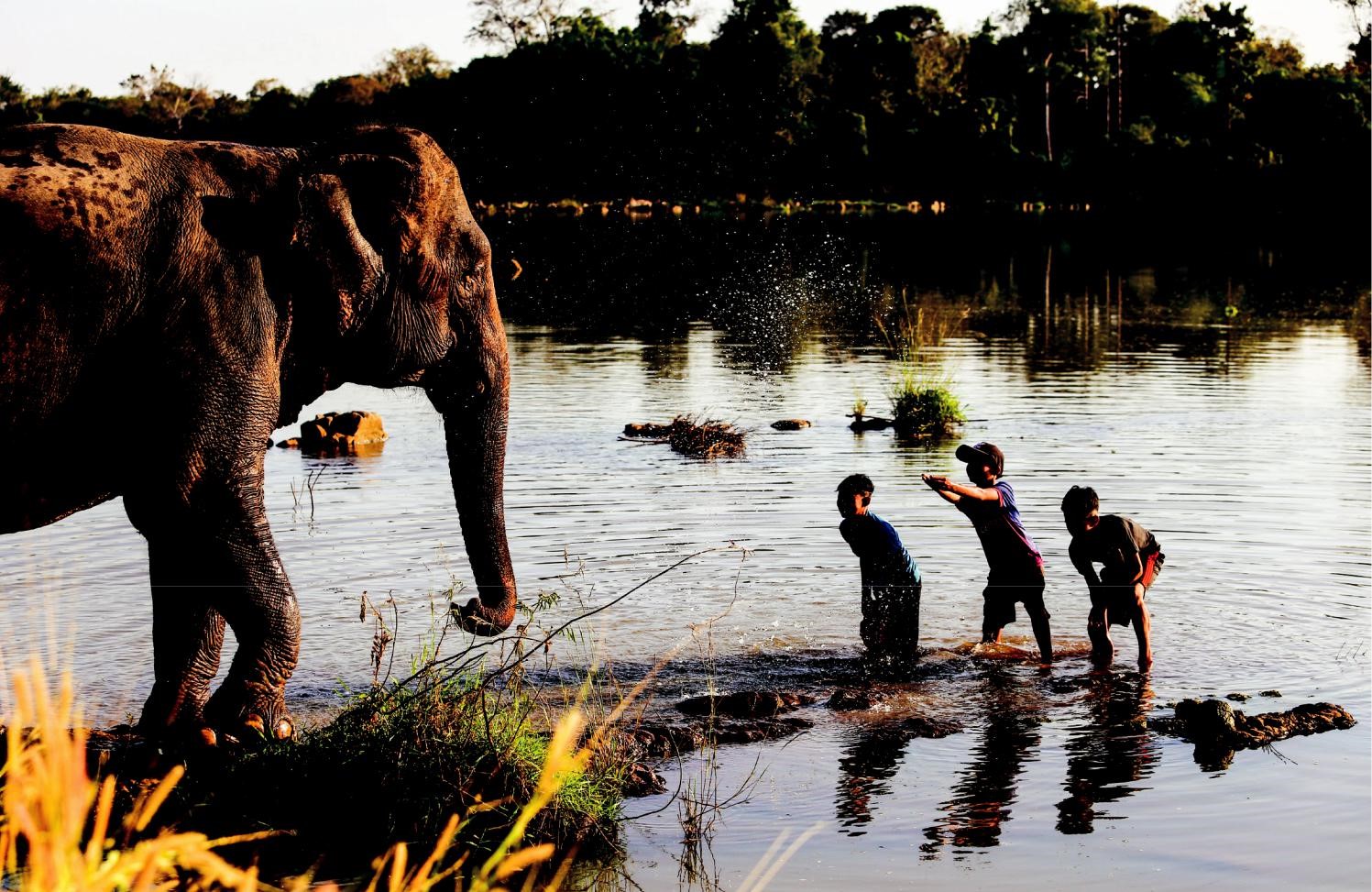
With the significant reduction in the number of elephants in Don village and the difficult reproductive characteristic of elephants, if we do not join hands to take actively protective actions, it is possible in the short term, the elephant will be extinct.
Experience Vua Voi island
Now that you have discovered more about the dipterocarp forest, you know that it is a favorable habitat for elephants. Now I will go back a bit to tell you the historical story about the land where the natives lived.
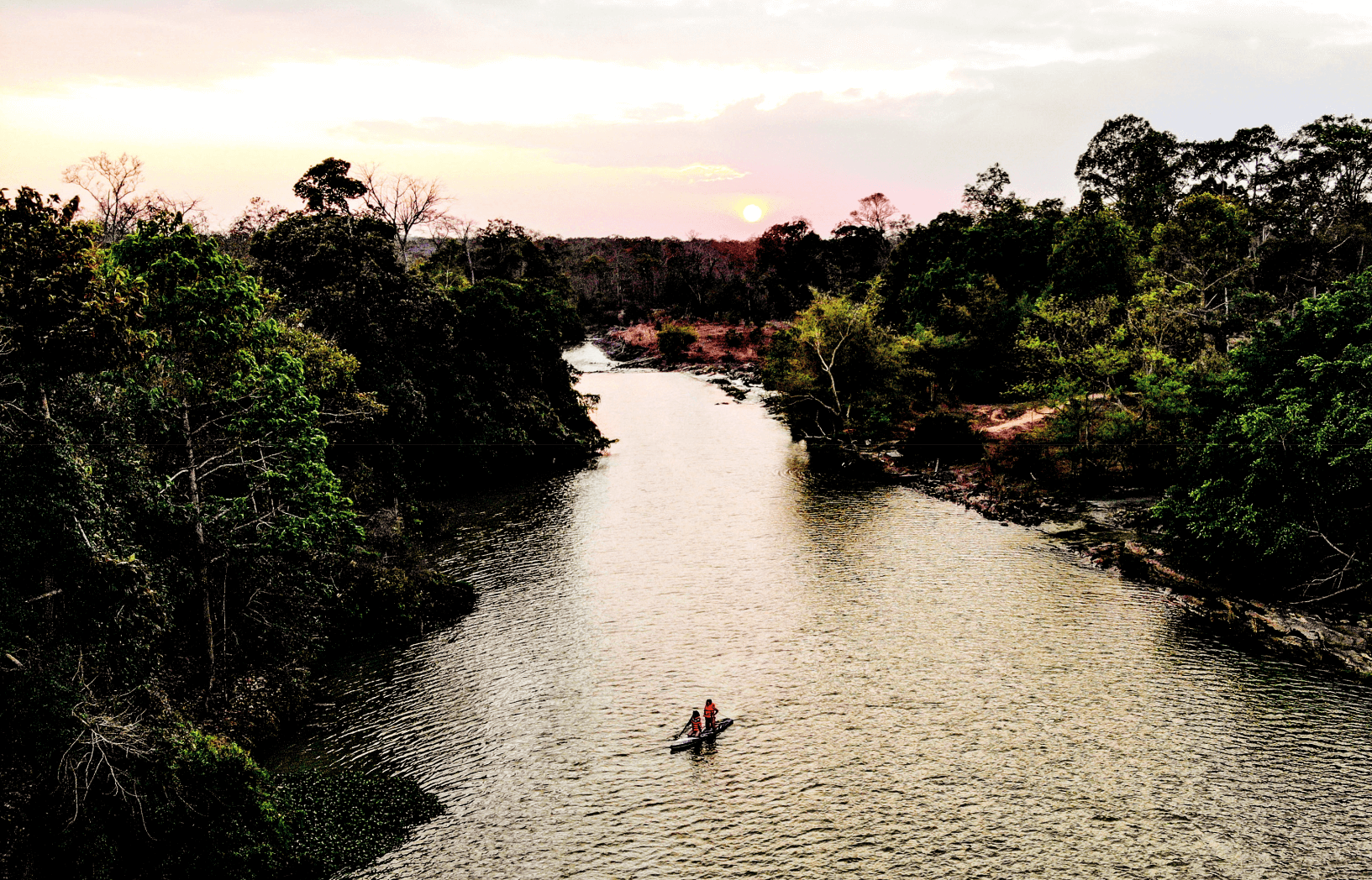
In the past, when the king of elephant hunters Y Thu Knul was looking for new land for the villagers, he went along the Srepok river to the mountain of Yok Don, where he discovered high alluvial areas beside the rapids, with great rocks dividing the river into seven branches. From his previous experiences, he believed that people would be able to use the land to cultivate crops. They would also be able to hunt and gather easily and also live safely (as they would be protected by the old bushes which were almost like a wall), so he called for people to come here to settle.
However, when the water level changes after the annual floods, the isles along the river here would be severely altered, and the fertile soil layers that were beneficial for farming would be removed. This meant that people in ancient times had to move to the land to continue farming and living.
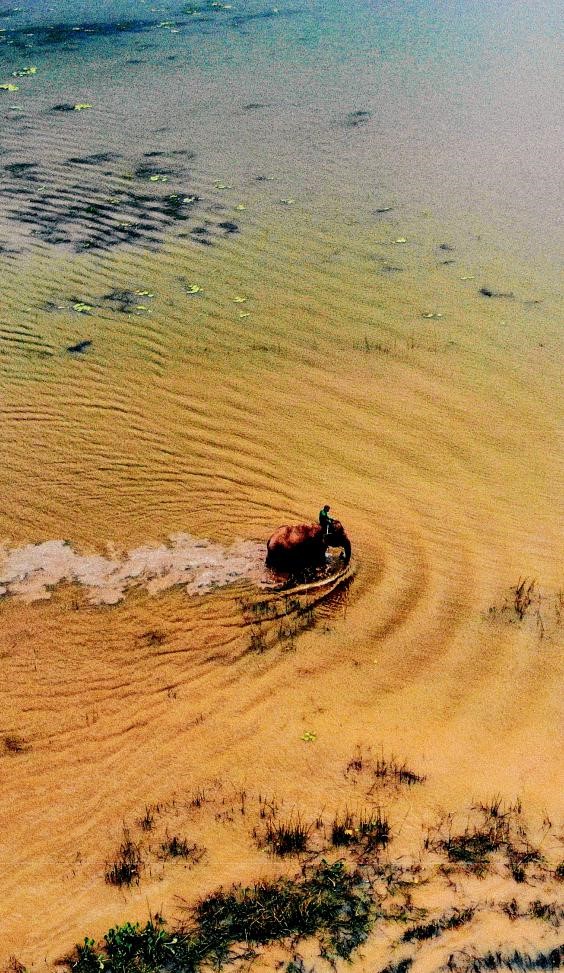
Up to now, this Bay Nhanh waterfall area only has one island is called Vua Voi Island. Currently, on Vua Voi Island, there is only one M'Nong household, who lives on poultry raising, farming, and fishing as well as bringing tourists on a motorboat to explore rapids on Serepok river and Bay Nhanh waterfall.
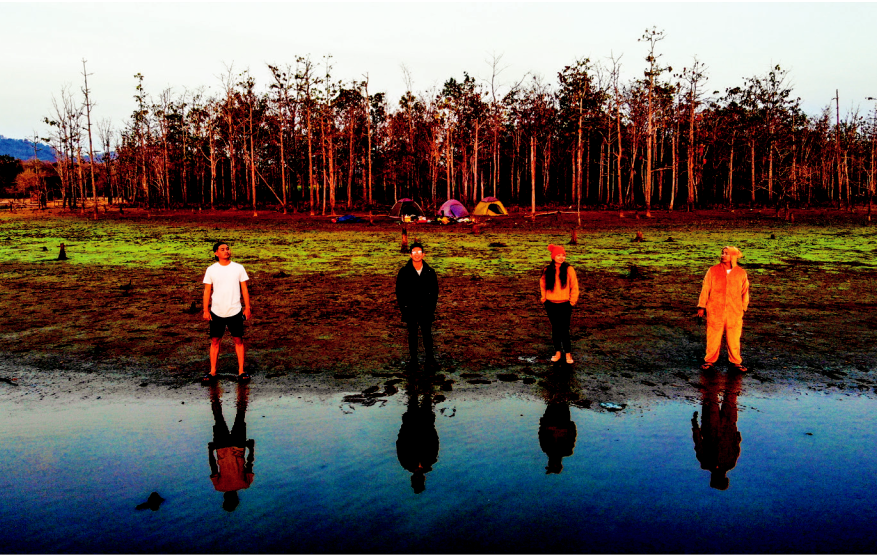
After my friends and I arrived at Ban Don Thanh Ha eco-tourism, we bought an entrance ticket and a boat ticket and headed to the wharf with our gear for a camping trip on the legendary Vua Voi Island.
The island is spacious, airy, surrounded by streams, and looks very poetic. Another highlight is, when standing on this island, you can enjoy the sunset behind the high trees without leaves and catch the sunrise that covers the nearby Srepok River. A camping trip with a "view" like this is so great!
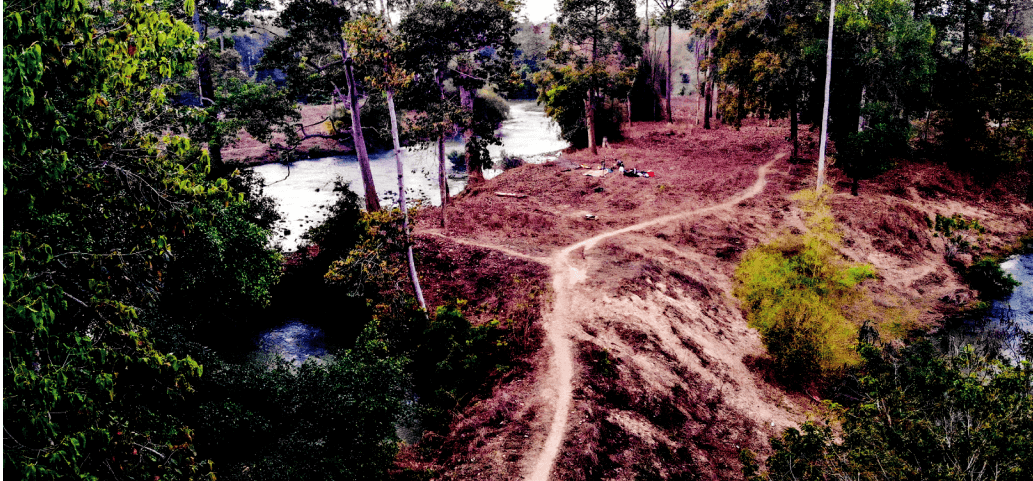
After we found a flat place for setting up tents with each person handling a task, we were ready for a fun night with friends. Joining us was uncle A-Ma Vong - the only M'Nong who lives on Vua Voi Island. All together we sat around the fire, enjoyed rice liquor (drunk out of a jar through pipes), and listened to songs about Buon Ma Thuot, the Central Highlands, the mountains, and forests.
In the early morning, when the birds were chirping, we woke up to enjoy a fresh morning on the island. The river was extremely tranquil and shrouded in mist. We grabbed our SUP (Standup Paddle) boards and rowed out in the middle of the river to follow the sun that was slowly emerging and radiating across the lake, giving us the feeling that we were lost in a fairy tale. It is really very poetic and chill.

The legendary Don village is known through many stories, but it still has a very wild spirit to please tourists who want to be closer to nature and its people. Coming to Don village, you should open your heart and mind to feel better about the mountains, rivers, and indigenous people; learn more about the history, elephant hunting stories... Remember you should not bring back gifts that are thought to be made from wildlife such as ivory, elephant tail feathers. Just bring yourself "a belly" of knowledge about Don village's legend and elephants so you can do your bit to consciously protect and preserve elephants. Don village is waiting for you!
Vinh Gau



Hot news





Buy Baggage, meals, choose seats and more…
Luxury service
About Vietjet
Contact Center
Where to buy ticket?
Cargo
Privacy policy
Cookie Policy


