Booking
 Skyshop
 Hotel
Hotel
 E-Voucher
 E-Sim
E-Sim
 E-Visa
 Buy foreign currency
 Insurance
 SkyJoy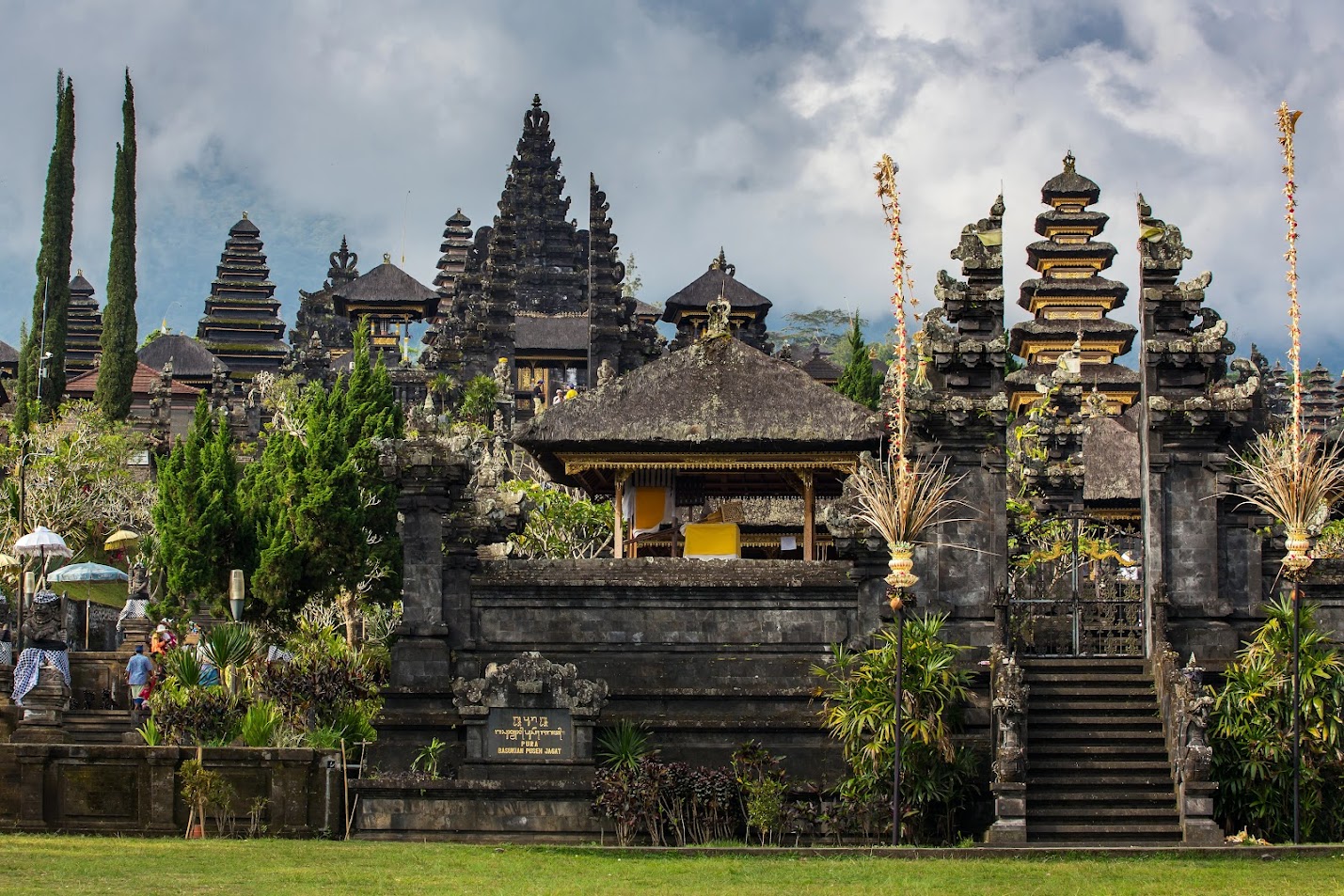
Besides its stunning beaches and majestic nature, Bali is also famous for its sacred temples—believed to be the resting places of gods in ancient legends. Among them, the largest and most significant for Hindu devotees is Pura Besakih. Known as the “Mother Temple” of the Indonesian archipelago, this ancient site dates back more than 2,000 years. Let’s explore the fascinating wonders of Besakih Temple with Vietjet!
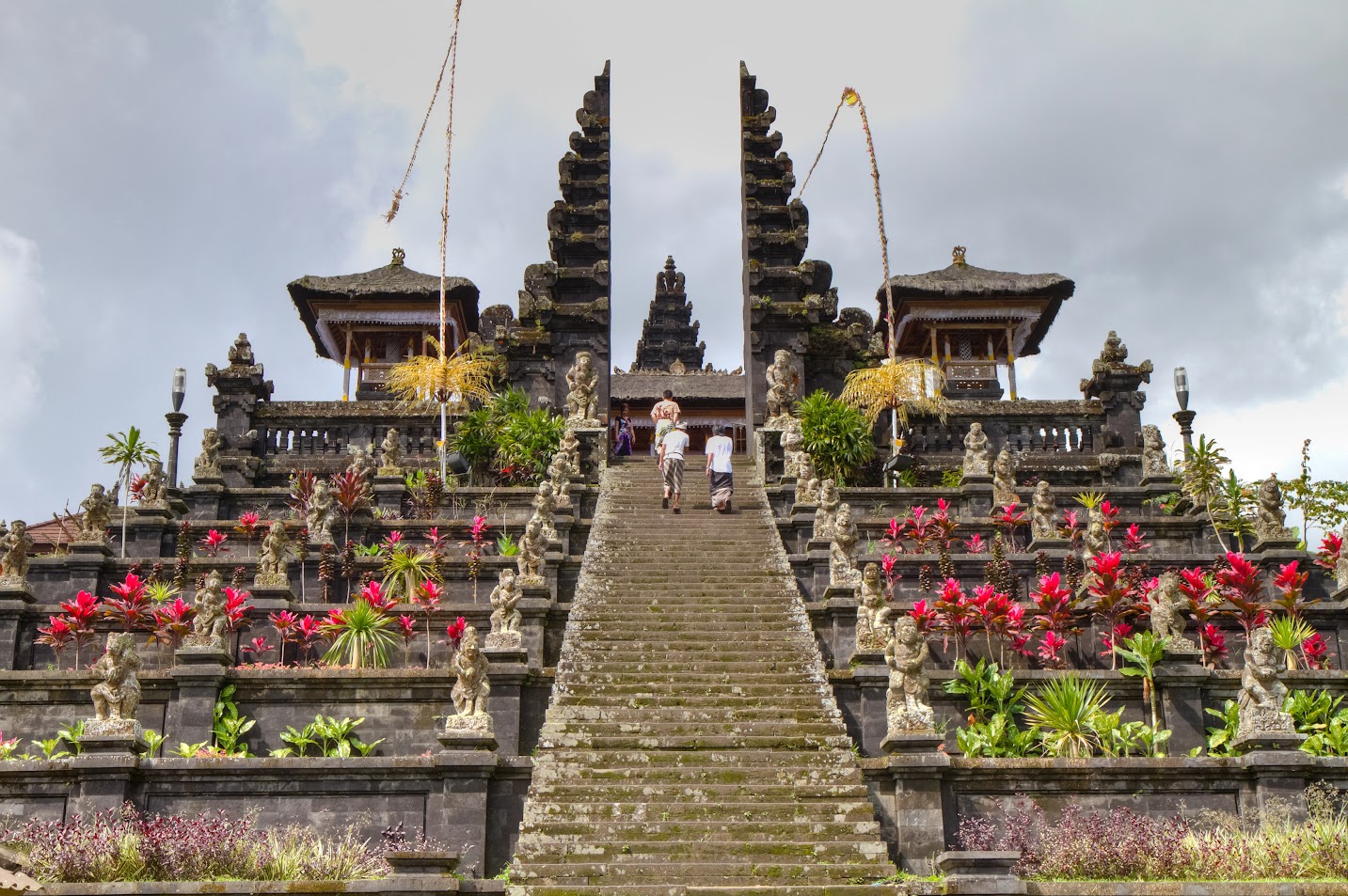
Pura Besakih, dubbed the “Mother Temple” of Indonesia, holds the highest spiritual importance for the Hindu community in Bali.
See more: Indonesia – What to eat, where to stay, and tips for cheap flight tickets
1. An Overview of Pura Besakih Temple
Pura Besakih is located in East Bali, on the southern slope of Mount Agung—Bali’s largest volcano—about 1 hour by car from Ubud town. This vast spiritual complex is composed of 22 individual temples spread out along a 3km stretch. From the upper sections of the temple, you can take in panoramic views of Bali’s dreamy landscape: lush green rice fields, crystal-clear streams, and mountain ranges shrouded in mist. For generations, Pura Besakih has been considered the spiritual heart of Balinese life.
- Address: Jl. Gunung Mas No.Ds, Besakih, Rendang, Karangasem Regency, Bali
- Opening Hours: 8:00 AM – 6:00 PM (Open 24/7 for Hindu devotees)
2. How to Get to Pura Besakih Temple
2.1 Getting to Bali
To travel from Vietnam to Bali, Indonesia, the best option is by plane to Ngurah Rai International Airport.
Currently, Vietjet offers multiple direct flights from Vietnam to Bali starting from just 599,000 VND. To secure the best fares and plan your schedule conveniently, it’s recommended to book your tickets 1–2 months in advance.xuống sân bay Ngurah Rai.
2.2 Getting to Pura Besakih Temple
The temple is located about 50 km from central Ubud (approximately 1+ hour by car). You can travel by bus or bemo (a local minivan service), which are the main public transport options available in both Ubud and Denpasar Airport, making it easy to reach the temple. You can also take either of these back from the temple to the airport—the last bemo typically leaves around 3 PM.
For more flexibility and comfort, you can rent a car, hire a driver, or rent a motorbike. This is a great choice if you want to enjoy the fresh air and beautiful natural scenery along the way.
3. The History of Pura Besakih Temple
According to local legends, Pura Besakih dates back to the 10th century and has been the spiritual center of Bali since ancient times. It is believed that in the 8th century, a revered Indian sage named Markandeya brought 8,000 followers to Bali to clear forests and build a new settlement. However, the mission failed as many of his followers died from illness and accidents, forcing Markandeya to abandon the project. He then moved to Java, where he meditated and prayed in hopes of fulfilling his vision.
Eventually, Markandeya received divine guidance instructing him to return to Bali, on the condition that he respect the tropical forests and Mother Earth by not destroying nature. He followed the instructions and successfully established a settlement. As a tribute to the gods, he built a small temple at the site where Pura Besakih now stands. The name "Besakih" is believed to originate from Basuki, a powerful and sacred serpent from Hindu mythology.
In 1963, when Mount Agung erupted, over 1,000 people lost their lives due to the lava flow. Miraculously, the lava stopped just a few hundred meters from Pura Besakih. Locals believe this was a divine sign and a miracle from the gods that saved the temple from destruction. This story has contributed to the temple's fame worldwide.
In 1995, Pura Besakih was nominated as a UNESCO World Heritage Site.
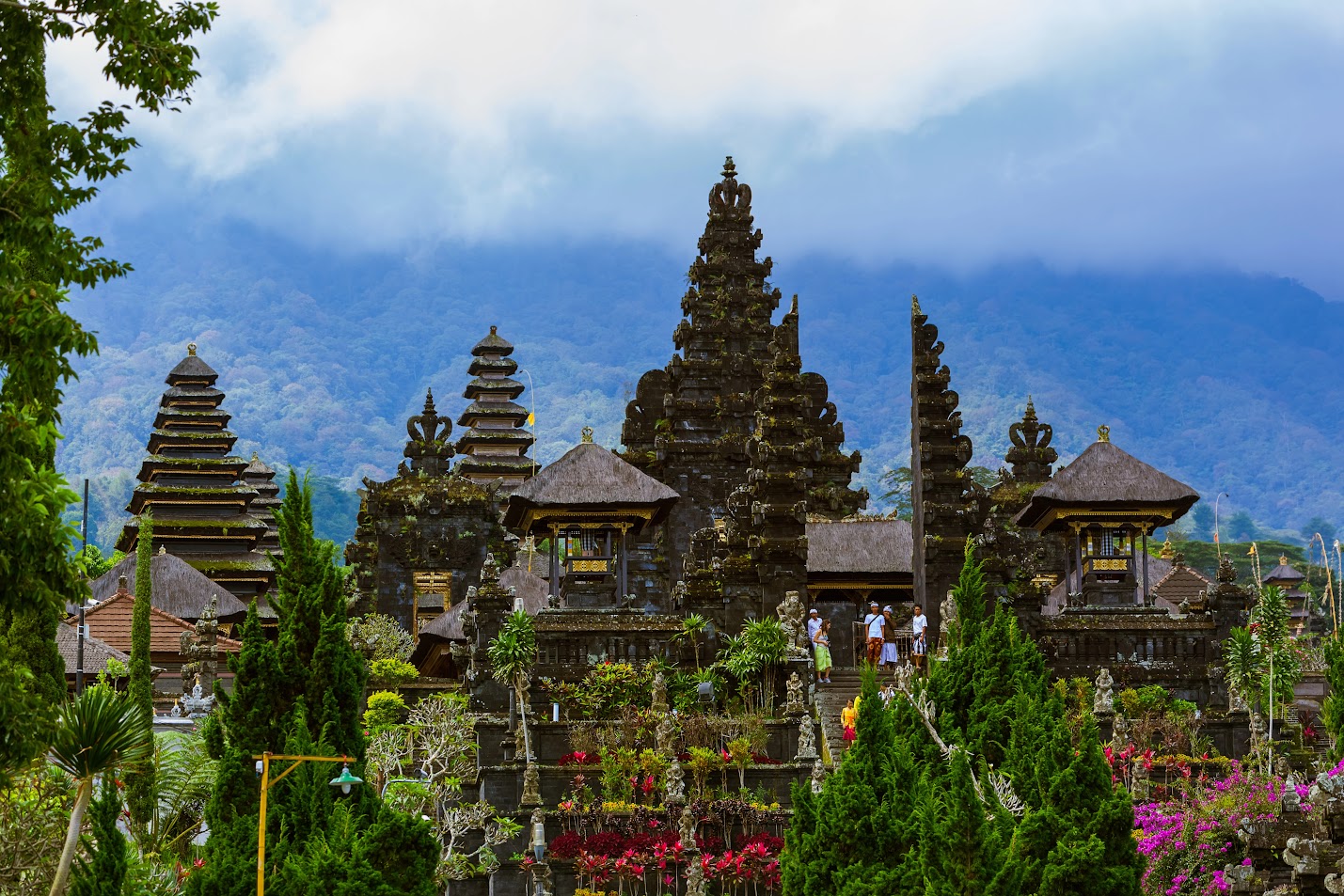
Pura Besakih was nominated as a UNESCO World Heritage Site in 1995.
4. Unique Architecture: A Fusion of Many Temples
The entrance to the temple is a towering staircase adorned with carvings from the Ramayana and Mahabharata. The gate is shaped like a split tower, which is also a symbolic feature of the temple.
The complex of the Mother Temple is divided into several zones, each representing the seven different layers of the Hindu universe. Each zone has its own temple, with unique architectural styles and spiritual significance in the lives of the Indonesian people.
Pura Besakih has three main temples dedicated to the three supreme Hindu deities:
- Pura Penataran Agung: This is the central temple of the complex, marked with white banners symbolizing Shiva (the destroyer).
- Pura Kiduling Kreteg: Located in the southern part of the complex, marked with red banners representing Brahma (the creator).
- Pura Batu Madeg: Situated in the northwest, displaying black banners representing Vishnu (the preserver).
Other temples include Pura Gelap (dedicated to the god Iswara), Pura Ulun Kulkul (which houses the kulkul – a traditional Balinese wooden gong), and Pura Hyang Haluh (where many sacred ancient stone statues of the mythical bird Garuda are kept).One of the architectural highlights of this Indonesian temple is its roofs made from traditional palm leaves, which over the centuries have darkened and gathered moss, adding to the temple’s mystical and sacred atmosphere.
Each temple at Pura Besakih has its own temple festival, with around 70 festivals held there each year, so chances are high that you’ll witness one during your visit.The two most important festivals here are Batara Turun Kabeh and Purnama Kedasa.
- Batara Turun Kabeh: means “the gods descend together,” and the Balinese believe that all Hindu gods descend to the temple at the same time during this festival.
- Purnama Kedasa: is the full moon festival, which holds special spiritual significance for Hindus in Bali. During this event, the entire temple complex is decorated with colorful fabrics and flags in white, red, black, and yellow. Balinese locals wear traditional clothing and carry offerings by hand or on their heads as they walk in procession toward the shrines.
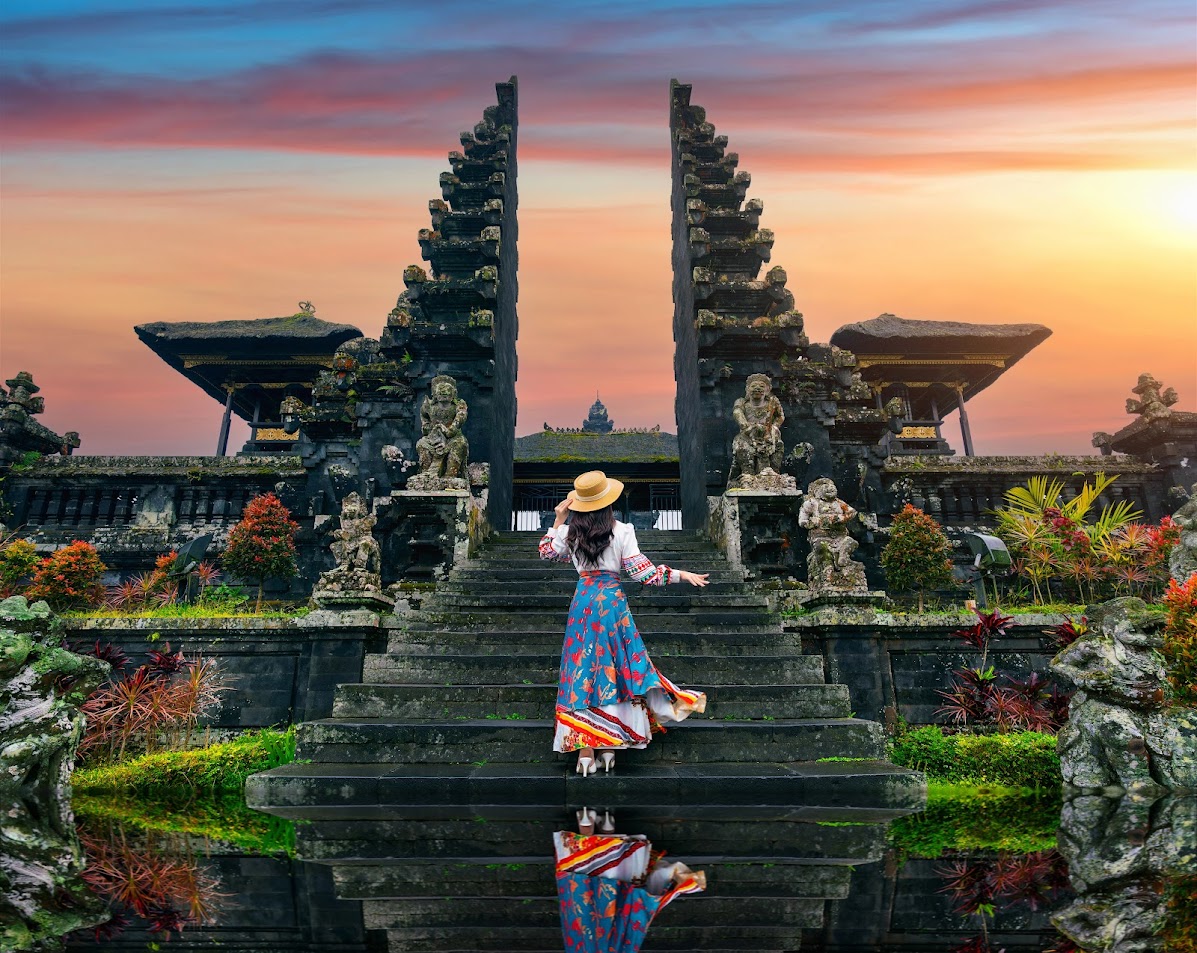
The entrance gate of Pura Besakih Mother Temple is a split tower — a truly unique and majestic structure.
5. Important notes when visiting Pura Besakih Mother Temple
As Pura Besakih is a sacred site with deep spiritual significance to the people of Bali and Indonesia, please keep in mind the following to avoid violating local customs:
- The entrance fee is 60,000 IDR/person (about 93,000 VND/person), which includes one sarong, so there's no need to purchase an extra sarong outside the temple.
- Since much of the visit involves walking outdoors, prepare sunscreen, a hat, long-sleeved clothing, and comfortable shoes.
- According to local customs, visitors are not allowed inside the main sanctum and may only explore the outer areas of the temple.
- Women who are menstruating are not permitted to enter the temple.
- The ideal time to visit the temple is during the dry season (from March to September). You should go early in the morning or late in the afternoon to fully appreciate the temple’s serene beauty.
- You do not need to hire unofficial guides around the temple to avoid scams.
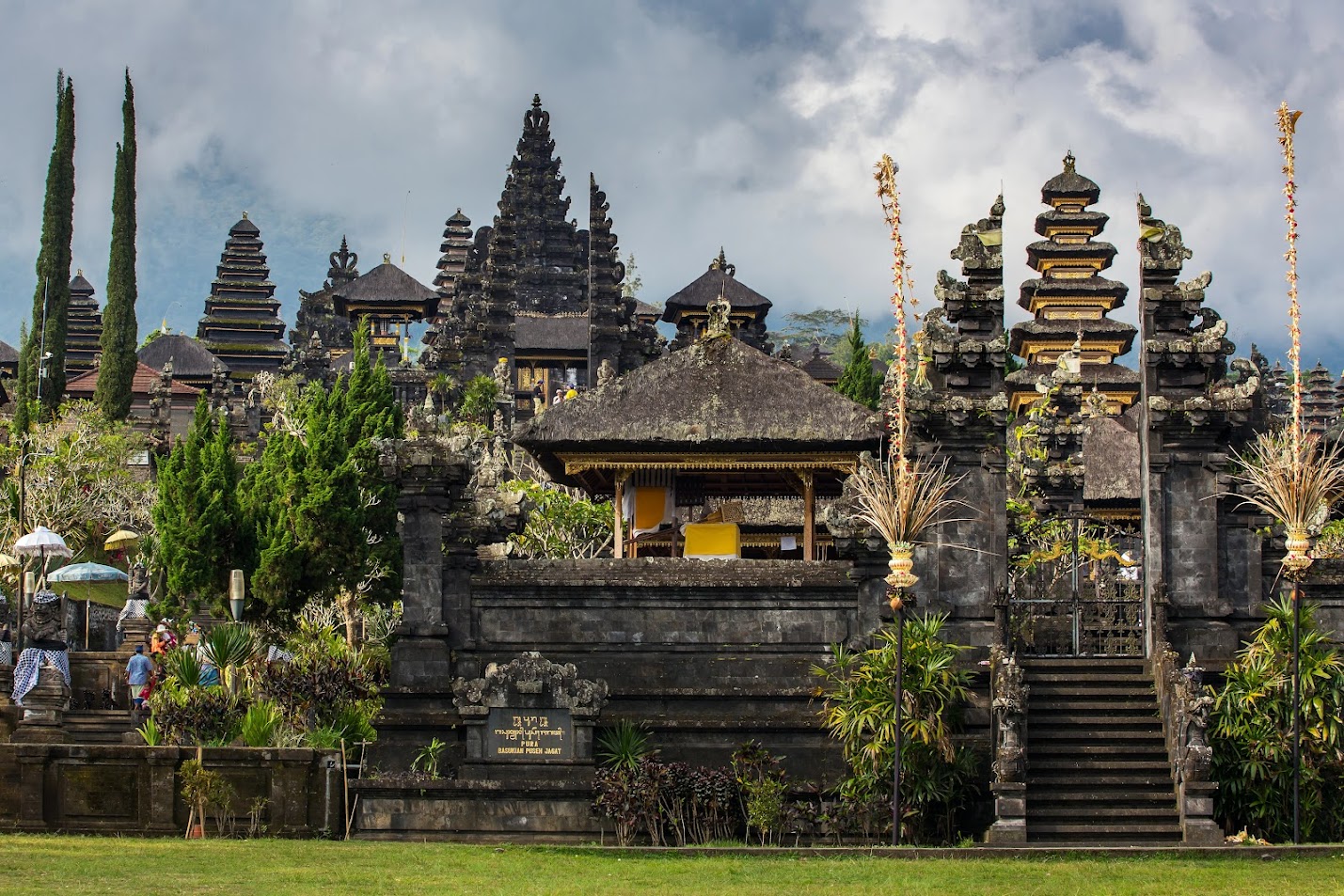
You should visit Pura Besakih early in the morning or in the late afternoon to experience its tranquil beauty.
See more: Do you need a visa to visit Bali? Detailed visa guide
The above are helpful tips for visiting Pura Besakih Mother Temple in Bali, Indonesia. We hope it provides useful information for your upcoming trip. Currently, Vietjet offers many flight routes to Bali, Indonesia at very attractive prices. You can also look forward to the 0 VND ticket promotion for international flights every Friday HERE.
Don't forget to follow Vietjet to stay updated with the latest travel news and promotions.
- Fanpge: https://www.facebook.com/vietjetvietnam
- YouTube: https://youtube.com/c/VietjetOfficial
- TikTok: https://www.tiktok.com/@vietjetvietnam
- Instagram: https://instagram.com/vietjet
- Zalo: https://oa.zalo.me/vietjet