Booking
 Skyshop
 Hotel
Hotel
 E-Voucher
 E-Sim
E-Sim
 E-Visa
 Buy foreign currency
 Insurance
 SkyJoy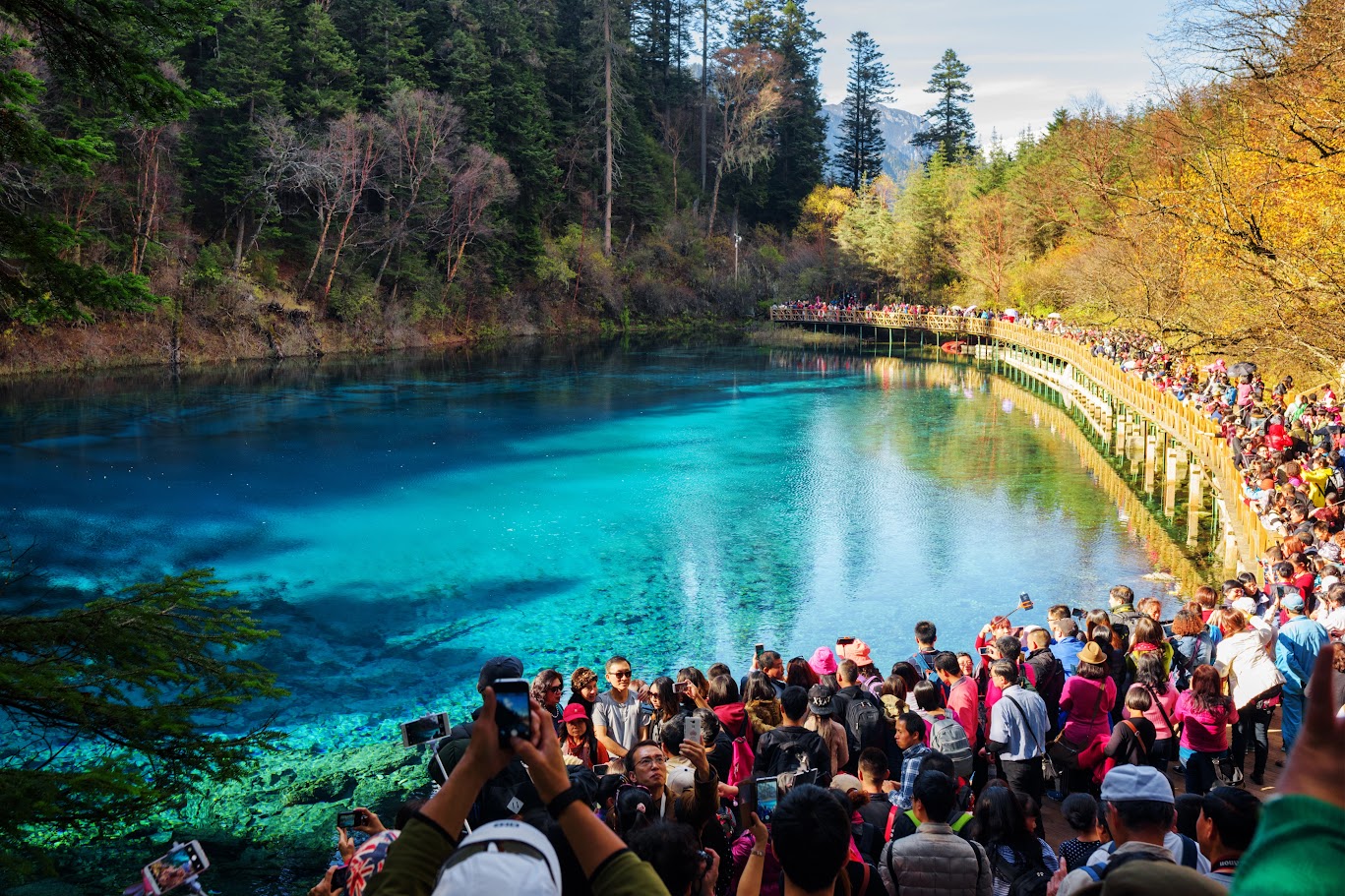
Unlike many other destinations in China, Cuu Trai Cau offers a fairytale-like world, with crystal-clear lakes, majestic waterfalls cascading through primeval forests, and the mighty Minshan mountain range embracing it all. The true magic of Cuu Trai Cau lies in its ability to transform with the seasons—fresh in spring, vibrant in autumn, and mystical in winter—making every trip a completely unique experience.
Moreover, the rich Tibetan culture, with its ancient villages, traditional festivals, and distinctive cuisine, adds an irresistible charm. Cuu Trai Cau is not just a destination, but a journey into a “paradise on earth” unlike anywhere else.
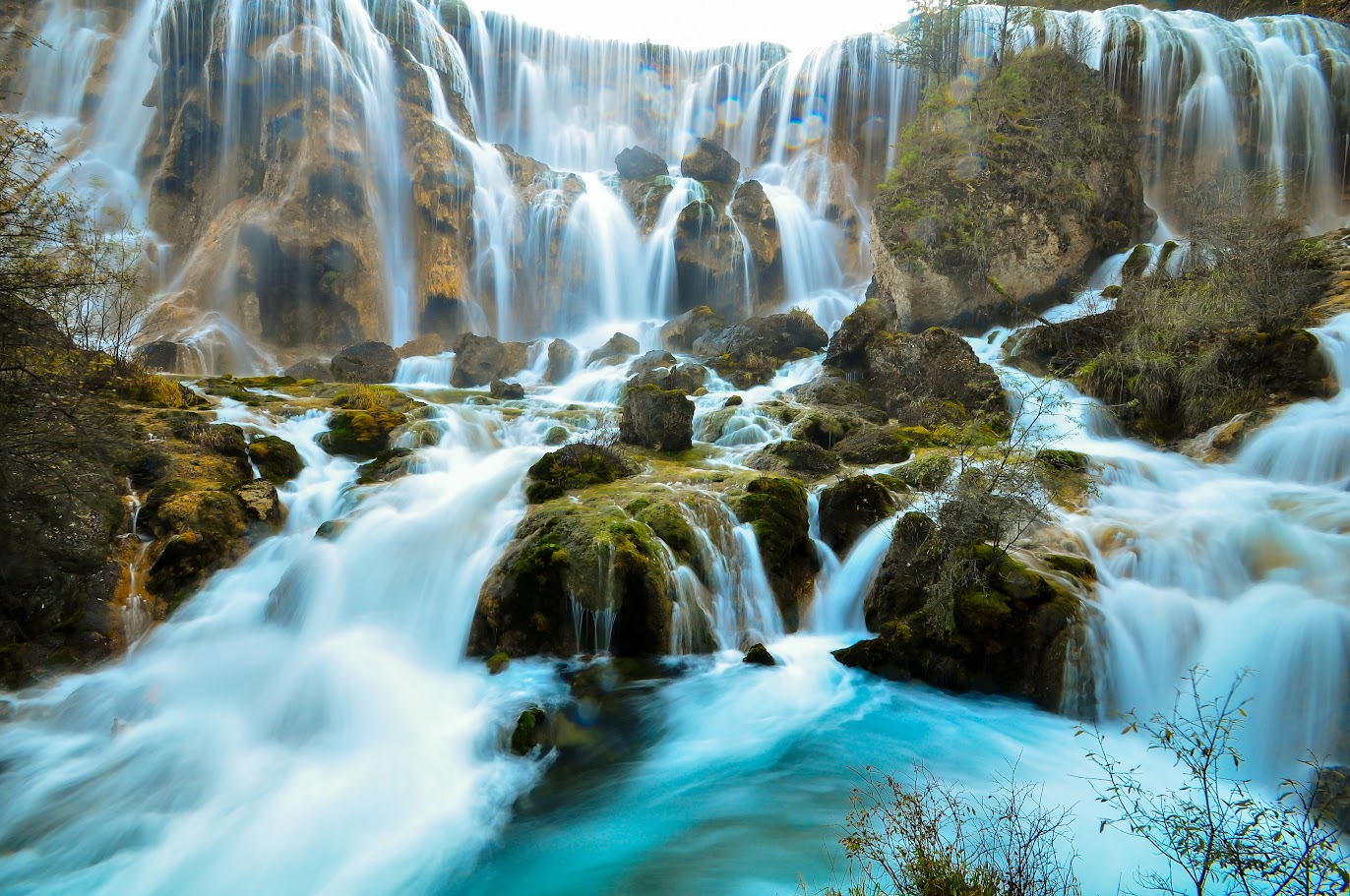
Cuu Trai Cau is famous not only for its surreal natural beauty but also for its unique harmony of landscape and culture.
1. “Paradise on Earth” – What does Cuu Trai Cau offer?
1.1 Where is Cuu Trai Cau?
The name “Cuu Trai Cau” means “Valley of Nine Villages,” referring to the nine Tibetan villages located in the area. It is a nature reserve and national park in the Aba Tibetan and Qiang Autonomous Prefecture, northern Sichuan Province, China. Situated in the Minshan mountain range, its elevation ranges from 2,000 to 4,500 meters above sea level, covering an area of about 60,000 hectares.
To reach Cuu Trai Cau from Vietnam, travelers can fly to Chengdu or Xi’an, then continue their journey to Cuu Trai Cau. Flights take about 2–3 hours from Hanoi and 4–5 hours from Ho Chi Minh City. After landing, you can take a bus or taxi (about 1.5 hours) to the Cuu Trai Cau area.
Book your flight tickets to China with Vietjet today, starting from only 890,000 VND. See details HERE.
1.2 The Scenic Beauty of Cuu Trai Cau
Cuu Trai Cau is famous for its 114 turquoise lakes, over 17 magnificent waterfalls, and 3 main valleys arranged in a Y-shape: Rize, Zechawa, and Shuzheng. It was recognized as a UNESCO World Natural Heritage Site in 1992 and a World Biosphere Reserve in 1997 thanks to its unique landscapes and diverse ecosystem, home to giant pandas, snub-nosed monkeys, and more than 140 rare bird species.
- Five-Color Lake: At 3,010 meters above sea level, this lake is considered the “eye” of Cuu Trai Cau. Its crystal-clear water reflects vibrant shades of blue, green, yellow, and orange, created by algae, limestone, and sunlight. It never freezes in winter, creating an enchanting sight.
- Pearl Waterfall: Located in the primeval forest, this is one of the most stunning waterfalls in Cuu Trai Cau, famously featured in the TV series Journey to the West. Its crescent-shaped cliff and cascading water resemble thousands of sparkling pearls.
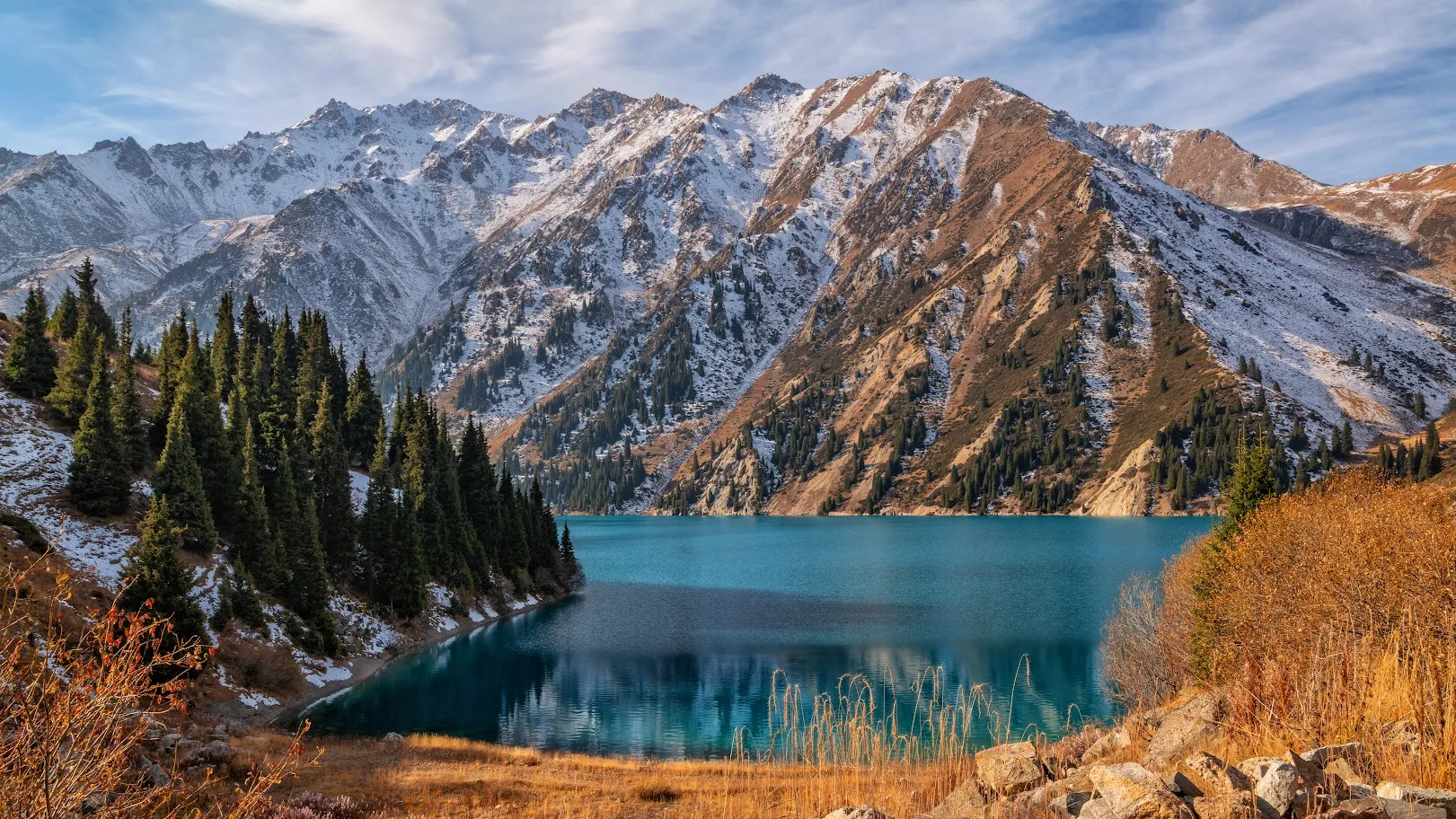
- Long Lake: The largest and deepest lake in Cuu Trai Cau, with a circumference of 7.5 km and a depth of more than 100 meters. Formed by glacial meltwater, it shines in shades of blue and green, reflecting the snow-capped peaks around it.
- Nuorilang Waterfall: At 24.5 meters high and 270 meters wide, it is the largest travertine waterfall in China and also appeared in Journey to the West. Its powerful flow resembles the Milky Way, creating a breathtaking view.
- Five-Flower Lake: Often called the “jewel of Cuu Trai Cau,” this lake dazzles with emerald-green waters that shift in color depending on the light. The clear water reveals submerged ancient tree trunks, creating a surreal scene.
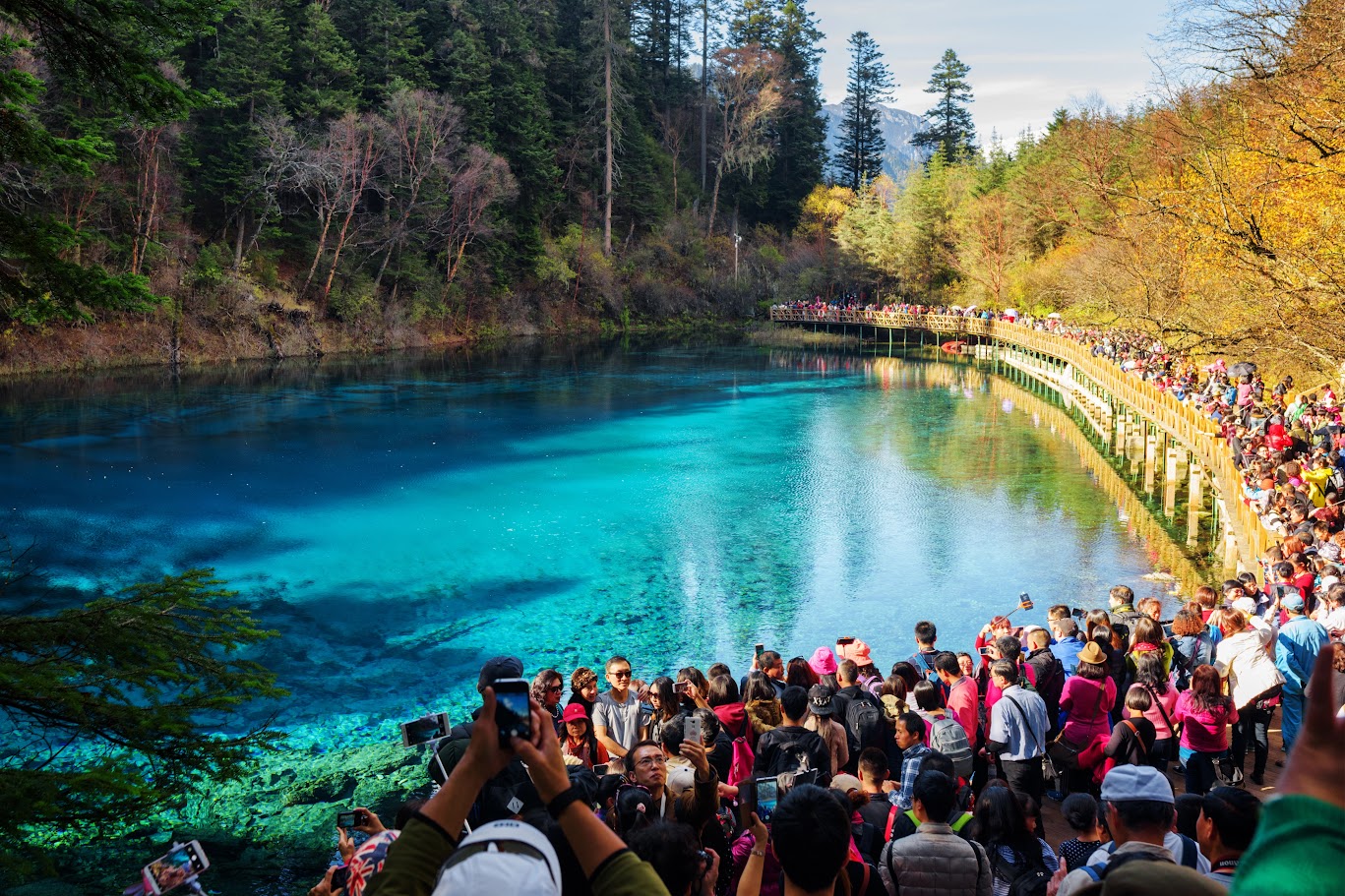
Every scenic spot in Cuu Trai Cau captivates visitors endlessly.
2. The Four Seasons of Cuu Trai Cau
2.1 Spring (March – May)
Spring in Cuu Trai Cau (March to May) brings refreshing beauty, with temperatures ranging from 9–18°C and crisp mornings and evenings. The lakes, such as the Five-Color Lake, sparkle in their clearest form, reflecting the fresh greenery of the mountains and forests. Visitors can walk along wooden boardwalks, exploring valleys like Rize and Shuzheng. This is also the season of traditional Tibetan festivals, such as the Mazi Festival or Zharu Temple Festival, giving independent travelers the chance to immerse themselves in the rich local culture.
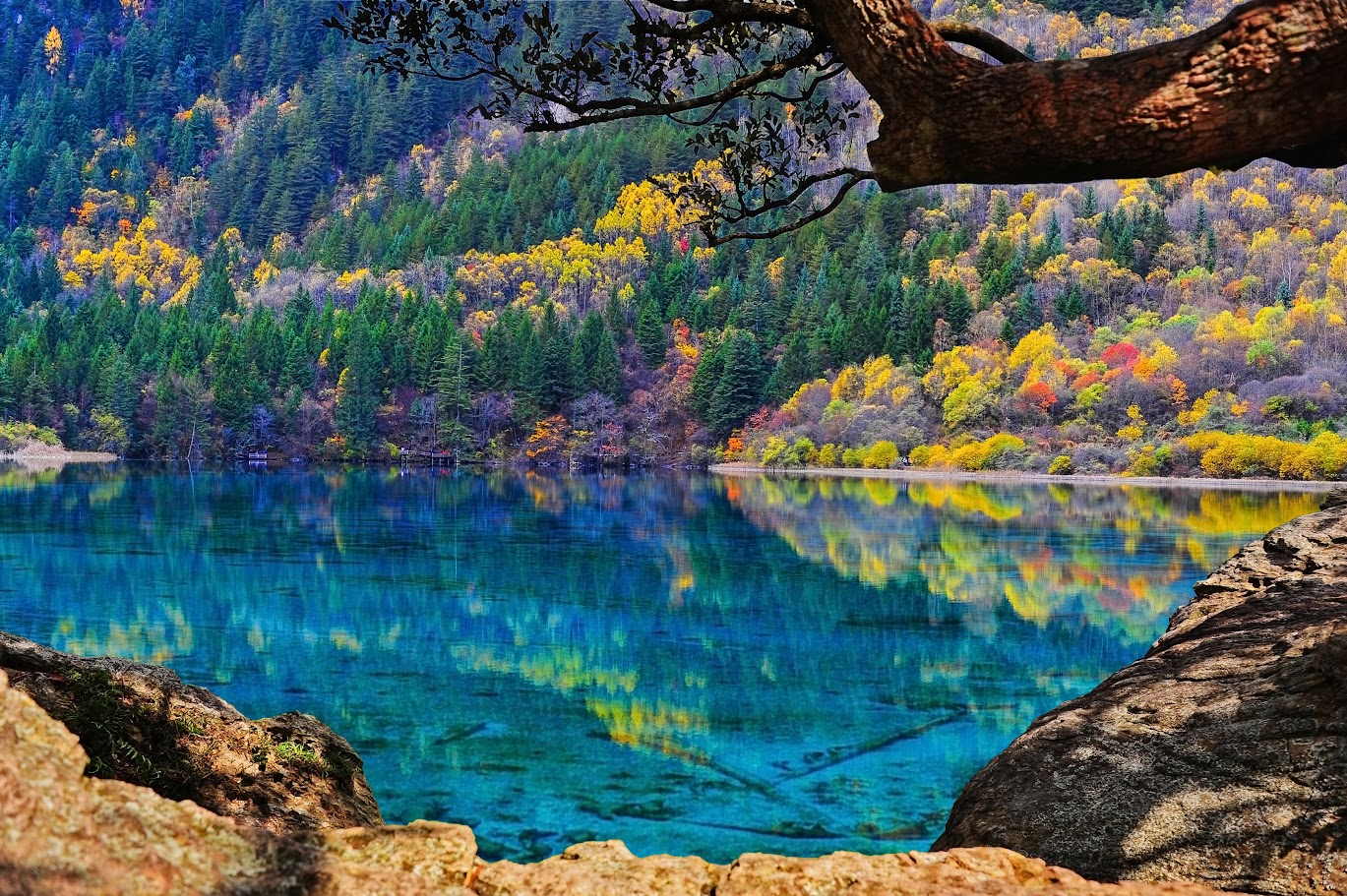
Spring in Cuu Trai Cau is a fresh beginning, with fewer crowds, allowing you to fully enjoy the beauty of nature.
2.2 Summer (June – August)
Summer in Cuu Trai Cau offers a lively natural experience with cool weather, occasional showers, daytime temperatures of 19–26°C, and around 10°C at night. Travelers can walk along winding wooden pathways through the primeval forest, enjoying breathtaking scenery and admiring crystal-clear lakes such as Five-Flower Lake and Mirror Lake that reflect lush landscapes. Pearl Waterfall and Nuorilang Waterfall are also must-visit spots to witness powerful cascades.Don’t miss Tibetan specialties such as grilled meat and butter tea, as well as cultural performances of traditional music and dance that make your summer nights in Cuu Trai Cau unforgettable.
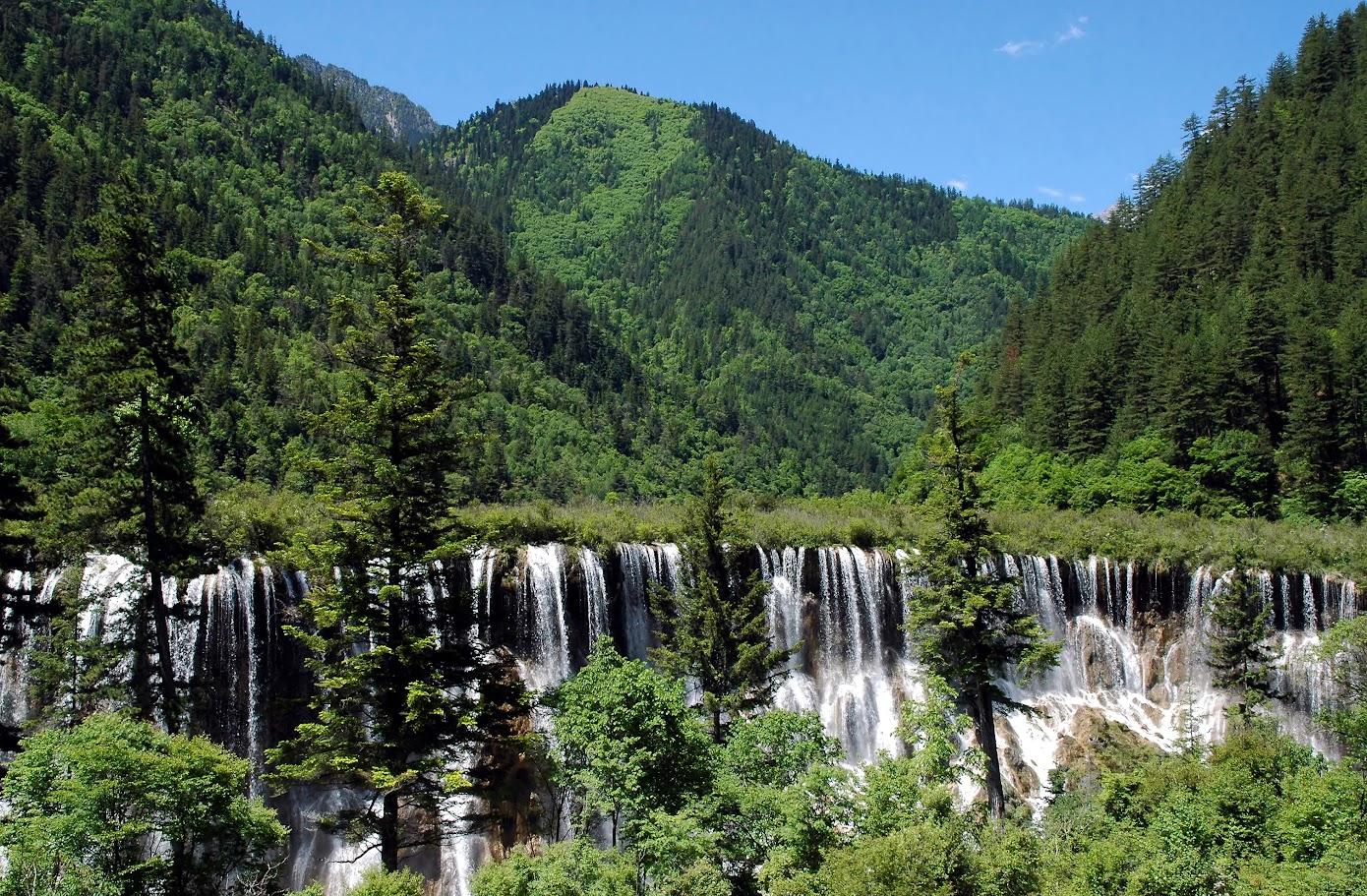
Summer is peak season, especially in July and August, due to the Chinese school holidays.
2.3 Autumn (September – November)
Autumn is when Cuu Trai Cau dons its most vibrant coat, with clear skies, little rain, and temperatures from 7–20°C. The primeval forest transforms into golden, red, and orange hues, blending perfectly with jade-green lakes such as Mirror Lake and Five-Flower Lake, creating a painting-like scene. Independent travelers can enjoy trekking trails, photographing Nuorilang Waterfall, or taking part in the “Red Leaf Festival” in October.
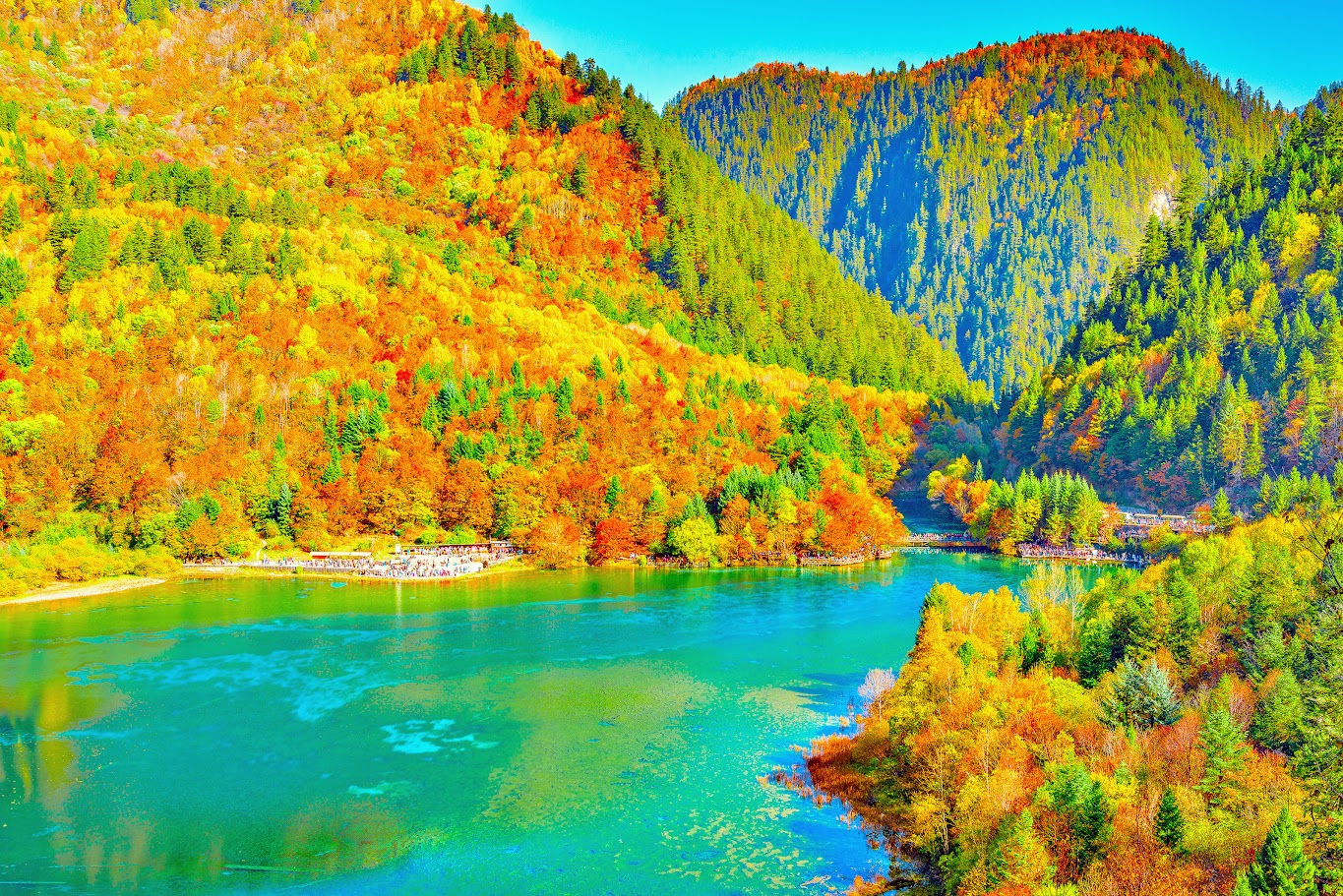
Fresh air, clear skies, and dazzling fall foliage make every moment here unforgettable.
2.4 Winter (November – February)
Winter in Cuu Trai Cau brings a fairytale of snow, with temperatures ranging from -6°C to 9°C, wrapping the landscape in mystery. Long Lake and Pearl Waterfall freeze into crystal-like wonders. Visitors can ski at the nearby Jiagu Mountain resort, stroll under falling snow, or capture magical photos of Five-Color Lake, which stays emerald beneath a thin layer of ice. Warm up with Tibetan hot pot or yak-based dishes, and visit Tibetan villages to experience unique customs. Winter is less crowded, though some areas such as the primeval forest may be closed.
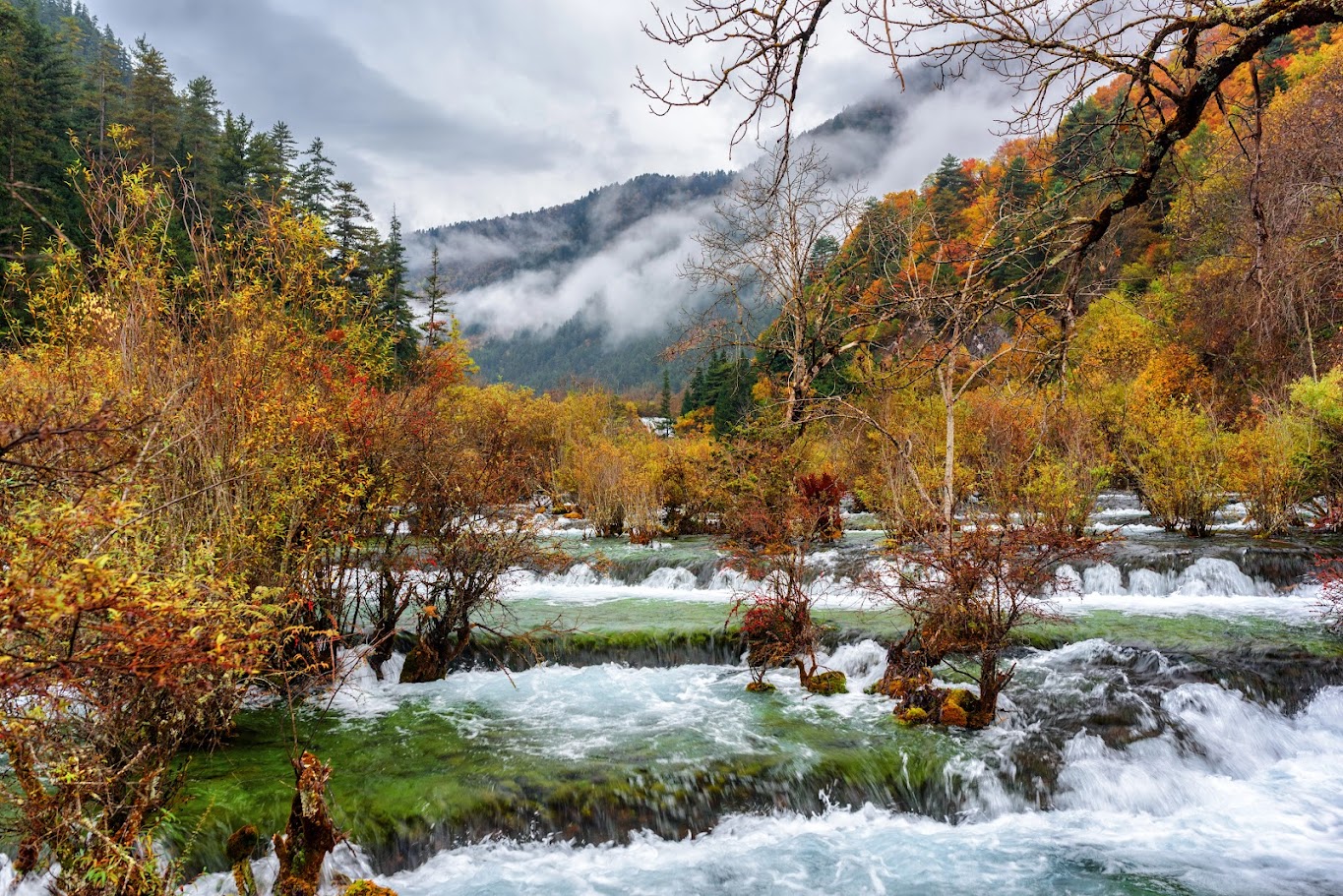
See also: What to note when visiting Cuu Trai Cau in winter?
3. Tips for Traveling Independently to Cuu Trai Cau
3.1 What to Wear in Cuu Trai Cau?
- Spring (March – May): Bring long-sleeved shirts, light jackets, windbreakers, long pants, and anti-slip sneakers due to drizzle and damp trails.
- Summer (June – August): Cool but with sudden rain. Wear short-sleeved tops, light trousers, raincoats or waterproof jackets, anti-slip shoes, hats, sunglasses, and sunscreen due to high UV levels.
- Autumn (September – November): Sweaters, warm jackets, windbreakers, long pants, and sneakers are essential.
- Winter (December – February): Prepare thermal wear, down jackets, windproof coats, gloves, scarves, wool hats, anti-slip boots, and thick socks.
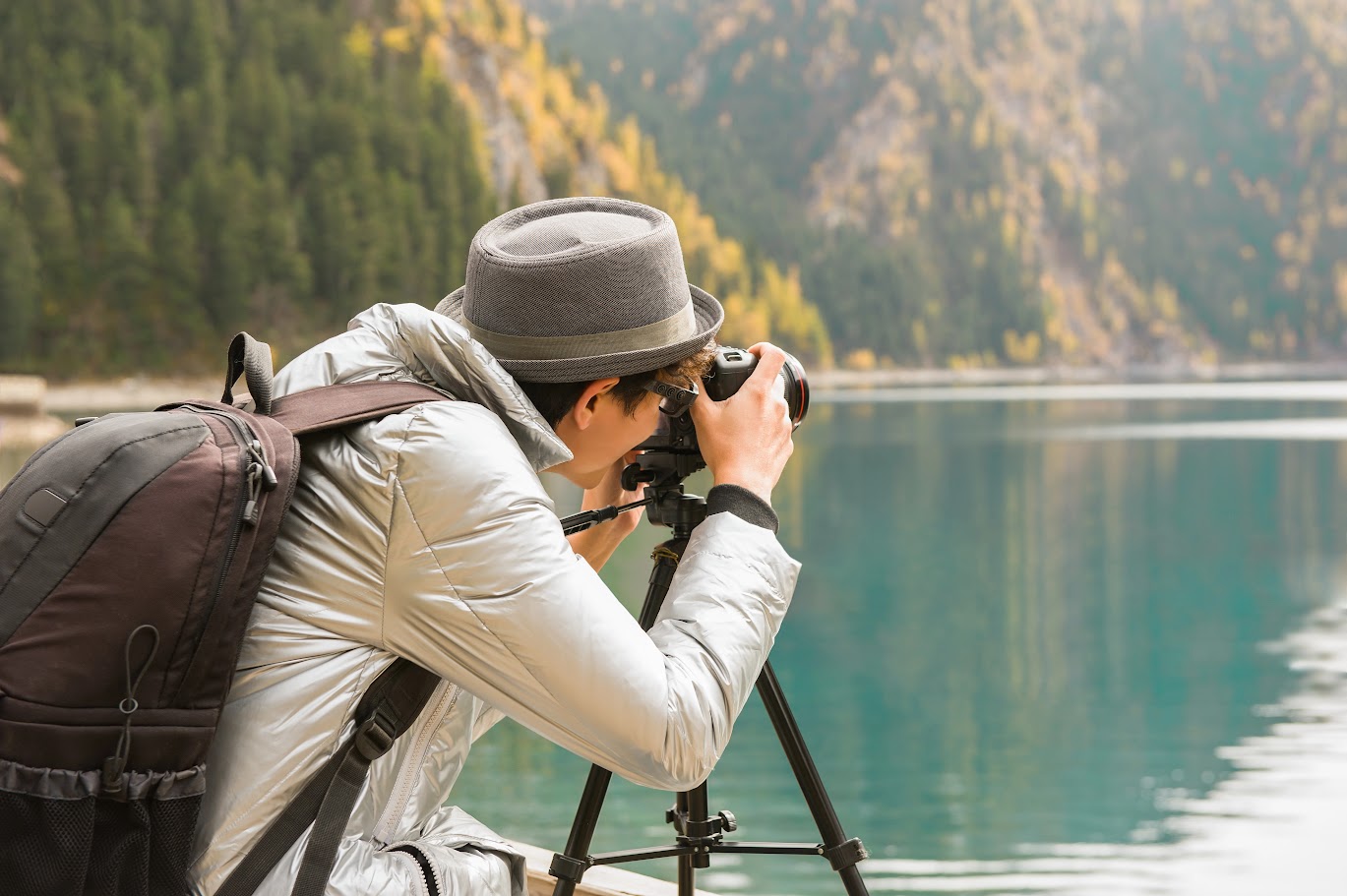
No matter the season, light and practical clothing is recommended for walking along mountain trails.
3.2 When is the Best Time to Visit Cuu Trai Cau?
Every season offers its own beauty, but October is considered the most spectacular. Autumn’s golden-red forests, jade lakes, and temperatures of 8–18°C with little rain make it perfect for sightseeing and photography.
For budget-conscious travelers who prefer peace and quiet, April is ideal, with blooming peach and rhododendron flowers, temperatures of 9–14°C, and fresh air. Meanwhile, June to August is a great time to escape the summer heat and join seasonal activities in Cuu Trai Cau.
See also: Which season is best for traveling to Cuu Trai Cau?
3.3 What’s on the Map of Cuu Trai Cau?
Cuu Trai Cau consists of three main valleys shaped like a Y—Shuzheng, Rize, and Zechawa—featuring over 114 lakes, 17 waterfalls, primeval forests, and Tibetan villages.
- Shuzheng Valley: The busiest valley, stretching 14 km with more than 40 natural lakes. Highlights include Reed Lake, Fire Flower Lake, Nuorilang Waterfall, and Shuzheng Village.
- Rize Valley: 18 km long, known for crystal-clear lakes and untouched forests. Attractions include Five-Color Lake, Mirror Lake, and Pearl Waterfall.
- Zechawa Valley: Also 18 km long, quieter but home to stunning sites such as Long Lake, Five-Flower Lake, and virgin forest landscapes.
Cultural Villages to Explore:
- Shuzheng Village: An ancient Tibetan village where you can experience stone houses, cultural performances, and rent traditional Tibetan attire for photos.
- Aba Pure Land Village: Showcasing Tibetan culture through Thangka paintings, traditional costumes, and artifacts. Visitors can learn about local life, customs, and join Tibetan handicraft workshops.
- Zechawa Village: A smaller village offering cultural immersion and photo opportunities in Tibetan dress.
Getting Around: Shuttle buses included in the entrance ticket, combined with wooden walkways stretching for kilometers, make it easy to explore. Major sites are 1–5 km apart, allowing visitors to see highlights within 1–2 days.
Overall, Cuu Trai Cau, with its magnificent scenery across all four seasons, is a must-visit for nature lovers and explorers. Let this journey into a “paradise on earth” become one of your life’s most memorable adventures. Start planning today—book your flight tickets to China with Vietjet for a convenient and affordable trip. Don’t forget to check the 0 VND promotional tickets available daily from 12 PM – 2 PM for the best fares. See details HERE.
Stay tuned with Vietjet to never miss the latest travel updates!
- Facebook: https://www.facebook.com/vietjetvietnam
- Instagram: https://instagram.com/vietjet
- YouTube: https://www.youtube.com/VietjetOfficial
- TikTok: https://www.tiktok.com/@vietjetvietnam
- Zalo: https://oa.zalo.me/vietjet