Booking
 Skyshop
 Hotel
Hotel
 E-Voucher
 E-Sim
E-Sim
 E-Visa
 Buy foreign currency
 Insurance
 SkyJoy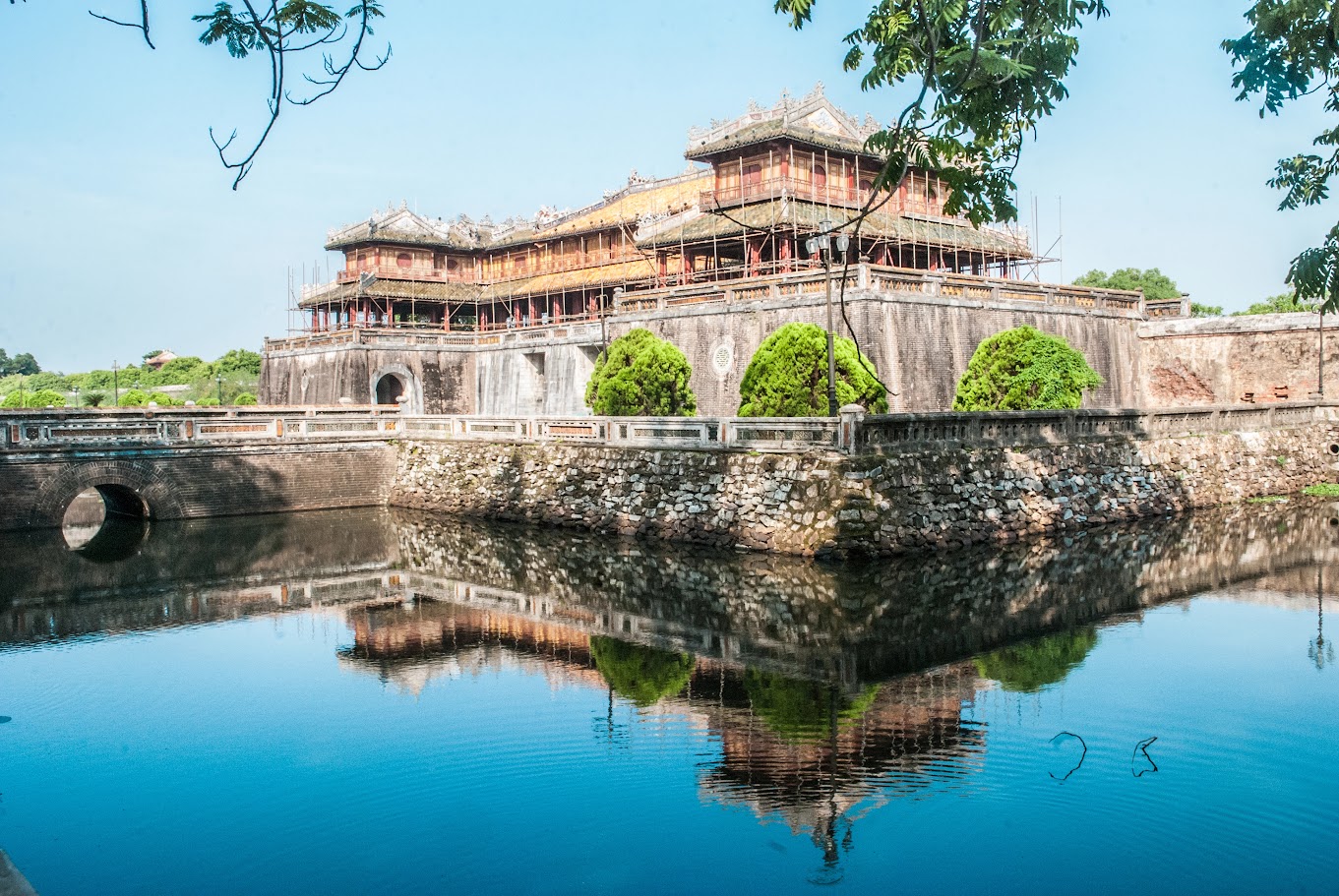
The Imperial City of Hue is the heart of the Complex of Hue Monuments, recognized by UNESCO as a World Cultural Heritage site since 1993. Not only is it distinguished by the ancient beauty of its royal architecture, but it also preserves many unique historical, artistic, and cultural values, notably the Hue court music (Nhã nhạc).
This article will provide a detailed guide on the map, ticket prices, visiting times, and experiences to help you explore the Imperial City fully and enjoyably.
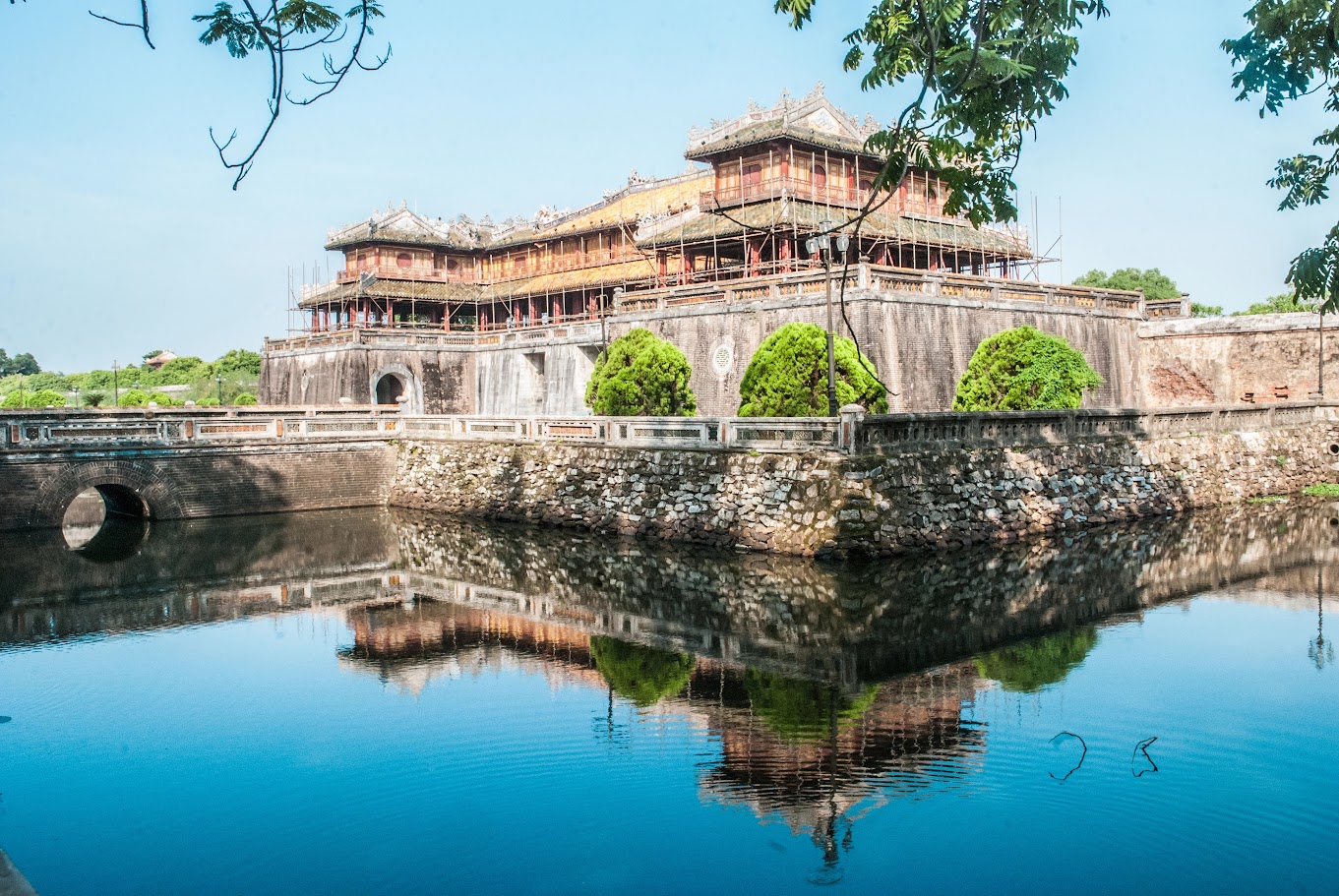
The Imperial City of Hue was once the residence and workplace of 13 Nguyen dynasty kings and is always on the list of must-visit attractions in Hue.
1. Where is the Imperial City of Hue located?
The Imperial City of Hue is located right in the center of Hue city, on the northern bank of the Perfume River, at 23/8 Street, Thuan Hoa Ward, Hue City, Thua Thien Hue Province. This is a very convenient location, making it easy for visitors to access from any point in the city.
How to get to the Imperial City of Hue:
- From Phu Bai International Airport Hue Airport:The airport is about 16km from the Imperial City. Visitors can take a taxi (costing from 150,000 to 200,000 VND, travel time about 30 - 40 minutes) or take the airport - Hue city center bus (cheaper but less flexible in terms of time).
- From Hue Train Station:Hue Train Station is only about 2km from the Imperial City. You can choose to walk along the ancient streets, rent a bicycle (about 30,000 VND/day), or take a cyclo (prices range from 50,000 to 100,000 VND/trip), which is both convenient and allows you to fully experience the slow pace of life in Hue.
- From the center of Hue city:The Imperial City is located north of the Perfume River and can be accessed via the Truong Tien Bridge or Phu Xuan Bridge. Visitors can use taxis, motorbikes, bicycles, or cyclos to get around. If staying in central areas like Le Loi Street, Nguyen Truong To Street, Hùng Vương Street, the travel time is only about 5 - 10 minutes.
2. What does the Imperial City of Hue have to offer?
2.1 Map of the Imperial City of Hue
The Imperial City of Hue is an architectural complex within the Hue Citadel, consisting of two main parts: the Royal City and the Forbidden City, with dozens of large and small structures. The buildings inside the Imperial City of Hue are constructed along a strict symmetrical axis, clearly reflecting Confucian thought and Eastern feudal philosophy.
Most of the architecture in the Royal City follows the principles of "left male, right female" and "left literature, right martial," with the central axis (also known as the divine axis) being the palaces reserved for the king. A special feature of the Imperial City’s layout is the harmonious combination of architecture and nature. Many palaces are built next to lakes, flower gardens, stone bridges, small islands, and ancient trees, to maintain vitality and create a serene landscape.
For convenience in visiting, tourists can follow the suggested route below:
- Start from Ngo Mon - the main gate of the Royal City, where important ceremonies of the court are held.
- Proceed to Thai Hoa Palace - the political center, where the king holds court and organizes grand ceremonies.
- Explore the Forbidden City area behind, including Can Chanh Palace, Thai Binh Lau - where the king lived, read books, and worked daily.
- Continue to the western area with Dien Tho Palace - the residence of the Queen Mother, which bears the strong imprint of female power during the Nguyen dynasty.Conclude the journey at the The Mieu, Hien Lam Pavilion, and Duyet Thi Duong - places for worship and performances of Hue court music.
When purchasing tickets to enter the Imperial City, you can request a paper map or take a photo of the overall map at the Ngo Mon gate for easier navigation.
2.2 Notable structures in the Imperial City of Hue
The Imperial City of Hue consists of hundreds of large and small structures, but the most prominent are those with strong royal architectural features, reflecting the power of a glorious dynasty and preserving many cultural and historical values.
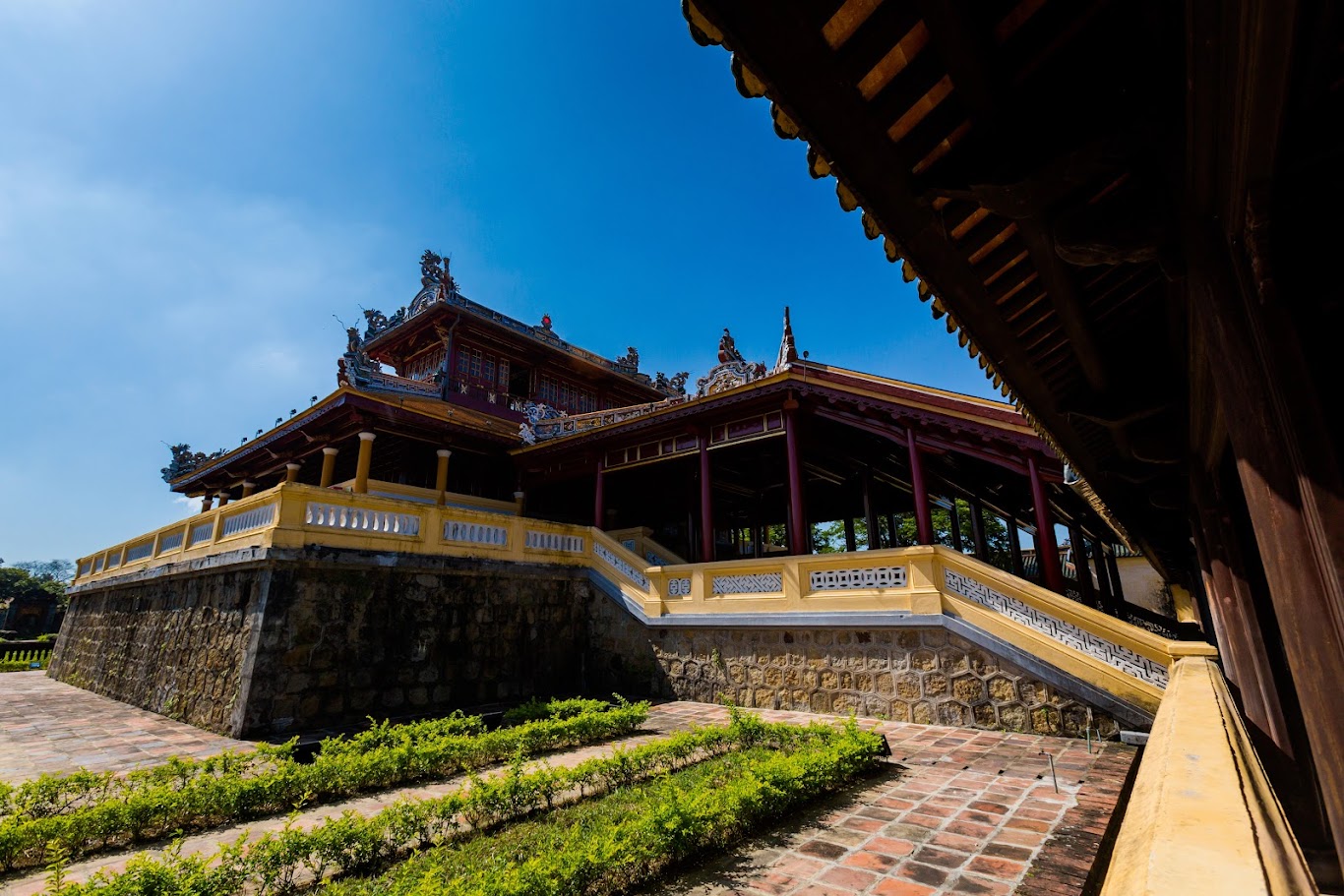
The Imperial City of Hue exudes ancient beauty and majesty.
Below are must-visit stops in your exploration journey:
Ngo Mon - The symbol of the dynasty's power
Ngo Mon is the main southern gate of the Royal City and is also the most distinctive architectural symbol at the Imperial City. The structure consists of two parts: a high stone platform and the Five Phoenix Pavilion above. This was once the site of the coronation ceremonies of the Nguyen kings, welcoming envoys and organizing military parades. Upon passing through Ngo Mon, visitors will immediately feel the solemnity, order, and Confucian spirit in the arrangement of the space.
Thai Hoa Palace - The center of supreme power
Following Ngo Mon is the Đại Triều Nghi courtyard and Thai Hoa Palace - where the king holds court and discusses state affairs with civil and military officials. The palace is entirely built of lim wood, featuring a system of 80 columns carved with golden dragons and a roof of royal glazed tiles. The interior is exquisitely arranged, symbolizing the king's supreme power. This is also where significant ceremonies such as coronations, issuing edicts, and national festivals take place.
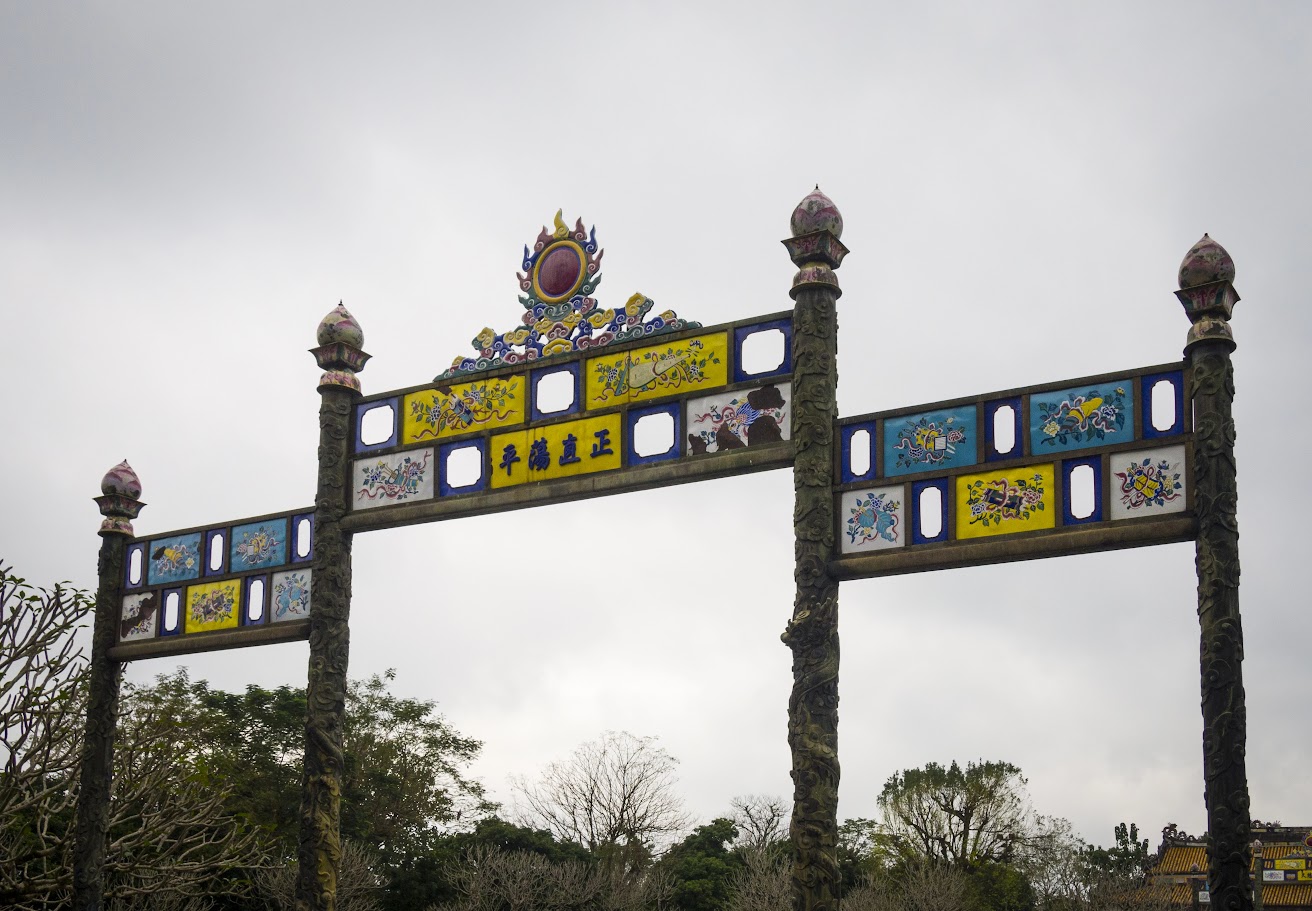
Thai Hoa Palace is the king's main workplace, where many important events took place.
Forbidden City - The king's private space
Located behind Thai Hoa Palace, the Forbidden City is the personal living area of the king and the royal family. Among them, Can Chanh Palace is where the king works daily; Can Thanh Palace is the king's residence; and Thai Binh Lau is a two-story structure by the lake, where the king often retreats to rest, compose poetry, and read books. The space here is quiet, secluded, and surrounded by separate city walls.
Dien Tho Palace - The residence of the Queen Mother
Located in the west of the Imperial City, Dien Tho Palace is the residence of the Queen Mother through many dynasties. The architecture of this area is soft and graceful, with a spacious garden, lotus pond, stone bridge, and small pavilion. Not only is it a living space, but Dien Tho is also a symbol of filial piety and family tradition in Vietnamese royal culture.
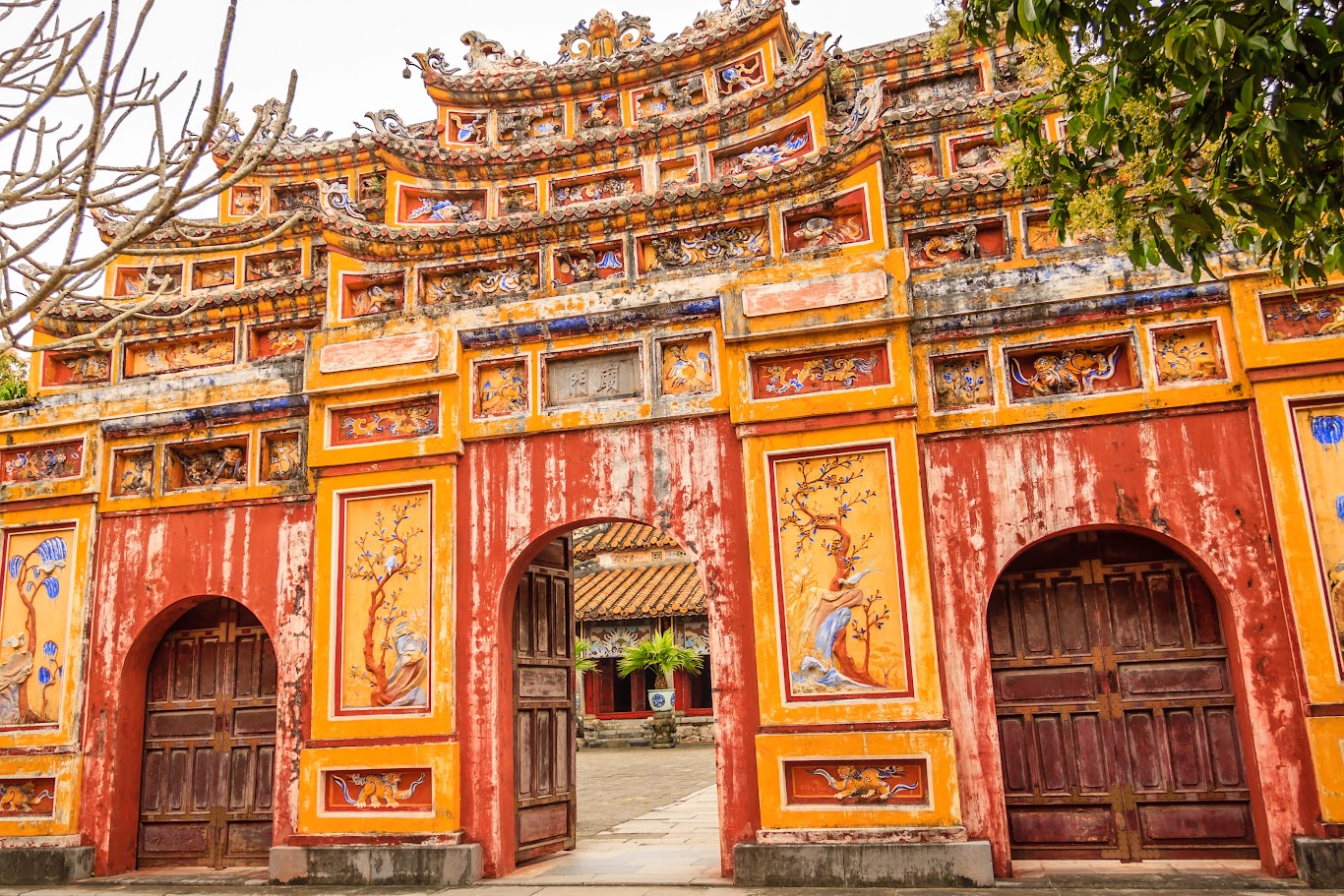
Dien Tho Palace is the residence of the Queen Mother, featuring soft architecture and many picturesque landscapes.
The Mieu - The spiritual space of the dynasty
The Mieu is a place of worship for 10 Nguyen dynasty kings, with a system of altars, ceremonial gates, and stone tablets arranged solemnly. The structure embodies the spiritual architecture of the royal court and is where major sacrificial ceremonies of the court take place. Nearby is Hien Lam Pavilion - a memorial for the meritorious officials and generals of the dynasty.
Duyet Thi Duong - The unique royal theater
Duyet Thi Duong is the oldest surviving theater in Vietnam, once serving exclusively for the king and the royal family. This is where court music (Nhã nhạc) is performed - a traditional music genre recognized by UNESCO as an Intangible Cultural Heritage of Humanity. Currently, Duyet Thi Duong still hosts daily performances, providing a unique artistic experience for visitors.
3. Ticket prices for the Imperial City of Hue
To visit the Imperial City of Hue, visitors need to purchase an entrance ticket. Additionally, the site offers supplementary services and ticket packages that combine multiple destinations to optimize costs. You can refer to the ticket prices for visiting the Imperial City of Hue in the table below:
Ticket type | Reference price |
Basic entrance ticket |
|
Supplementary services |
|
Combo ticket |
|
Depending on the time, the Imperial City of Hue will have discount programs or free entrance tickets. Visitors can update at the Electronic Information Portal of the Hue Monuments Conservation Center.
4. Tips for visiting the Imperial City of Hue
4.1 Visiting time for the Imperial City of Hue
The Imperial City of Hue is open to visitors every day of the year, including holidays. In the eyes of many tourists, the ideal time to explore this place is in spring (January - March), when the weather is mild, or early summer (April - May), when the Hue Festival takes place. This event is usually held every two years, bringing a vibrant appearance to the Imperial City with sparkling lights and many unique cultural activities.
If this is your first visit, knowing how long it takes to visit the Imperial City of Hue will help you arrange a reasonable schedule. A quick visit, mainly passing through the main structures and taking photos, usually takes about 2 hours. If you want to listen to the commentary and learn more about the architecture and history, you should spend 3 - 4 hours for a more complete experience.
Visiting hours:
- Summer (April - September): 6:30 AM - 5:30 PM
- Winter (October - March): 7:00 AM - 5:00 PM
4.2 Special experiences
In addition to admiring the royal architectural structures, visitors to the Imperial City of Hue can participate in many experiential activities rich in the colors of ancient royal culture, making the trip more vibrant and memorable.
- Renting royal costumes:In the Huu Vu area, you can rent five-body robes, royal gowns, or Nguyen dynasty guard costumes for prices ranging from 50,000 to 100,000 VND/set. This is an ideal choice for taking souvenir photos amidst the ancient space of the Imperial City.
- Watching Hue court music:This type of music was once performed in royal ceremonies and is now periodically performed at the Duyet Thi Duong theater within the Imperial City. Ticket prices range around 100,000 VND/entry, providing a unique, tranquil, and nostalgic artistic experience.
- Enjoying tea in the royal space:Some spots in the Imperial City, such as the garden of Dien Tho Palace, serve royal tea. Sitting in the serene setting, visitors can sip lotus tea, listen to the birds singing, and feel the peaceful beauty of the ancient palace.
4.3 Some regulations and notes
As a World Cultural Heritage site and a place rich in spiritual and historical significance, the Imperial City of Hue has specific regulations to preserve the value of the monument and ensure a civilized visiting experience for tourists.
- Dress and behavior:Visitors should wear polite clothing, avoiding overly short or inappropriate attire when visiting worship areas and palaces. Maintain a serious attitude and do not create noise in the monument space.
- Protecting the monument:Do not touch artifacts, ancient walls, or architectural details. Some interior areas of the palaces and halls prohibit photography; visitors should follow the guiding signs.
- Maintaining general hygiene:Do not litter, and do not smoke within the Imperial City grounds. Visitors should bring personal drinking water and hats/caps as the area is quite large, especially during the hot summer.
- Notes when traveling with children or the elderly:The Imperial City grounds are primarily navigated on foot with many steps, so prepare strollers or sunshades if needed. You can rent electric cars within the grounds to save energy and time.
The Imperial City of Hue is a treasure of culture and history, where you can touch the glorious past of the Nguyen dynasty. We hope this article has provided useful information to help you easily plan your upcoming trip.Book a flight to Hue Today and start your journey to explore the dreamy ancient capital of Hue with super budget costs. Don't forget the 0 VND flight ticket hunting program from 12 PM to 2 PM daily at Vietjet. See details here.
Follow flight information, promotional programs, and travel guides on the official channels of Vietjet: