Booking
 Skyshop
 Hotel
Hotel
 E-Voucher
 E-Sim
E-Sim
 E-Visa
 Buy foreign currency
 Insurance
 SkyJoy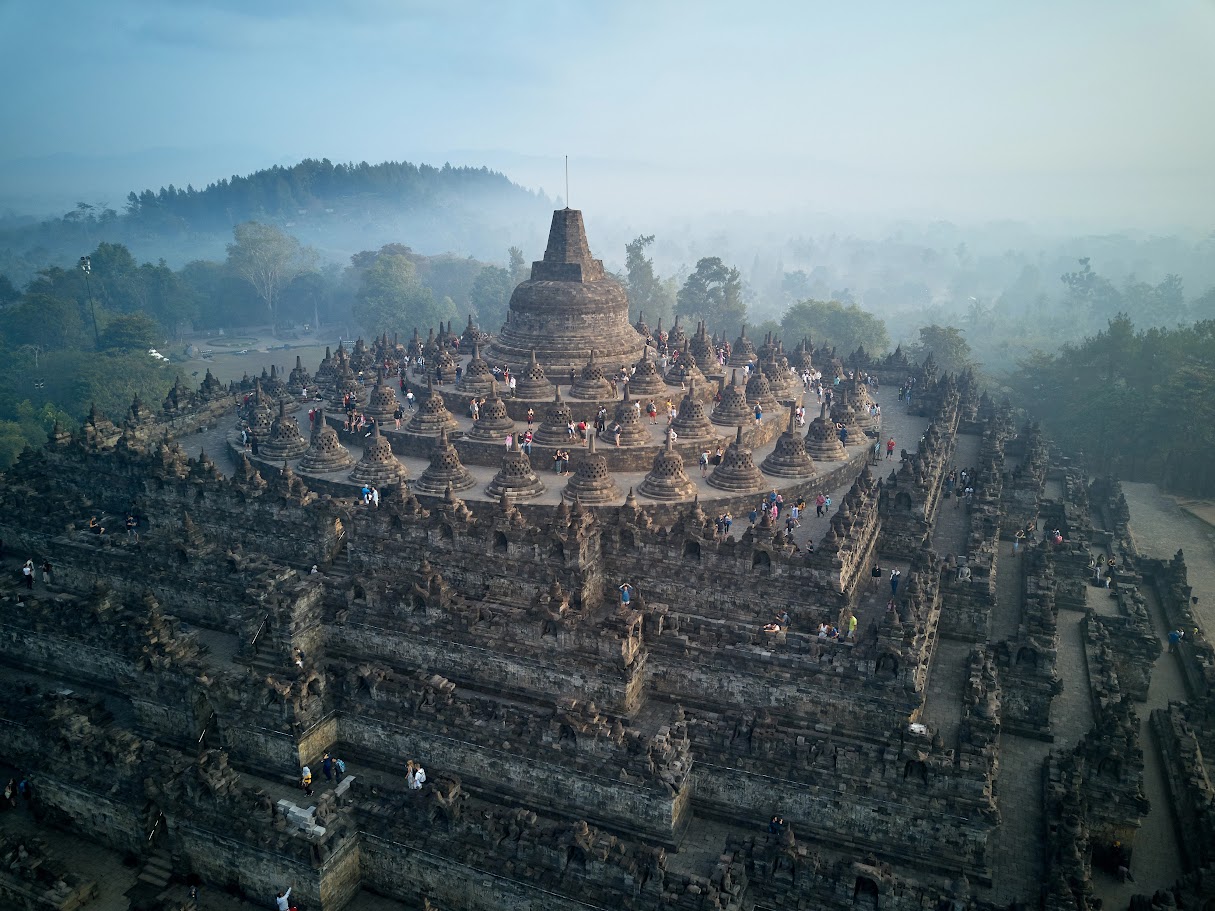
Hidden among the lush forests of Central Java, Indonesia, Borobudur Temple stands as a magnificent masterpiece of Buddhism. It has been recognized by UNESCO as a World Heritage Site, attracting visitors with its sacred beauty, unique architecture, and rare meditative atmosphere.
If you are planning to explore Indonesia, a journey to Borobudur is an experience you cannot miss – a place where you can fully feel the depth of Eastern culture and spirituality.
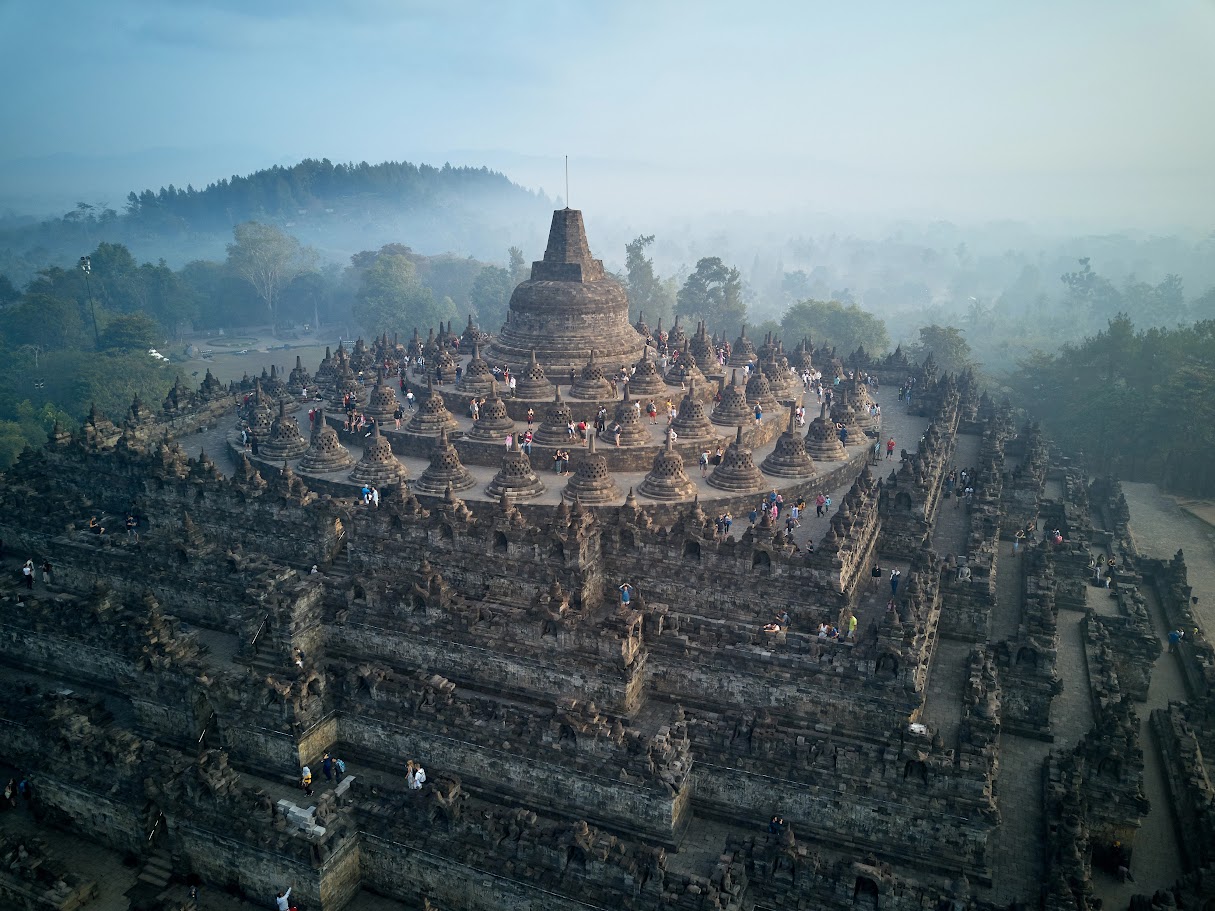
Aerial view of the Borobudur temple complex.
1. Where is Borobudur Temple?
Borobudur Temple is located in the town of Magelang, Central Java province, Indonesia, about 40km northwest of Yogyakarta – a major cultural center of Java Island. Nestled in a cool valley surrounded by the majestic Menoreh mountains, the temple stands solemnly amidst the serene natural landscape, far removed from the hustle and bustle of urban life.
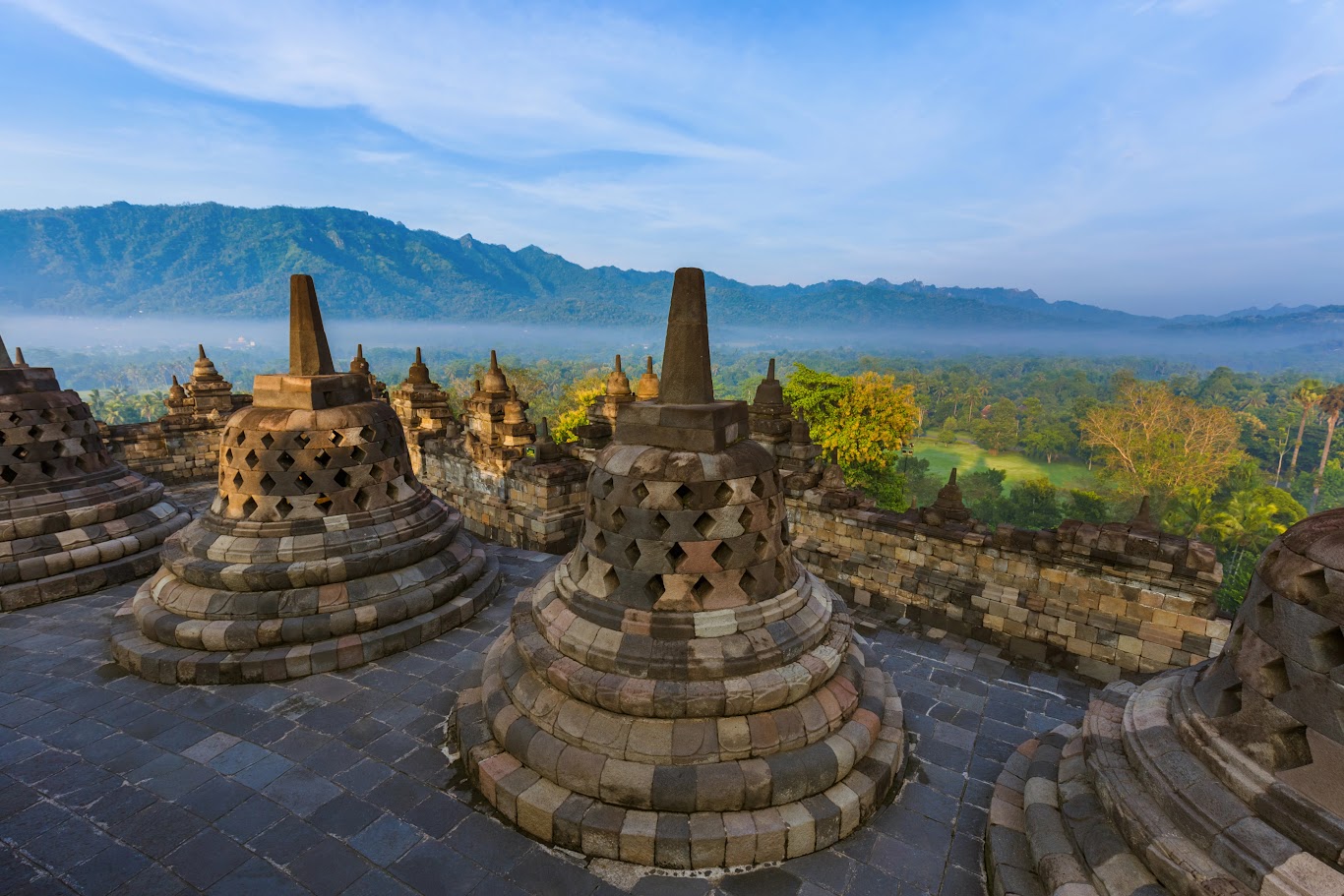
Borobudur Temple is situated in a prime location amidst awe-inspiring nature.
From Yogyakarta, visitors can easily reach Borobudur by car, bus, or a day tour, taking about 1 - 1.5 hours. The journey to Borobudur is not only convenient but also scenic, taking you through peaceful villages, vast rice fields, and stunning mountainous landscapes, opening up an emotionally charged spiritual exploration.
2. History and Value of Borobudur Temple
Borobudur was built around the 8th to 9th century during the Sailendra dynasty, one of the most prosperous Buddhist dynasties in Southeast Asia in ancient times. Over 1,200 years old, Borobudur is not only a monumental religious structure but also a living testament to the flourishing of Mahayana Buddhism culture on Java Island.
The temple was forgotten for centuries, buried under volcanic ash and dense forests. It wasn’t until 1814 that Borobudur was rediscovered by Thomas Stamford Raffles – the British Governor-General of Java at that time. Since then, Borobudur has undergone several major restorations, especially the large-scale restoration project by UNESCO and the Indonesian government in the 1970s, helping the temple regain its majestic appearance.
With its architectural grandeur, deep Buddhist philosophy, and timeless historical value, Borobudur was recognized as a UNESCO World Heritage Site in 1991. Today, it is not only a major pilgrimage center for Buddhists worldwide but also a symbol of knowledge, art, and the enduring spirit of the Indonesian people.
3. Architecture and Highlights of Borobudur Temple
Borobudur Temple is a Buddhist architectural masterpiece in the shape of a stepped pyramid, consisting of 9 tiers – with 6 square tiers at the bottom, 3 circular tiers at the top, and topped with a central stupa in the shape of a bell at the highest point. This massive structure is entirely built from volcanic stone, with approximately 2 million stone blocks stacked cleverly without the use of any adhesive.
The architecture of Borobudur is not only overwhelming in scale but also imbued with Buddhist philosophy through three symbolic tiers:
- Kamadhatu (the bottom tier): Represents the world of desires – where people are still bound by greed, anger, and ignorance. The reliefs on this level depict the law of cause and effect and the cycle of reincarnation.
- Rupadhatu (the middle tier): Symbolizes the world of forms – where the mind has been purified and is on the path to enlightenment. This tier features long corridors with intricately carved reliefs and thousands of sculptures.
- Arupadhatu (the three circular tiers at the top): Represents the formless world – where the soul reaches absolute liberation, also known as Nirvana. The space here opens up with bell-shaped stupas, creating a sense of serenity and sacredness
One of the most captivating features of the temple is its system of over 2,600 stone reliefs that depict the life of the Buddha and the Jataka tales, showcasing the artistic mastery and symbolic thinking of ancient creators. In addition, Borobudur houses 504 Buddha statues, with 72 sitting inside bell-shaped stupas on the highest tier. Each statue has a different hand gesture (mudra), symbolizing various meanings related to meditation and enlightenment.
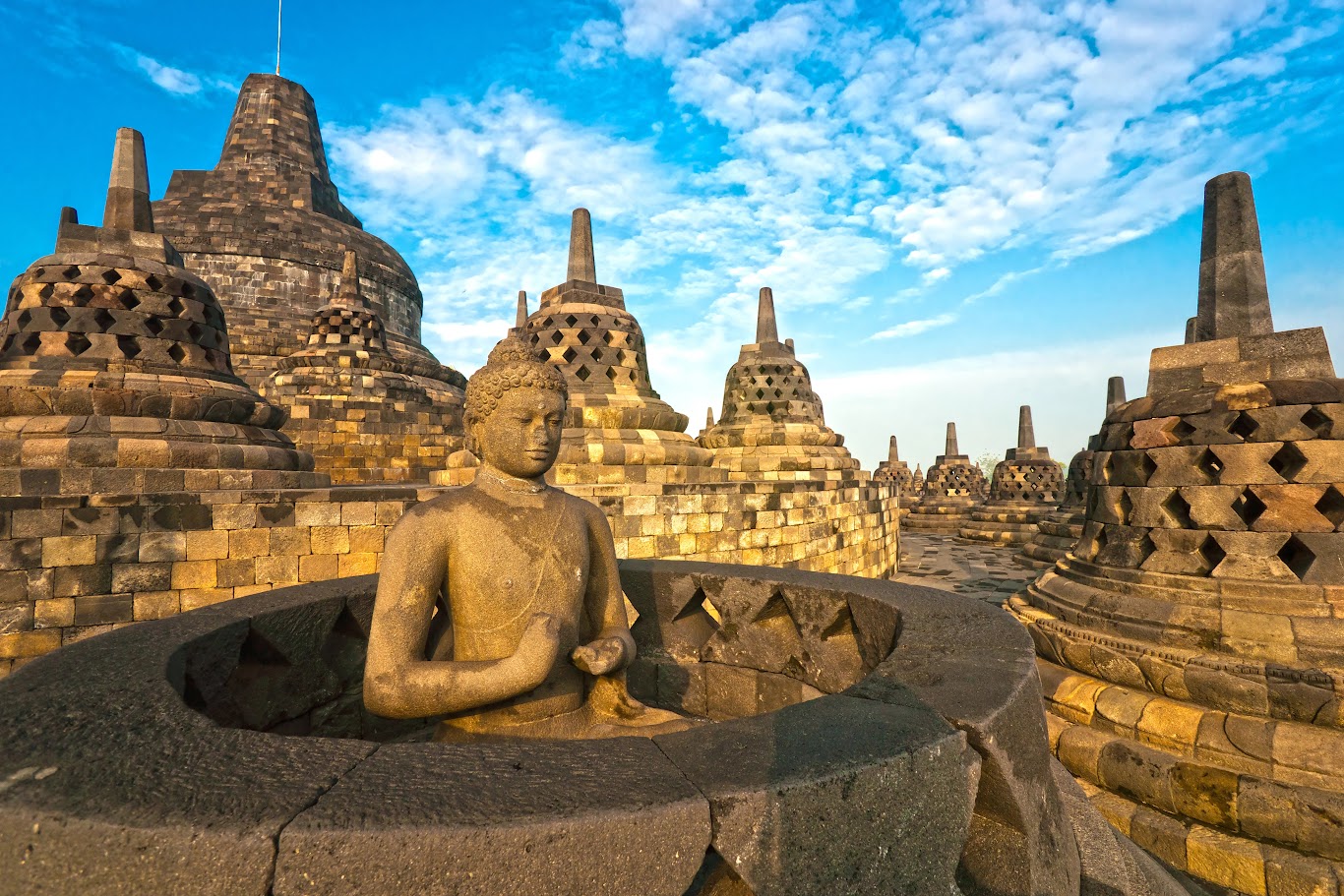
The architecture of Borobudur Temple is steeped in Buddhist philosophy.
4. Notable Activities at Borobudur Temple
When visiting Borobudur, tourists can not only admire its magnificent architecture but also participate in exciting activities such as:
- Festivals and Religious Events: Borobudur hosts many major religious festivals, especially during Vesak – the largest Buddhist celebration in Indonesia, usually held in May. Thousands of Buddhists gather here, releasing lanterns, chanting, and participating in ritual processions in a sacred, peaceful atmosphere.
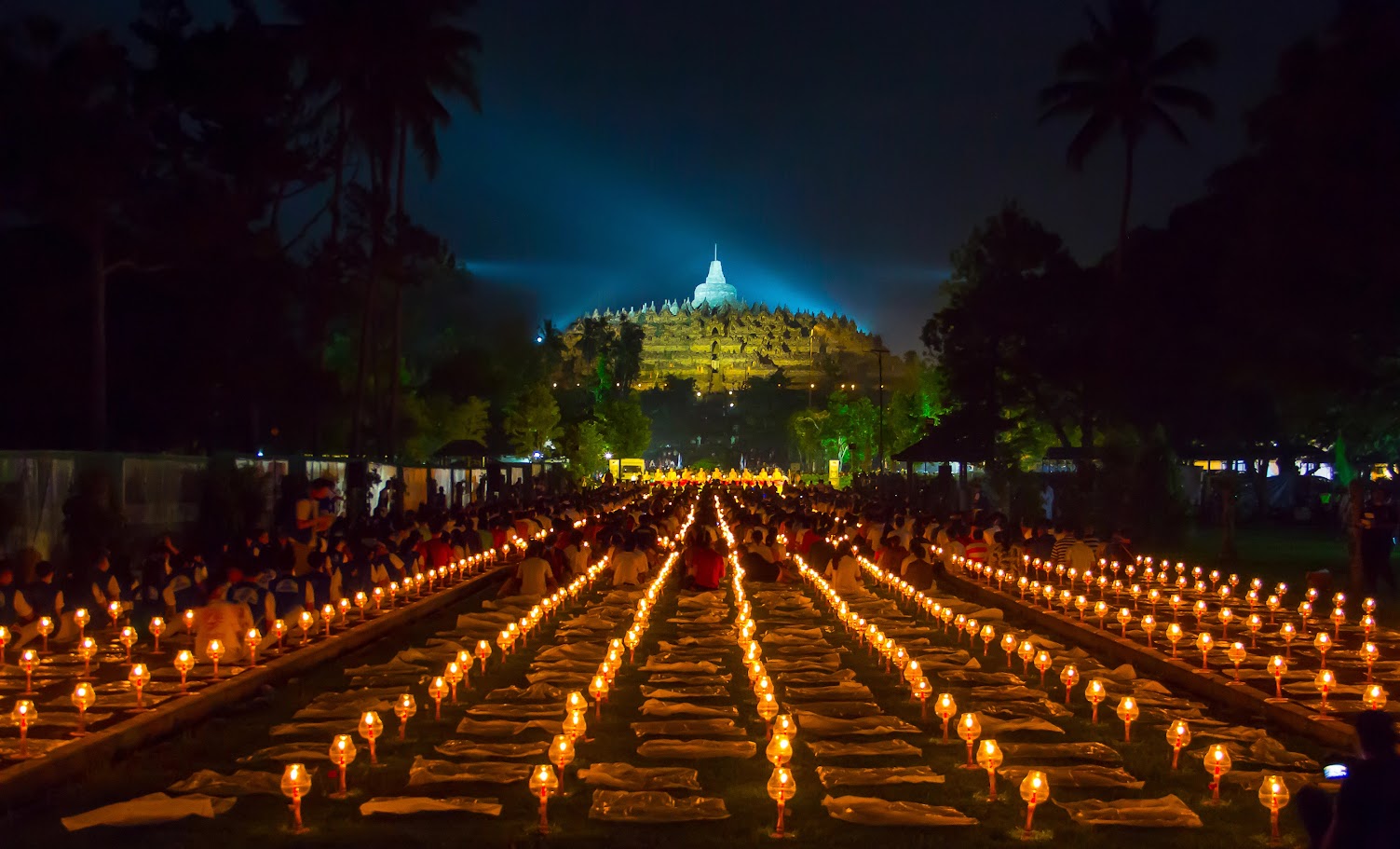
Thousands of candles are lit during the Vesak celebrations held at the temple.
- Sunrise and Sunset Tours: Visitors can join special tours to view the sunrise or sunset from the top of the temple. These moments allow you to experience the mystical and serene atmosphere of the temple as the light casts over the reliefs and Buddha statues.
- Explore the Surroundings: Close to Borobudur are small museums such as the Karmawibhangga and Borobudur Museum, where artifacts are displayed and the temple restoration process is showcased. Additionally, you can cycle through nearby villages, visit smaller temples like Mendut and Pawon, or join a workshop on traditional local crafts.
5. Tips When Visiting Borobudur Temple
To ensure a complete visit to Borobudur, visitors should keep in mind the following tips:
- Best Time to Visit: The dry season (April – October) is the best time, with pleasant weather and little rain. Avoid the rainy season (November – March) as the paths may be slippery, and visibility is limited.
- Dress Code: Borobudur is a sacred site, so visitors should dress modestly, covering their shoulders and knees. Some areas may require the rental of a sarong (traditional wrap) if your attire is inappropriate.
- Physical Fitness and Gear: Visiting Borobudur requires walking and climbing many steps, so wear comfortable shoes, a hat, and sunscreen. Bring water to stay hydrated in the hot weather.
- Respect the Heritage: Do not touch the reliefs or Buddha statues, climb the stupas, or litter. Follow the instructions provided by the site staff.
- Tickets and Costs: Ticket prices vary depending on the type of tour, such as regular tickets or sunrise/sunset tours. It’s recommended to buy tickets online or at official counters to avoid scams.
- Time Management: A full visit usually takes 3-4 hours, not including time for exploring the surrounding areas. If participating in a sunrise or sunset tour, adjust your schedule accordingly.
Borobudur Temple is not only a magnificent architectural feat but also a symbol of Buddhist philosophy and Javanese culture. With its long history, unique architecture, and profound spiritual significance, it is a must-visit destination for anyone interested in history, culture, and spiritual travel. To make your journey to explore this great Buddhist temple even easier and more affordable, don’t miss the flight tickets to Indonesia from Vietjet. The “0 VND Flight Tickets” promotion between 12 PM – 2 PM daily is waiting for you!
Follow Vietjet for the latest travel information and offers!
- Website: https://www.vietjetair.com
- Facebook: https://www.facebook.com/vietjetvietnam
- Instagram: https://instagram.com/vietjet
- YouTube: https://www.youtube.com/VietjetOfficial
- TikTok: https://www.tiktok.com/@vietjetvietnam
- Zalo: https://oa.zalo.me/vietjet