Booking
 Skyshop
 Hotel
Hotel
 E-Voucher
 E-Sim
E-Sim
 E-Visa
 Buy foreign currency
 Insurance
 SkyJoy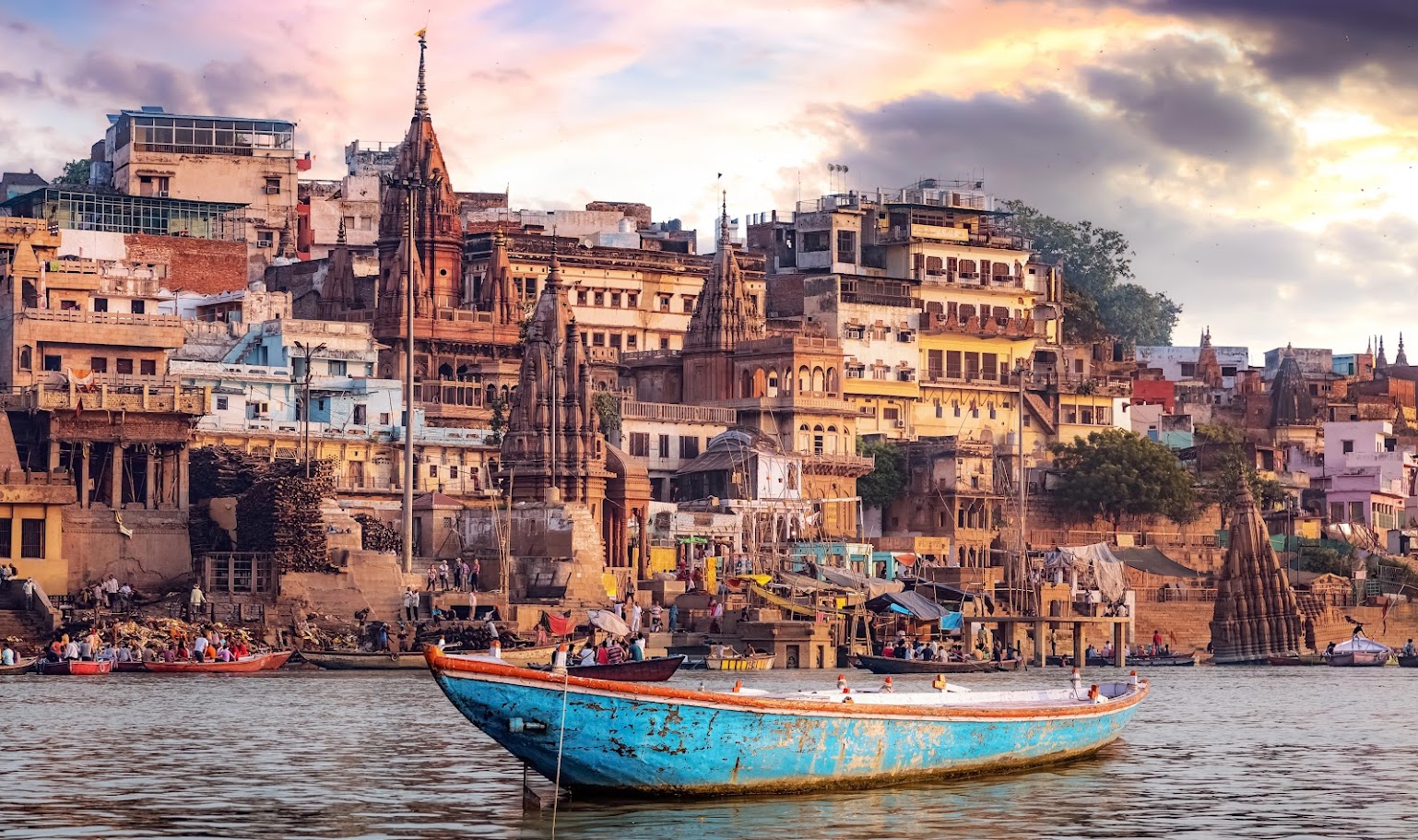
The Ganges River and the city of Varanasi are two sacred symbols of India, where profound religious, cultural, and historical values converge. For Hindu devotees, a pilgrimage here is not merely a trip but a journey to find spiritual purity and inner peace. Let’s explore the magical beauty and unmissable activities in this sacred land.
1. Introduction to the Ganges River and Varanasi
1.1 Where are the Ganges River and Varanasi located?
The Ganges River flows through northern India and is the longest river in the country, stretching over 2,500 km from the Himalayas to the Bay of Bengal. Known as the most sacred river in Hinduism, it attracts millions of visitors each year and serves as a center of religious, cultural, and historical activities in India.
The city of Varanasi lies on the banks of the Ganges in the state of Uttar Pradesh. Known as the "City of Light," it is one of India’s major religious centers.
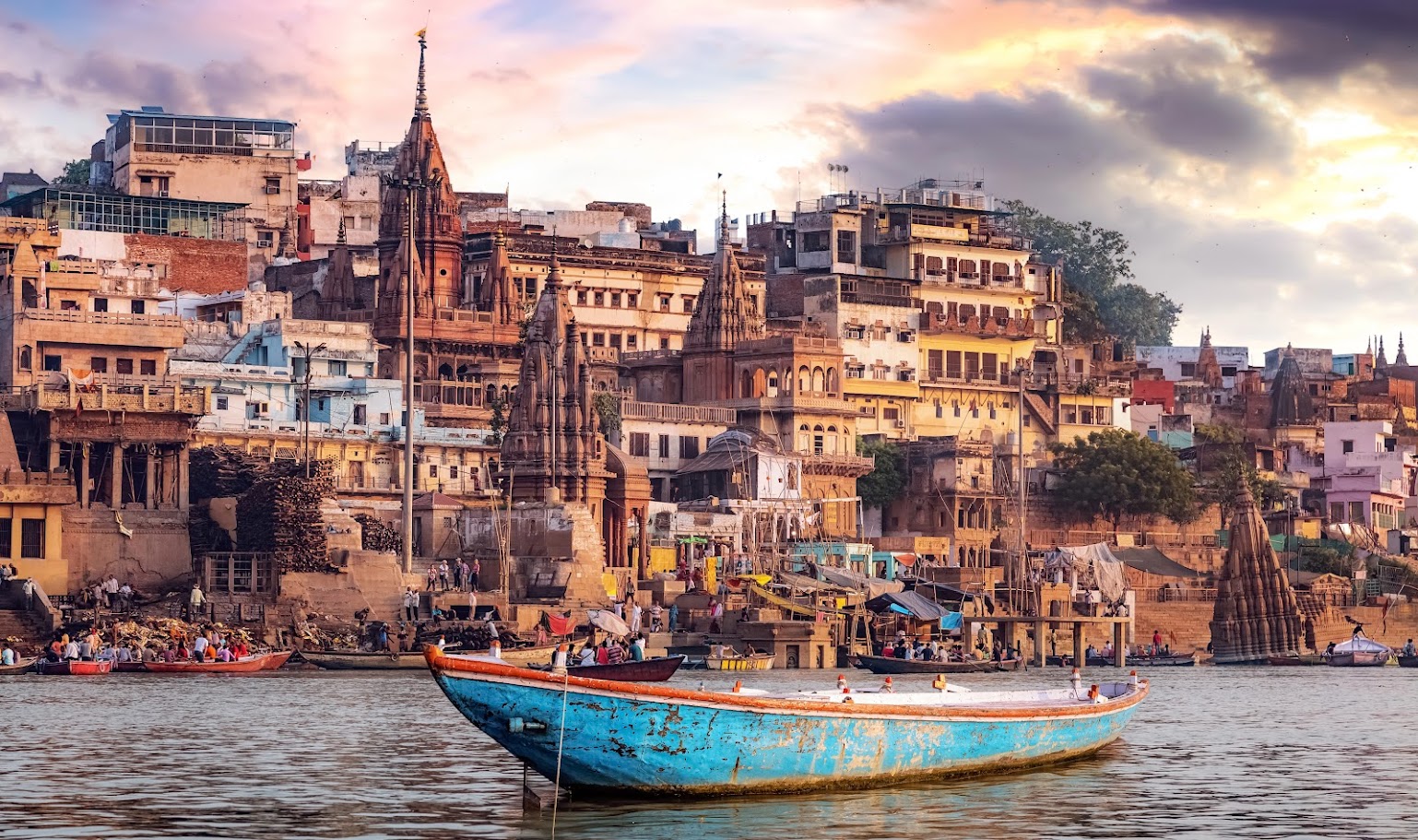
The ancient city of Varanasi rests peacefully along the sacred Ganges River.
1.2 Historical and Cultural Significance
The Ganges is named after the Hindu goddess Ganga, often referred to as Mother Ganga. With a basin covering 907,000 km², it is located in one of the most fertile and densely populated regions in the world. In India, the Ganges is more than a river—it symbolizes religion, culture, industry, agriculture, and politics. For Hindus, it is revered as “Ganga Ma” or Mother Ganga, the spiritual center for over a billion people. Every year, millions of Hindu devotees make pilgrimages to temples and holy sites along its sacred waters.
Varanasi is one of the world’s oldest cities, with a history of over 3,000 years. It is a center of Hindu culture and religion, where devotees seek moksha (liberation) from the cycle of rebirth. The city is a crossroads of art, philosophy, and religion, with ancient temples, sacred rituals, and long-standing traditions.
1.3 Why go on a pilgrimage to the Ganges and Varanasi?
A pilgrimage to the Ganges River and Varanasi offers a unique opportunity to purify the soul through deeply spiritual rituals. It is also a chance to experience Hindu culture first-hand—from daily life and religious practices to sacred ceremonies. Visitors can witness spectacular festivals such as Ganga Aarti, the evening prayer ceremony on the riverbanks illuminated with lamps, or Kumbh Mela, one of Hinduism’s largest and most sacred gatherings.
2. Activities During the Pilgrimage to the Ganges River and Varanasi
2.1 Performing the Ganga Bathing Ritual (Snan)
Pilgrims can choose famous ghats such as Dasaswamedh Ghat or Assi Ghat to participate in the ritual bathing in the sacred Ganges River or simply observe this fascinating spiritual practice.
The ritual can be performed at any time of day, but it is typically done at sunrise, believed to be the most sacred and pure moment, allowing devotees to feel a deep connection with nature and spirituality.
During major festivals like Kumbh Mela or Ganga Dussehra, millions gather to take the holy bath. These occasions are considered especially auspicious, and bathing in the Ganges during these times is believed to cleanse sins and bring both physical and spiritual purity.
Key activities of the ritual include:
- Immersing oneself in the Ganges to wash away sins.
- Offering prayers and ceremonial offerings.
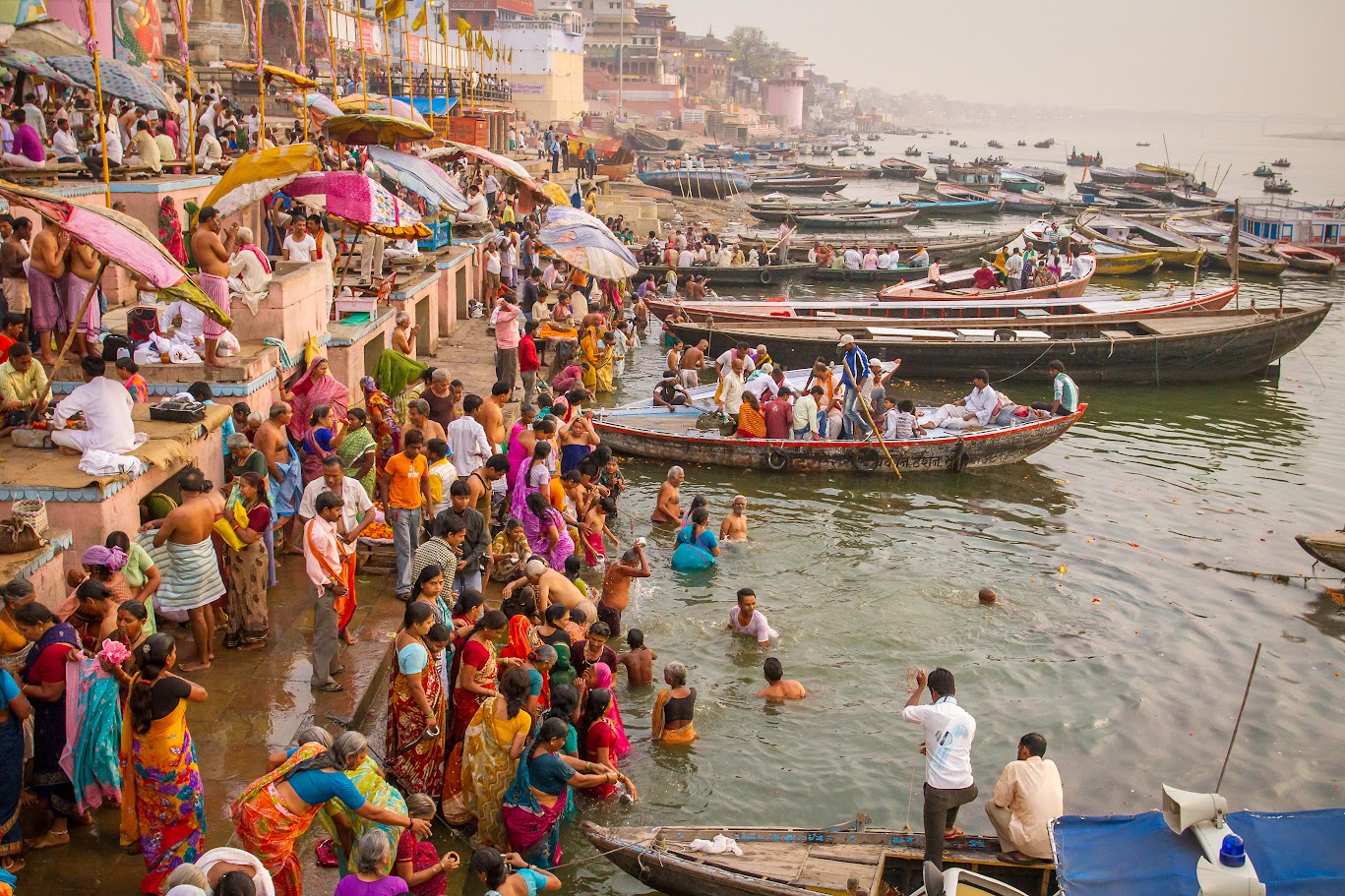
The ritual bathing in the Ganges attracts thousands of participants along the riverbanks.
Bathing in the Ganges is seen as an act of spiritual purification, helping individuals attain liberation and connect with the divine.
2.2 Attend the Ganga Aarti Ceremony (Ganges Prayer Ritual)
To attend the Ganga Aarti, visitors should head to Dasaswamedh Ghat, the most famous riverbank in Varanasi.
The Ganga Aarti usually takes place in the evening, right after sunset. The exact timing may vary by season, typically starting around 6:30–7:00 PM in summer months and 5:30–6:00 PM in winter.
This is a sacred and serene moment when the flickering lights of oil lamps merge with chanting and the sound of bells, creating a mystical and spiritual atmosphere along the Ganges River.
During the ceremony, key activities include:
- Priests performing rituals with fire lamps and flowers, accompanied by traditional music.
- Devotees releasing lamps and flowers into the Ganges River as offerings and prayers.
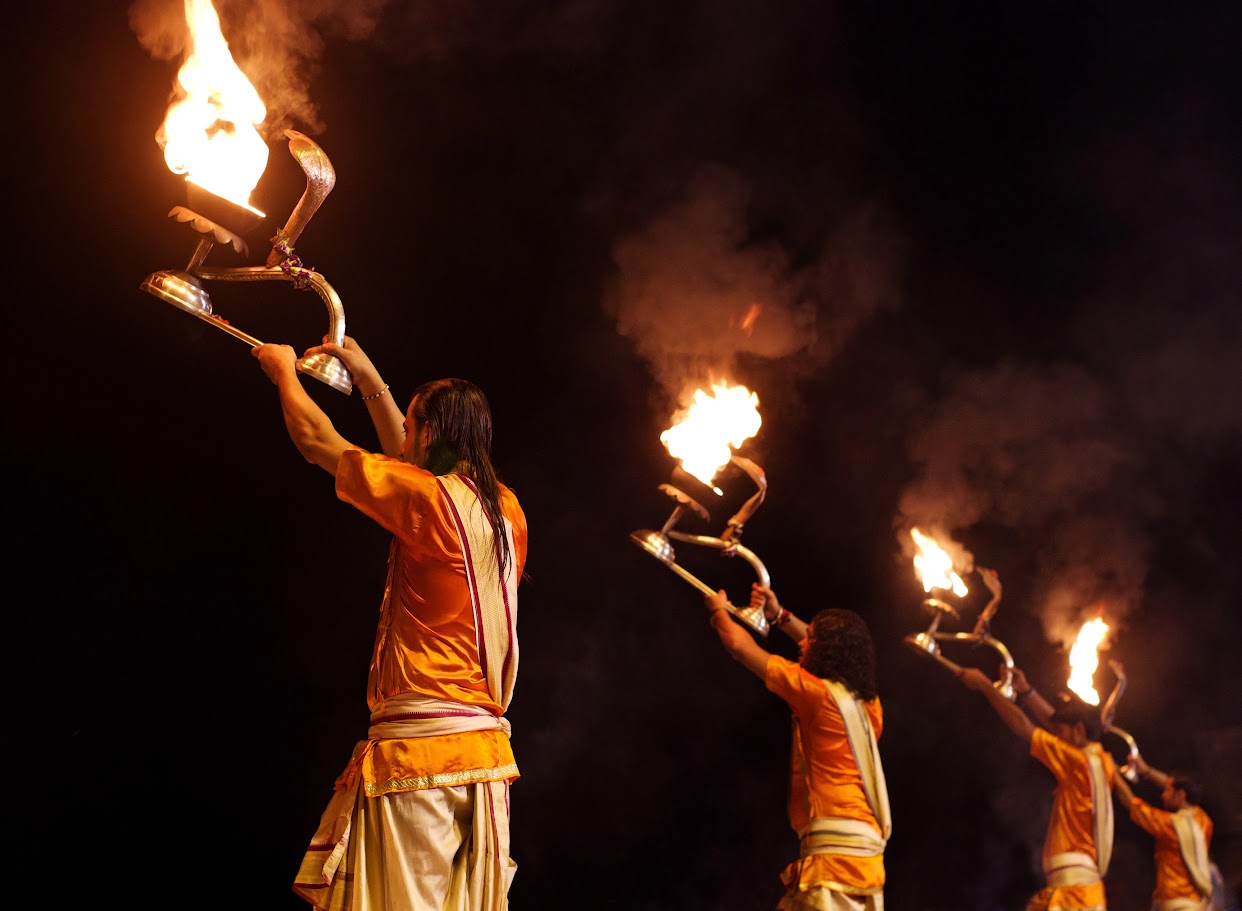
The Ganga Aarti ceremony is conducted with grandeur, as priests present fire offerings, creating a truly special atmosphere.
The Ganga Aarti expresses gratitude and reverence for the Ganges River—a symbol of life and sanctity.
2.3 Pilgrimage to the Sacred Ghats
Along the Ganges River, there are many famous ghats, specifically chosen for spiritual practices. Knowing these sites enhances the pilgrimage experience to the Ganges and Varanasi.
Recommended ghats:
- Dasaswamedh Ghat: The site of the most sacred rituals.
- Manikarnika Ghat: A sacred cremation ghat, believed to help souls achieve liberation.
At these ghats, visitors can:
- Witness traditional prayer and cremation rituals.
- Learn about Hindu beliefs on reincarnation and liberation.
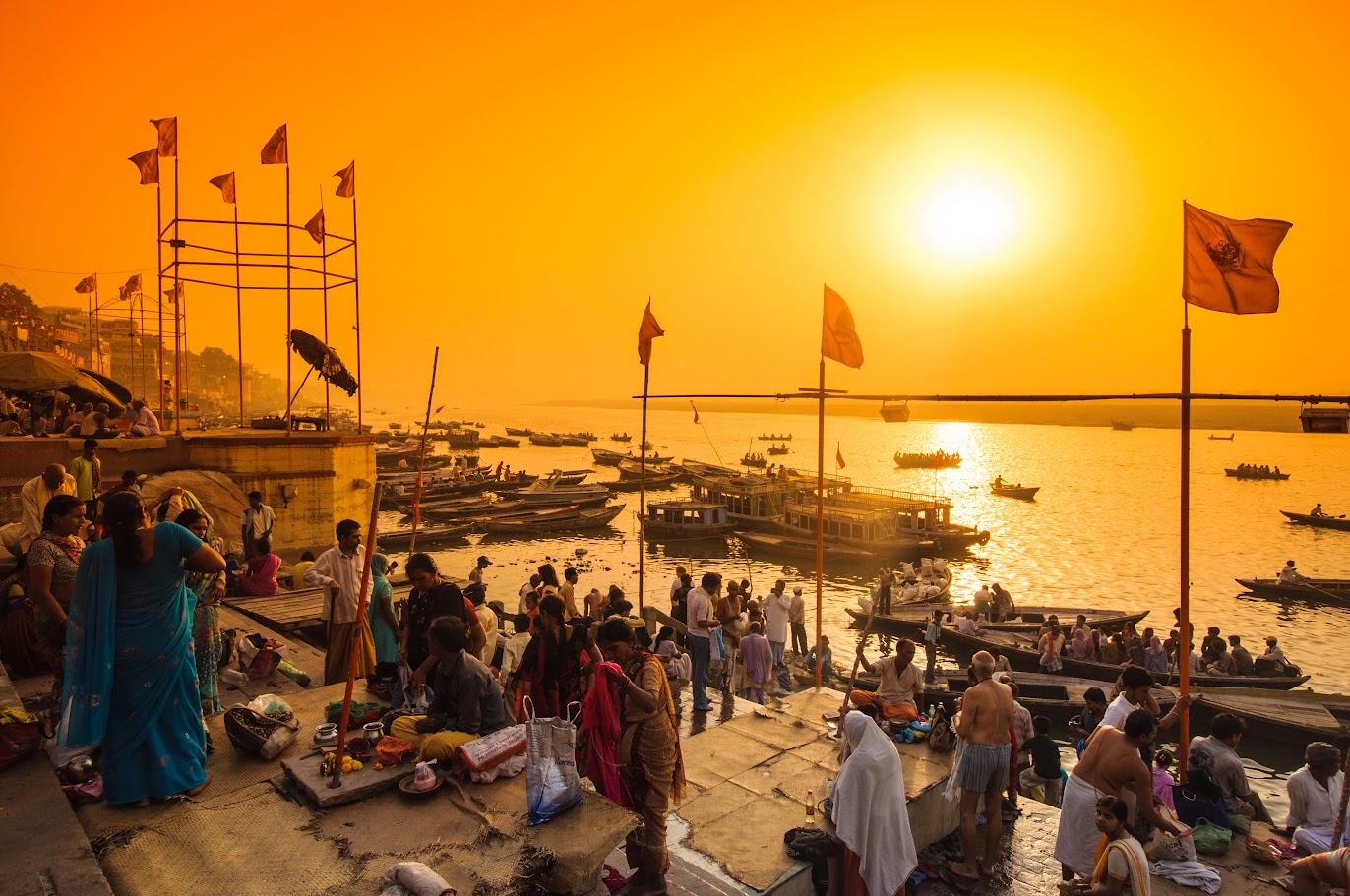
Locals and pilgrims gather at the ghats.
The ghats are the heart of spiritual life in Varanasi, embodying profound religious values.
2.4 Ancestral Offerings and Rituals (Pind Daan)
Varanasi is one of the most important places to perform Pind Daan, the ritual of ancestral offerings. This ceremony is usually held during Pitru Paksha (the 15-day period for remembering ancestors, typically in September or October) or on Amavasya (the new moon day).
During the ritual, participants:
- Offer rice, sesame seeds, and water.
- Pray for the peace and liberation of their ancestors’ souls.
The Pind Daan helps devotees fulfill their duties toward ancestors and brings blessings to the family.
3. Tips for Pilgrimage to the Ganges and Varanasi
3.1 Traveling to the Ganges and Varanasi with Vietjet
Vietnamese travelers can take a direct Vietjet flight to New Delhi, the capital of India, and then continue with a connecting flight to Varanasi quickly and conveniently.
Book today to enjoy limited-time offers starting from 668,000 Dong. Don’t miss the exclusive 0 VND flight tickets available daily from 12:00–14:00 at vietjetair.com.

Experience a memorable Ganges pilgrimage with Vietjet at unbeatable prices!
3.2 Best Time to Go on Pilgrimage
October to March is the ideal period, with cooler weather suitable for outdoor activities, especially for a pilgrimage to the Ganges River and Varanasi.
Attending the Ganga Aarti or the Kumbh Mela festival during special times of day is also an unmissable experience.
3.3 Preparing for the Pilgrimage
To fully experience the spiritual and cultural essence of the Ganges River and Varanasi, ensure you bring:
- Clothing: Modest, comfortable attire suitable for local culture.
- Personal items: Sunscreen, hats, and walking shoes.
- Cash: Small denomination cash for shopping and ritual offerings.
3.4 Important Notes
- Respect the culture: Follow the rules and rituals at sacred sites.
- Timing: Plan accordingly, avoiding peak heat or rainy seasons.
- Health: Drink bottled water and maintain personal hygiene to prevent health issues.
A pilgrimage to the Ganges and Varanasi is not only a spiritual journey but also an opportunity to explore India’s culture and history. From river bathing rituals to the Ganga Aarti and sacred ghats, each activity offers a meaningful and profound experience. Plan your journey with Vietjet for a complete and memorable pilgrimage!
Discover more travel deals and useful information at:
- Facebook: https://www.facebook.com/vietjetvietnam
- Instagram: https://instagram.com/vietjet
- YouTube: https://www.youtube.com/VietjetOfficial
- TikTok: https://www.tiktok.com/@vietjetvietnam
- Zalo: https://oa.zalo.me/vietjet