Booking
 Skyshop
 Hotel
Hotel
 E-Voucher
 E-Sim
E-Sim
 E-Visa
 Buy foreign currency
 Insurance
 SkyJoy
If you are looking for a destination that carries the mark of time, with ancient architecture and fascinating historical stories, Pho Minh Tower or Pho Minh Pagoda Tower is one of the ideal suggestions. This is one of the towers from the Tran Dynasty that still exists today, once a famous spiritual site of ancient Vietnam associated with historical figures of the Tran era.
In this article, let’s explore the detailed information about Pho Minh Tower with Vietjet and admire the beauty of this centuries-old pagoda tower from the Tran Dynasty!
1. Pho Minh Tower – Where is it located?
Pho Minh Tower is a tower located within the grounds of Pho Minh Pagoda (also known as Chua Thap or Pho Minh Pagoda Tower), on the west side of the Tran Temple. The Pho Minh Pagoda Tower complex is situated in Tuc Mac village, Loc Vuong ward.
Address: Tuc Mac village, Loc Vuong ward, Nam Dinh city, Nam Dinh province.
2. How to get to Pho Minh Tower
Pho Minh Tower is about 90 km from Hanoi. For visitors in the Northern region, you have various transportation options such as motorbike, passenger bus, or taxi. For visitors from farther provinces such as those in Central or Southern Vietnam, the best option is to travel to Hanoi first, then take a bus to Nam Dinh.

Besides its poetic natural scenery, Nam Dinh also attracts visitors with the Pho Minh Pagoda Tower complex rich in historical significance.
2.1 Traveling to Hanoi
For visitors far from Nam Dinh, such as those in Central or Southern Vietnam, you can travel to Hanoi and then continue by bus to Nam Dinh to reach Pho Minh Pagoda Tower.
There are many options for traveling to Hanoi. Depending on your time and budget, you can choose the option that suits you best.
- Passenger bus: There are currently many high-quality bus companies connecting Hanoi with provinces nationwide, from Ho Chi Minh City, Hue, Da Nang, Vinh, etc. Most bus companies offer modern amenities such as sleeper beds, Wi-Fi, TV,… The advantage of this option is the affordable price, starting from 400,000 Dong to around 1,000,000 Dong. However, the travel time is quite long, with HCMC – Hanoi routes often lasting up to 35 hours.
- Train: This is a safer and more comfortable option. Trains also give you various choices regarding departure points, seat types, and different price ranges. Especially, passengers can enjoy the scenery along the way. Depending on the ticket class and route, train fares may range from about 600,000 Dong to 1,600,000 Dong. Travel time is shorter compared to buses but still considerable, averaging around 33 hours from Ho Chi Minh City to Hanoi.
- Airplane: Flying to Hanoi is the most convenient and fastest option. Flights take only about 2 hours, helping visitors save maximum travel time.
See also: Hanoi Travel Guide: Attractions, cuisine, cheap flight tickets
2.1 Traveling to Pho Minh Tower
Pho Minh Tower is located only about 5 km from Nam Dinh city center. Therefore, to reach this centuries-old historical site, visitors can travel to Nam Dinh city center, then take a taxi or motorbike taxi to Pho Minh Tower.
- From Hanoi: You can take a passenger bus or drive a private car to Nam Dinh. From Nam Dinh city center, you can take a taxi or motorbike taxi to Pho Minh Pagoda. You can go to My Dinh, Gia Lam, or Giap Bat bus stations to catch a bus to Nam Dinh. There are many bus companies such as Phuc Loc Tho Limousine, Tien Long, X.E Vietnam,… with prices ranging from 135,000 Dong to 345,000 Dong.
- From other Northern provinces: You can take a passenger bus to Nam Dinh bus station, then take a taxi or motorbike taxi to the Pagoda Tower.
Additionally, visitors can choose to travel by personal vehicles such as motorbikes or cars to go directly to the Pagoda Tower. This option gives you more flexibility in your schedule, but may cause some inconvenience as you need to navigate on your own and may feel tired.
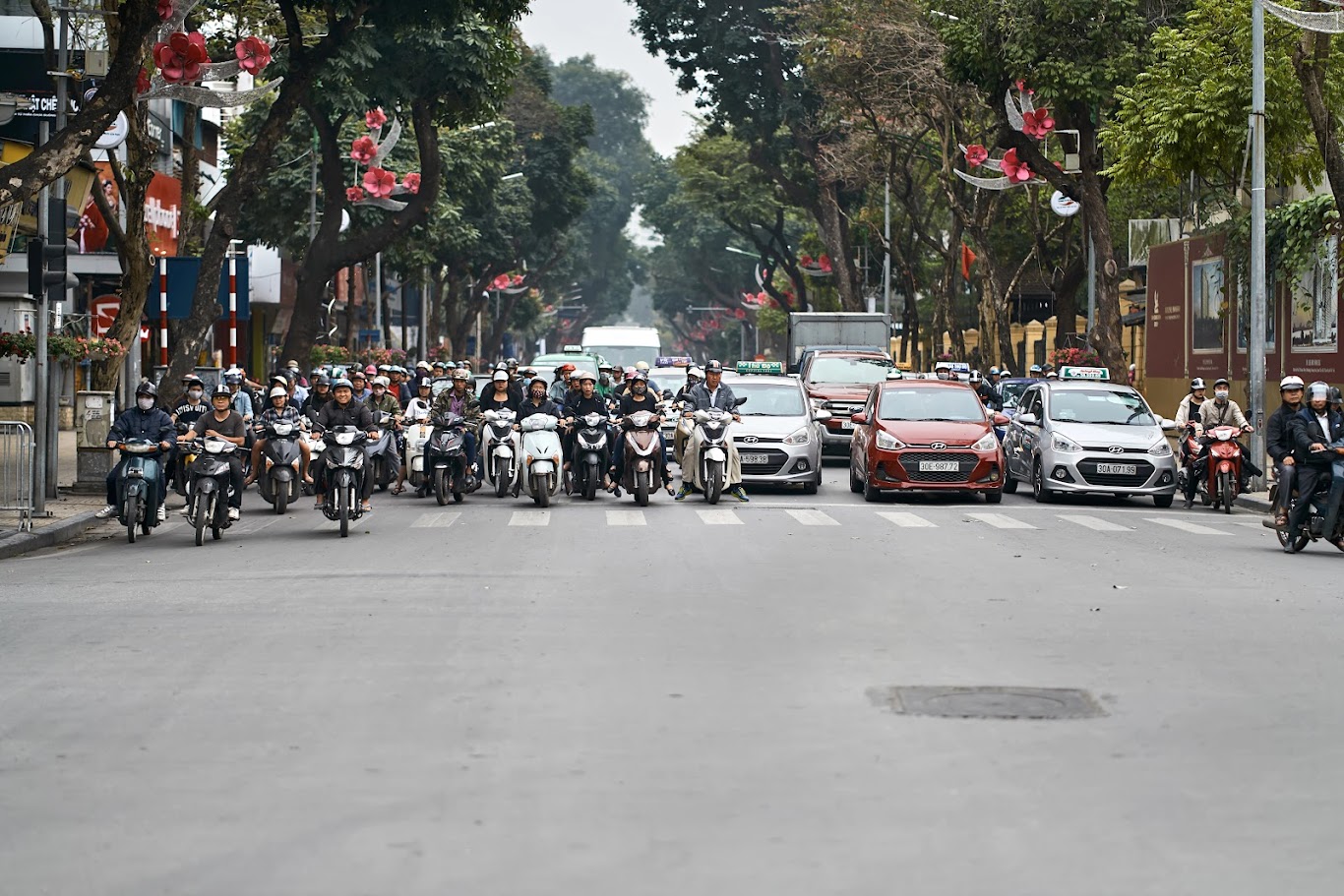
From Hanoi, you have many options to reach Pho Minh Tower, Nam Dinh.
3. Exploring the history of Pho Minh Pagoda Tower
According to historical records, Pho Minh Pagoda was built during the Ly Dynasty and expanded in 1262. It is said that in 1308, Monk Tran Nhan Tong passed away at Ngoa Van hermitage. Shortly after, King Tran Anh Tong brought 7 out of 21 relic beads of his father, placing them inside a palanquin and building a tower above it. From then on, the Pagoda Tower complex was officially established.From 1533 to 1592, the pagoda continued to be restored and expanded under Princess Mac Ngoc Lam. After that, Pho Minh Pagoda Tower underwent several more renovations. However, the pagoda still retains its grand appearance, scale, and architectural integrity both inside and outside. Sadly, in the early 20th century, Pho Minh Tower was renovated and covered with a “new coat” of cement, causing its original brick carvings to be lost.
Even so, up to now, Pho Minh Tower remains one of the three towers from the Tran Dynasty that still preserve their original structure, alongside Hue Quang Tower (Yen Tu, Quang Ninh) and Binh Son Tower (Lap Thach, Vinh Phuc). In 2012, Pho Minh Pagoda was recognized by the Prime Minister as a Special National Relic.
4. The architectural beauty of Pho Minh Tower
The architectural components include: the Three-Entrance Gate, the Front Hall, the Incense Burning Hall, the Upper Hall, Pho Minh Tower, the corridor, the Patriarch House, the Mother Goddess Hall,…
4.1 Architecture of Pho Minh Tower
Pho Minh Tower is built along the North–South axis, located on a small square courtyard measuring 8.6m x 8.6m. The courtyard surface is 0.45m lower than the ground level. The architecture of Pho Minh Tower consists of 14 stories with a total height of 19.5m. According to scientific calculations, the tower may weigh up to 700 tons.
The lowest level, also known as the palanquin base of the Tower, is entirely made of blue stone, with each side measuring 5.2m. At the foot of the tower is a band of lotus petals, symbolizing a lotus pedestal lifting the palanquin. The lower part of the stone base curves on both sides, creating a visual effect that resembles subsidence, but in fact, this intentional design helps form the curvature for the 10 higher levels that follow. From afar, Pho Minh Tower looks like a lotus blossom rising majestically into the sky.
The remaining levels are made of red bricks, with four doors facing East – West – South – North. As the structure rises, the height and width of each level gradually become smaller. In the past, the tower levels displayed wooden decorative motifs of dragons and floral patterns. At the very top of the tower is a terracotta structure shaped like an unopened lotus bud. Notably, each brick on the Tower once bore the inscription “Hung-Long thap tam nien” (the 13th year of Hung Long – 1305) and the embossed dragon motifs of the Tran Dynasty. However, in the early 20th century, during restoration, a layer of cement was applied to the surface of the tower, so visitors today can no longer admire these intricate carvings.
4.2 Architecture of Pho Minh Pagoda
Alongside the majestic Pho Minh Tower, visitors also have the chance to admire the ancient beauty of Pho Minh Pagoda. With its unique “gong-shaped” layout, the pagoda includes 9 bays of the Front Hall, 3 bays of the Incense Burning Hall, and a spacious Upper Hall. The highlight is the exquisitely carved ironwood doors in the center bay of the Front Hall. The two central panels depict a pair of large dragons solemnly worshipping the Sun inside a bodhi leaf circle—an artistic masterpiece of perfect craftsmanship. Together with the stone crocodile sculptures at the three-entrance steps and the pair of dragons at the central stairway of the Front Hall, these ironwood doors are vivid evidence of the exceptional skill of Tran-era artisans. Today, for preservation and exhibition purposes, the two central door panels have been transferred to Nam Dinh Museum, while the other two are kept at the Vietnam National Museum of History in Hanoi.
The Main Hall of Pho Minh Pagoda is where the Buddhas and Bodhisattvas are worshipped. Notably, the Truc Lam Tam To statue set placed in the rear hall is an invaluable national treasure. These statues are made of wood and gilded with gold; after more than 300 years, they still retain their pristine beauty. The set includes three statues: Tran Nhan Tong entering nirvana, Zen Master Phap Loa, and Zen Master Huyen Quang, representing the three patriarchs of the Truc Lam Yen Tu Zen sect. With their unique historical and artistic value, the statue set was recognized as a national treasure on January 30, 2023, becoming a source of pride for the people of Nam Dinh.
4.3 Surrounding scenery of the Tower
Alongside the architectural features imbued with the marks of time and preserving the spirit of the heroic Đông A era, visitors to the Pagoda Tower can also admire the peaceful surroundings. Around Pho Minh Pagoda Tower are many trees, creating a cool and serene atmosphere. Among them are heritage mango trees over 300 years old, providing shade and a tranquil space that soothes the soul. The pathways inside the pagoda grounds are paved with red bricks, shaded by tall areca palms, creating an atmosphere of solemnity.
Following the small red-brick path between two rows of soaring areca palms and two large ponds, I slowly walk deeper into the pagoda courtyard.
See also: Spring Travel in the Northern Region – Pagoda Visits During Tet
5. Travel tips for visiting Pho Minh Tower
- Best time to visit: When traveling to Pho Minh Pagoda Tower, you may choose to visit during festival season in Nam Dinh to explore additional meaningful cultural activities. Some notable festivals include: Festival of Opening the Tran Temple Seal on the 14th and 15th of the first lunar month at the Tran Temple relic site
- Phu Day Festival on the 3rd of the third lunar month
- Co Trach Temple Festival, held over 5 days from the 15th to the 20th of the eighth lunar month
- Co Le Pagoda Festival from the 13th to the 16th of the ninth lunar month,…
Dress code: When visiting the Pagoda Tower, dress modestly and respectfully. Avoid wearing revealing or inappropriate clothing.
Respect religious practices: Do not engage in activities that violate pagoda regulations, and avoid making loud noises that disturb others. Absolutely do not climb on the tower, Buddha statues, or trees within the pagoda grounds.
Book your train or flight tickets early: For visitors coming from afar, you should book your train tickets or flight tickets to Hanoi early to secure good prices and maintain control over your travel schedule. If you book too close to the departure date, you will have fewer choices for seats and travel times, and prices will also be higher.
If you are still unsure where to buy flight tickets to Hanoi, you can refer to ticket purchases at Vietjet. Direct flights to Hanoi are operated frequently each day from many departure points such as Ho Chi Minh City, Can Tho, Phu Quoc, Hue,… Flights last only around 2 hours, helping visitors save maximum travel time when heading to Pho Minh Pagoda Tower.
Especially, if you want to save money, you can “hunt” 0 Dong flight tickets to Hanoi from Vietjet. The “flash sale” promotion offering 0 Dong flight tickets to Hanoi applies daily from 12 PM – 2 PM. See details HERE.

“Hunting” flight tickets to Hanoi at 0 Dong from Vietjet will help visitors minimize costs for their journey to explore Pho Minh Tower.
Hopefully, the information above will help you prepare for your journey to explore Pho Minh Tower more completely and easily. Don’t forget to buy flight tickets to Hanoi at Vietjet to save on your trip. Follow Vietjet to stay updated on flight schedules, flight tickets to Hanoi, and useful travel tips.
- Facebook: https://www.facebook.com/vietjetvietnam
- Instagram: https://instagram.com/vietjet
- YouTube: https://www.youtube.com/VietjetOfficial
- TikTok: https://www.tiktok.com/@vietjetvietnam
- Zalo: https://oa.zalo.me/vietjet