Booking
 Skyshop
 Hotel
Hotel
 E-Voucher
 E-Sim
E-Sim
 E-Visa
 Buy foreign currency
 Insurance
 SkyJoy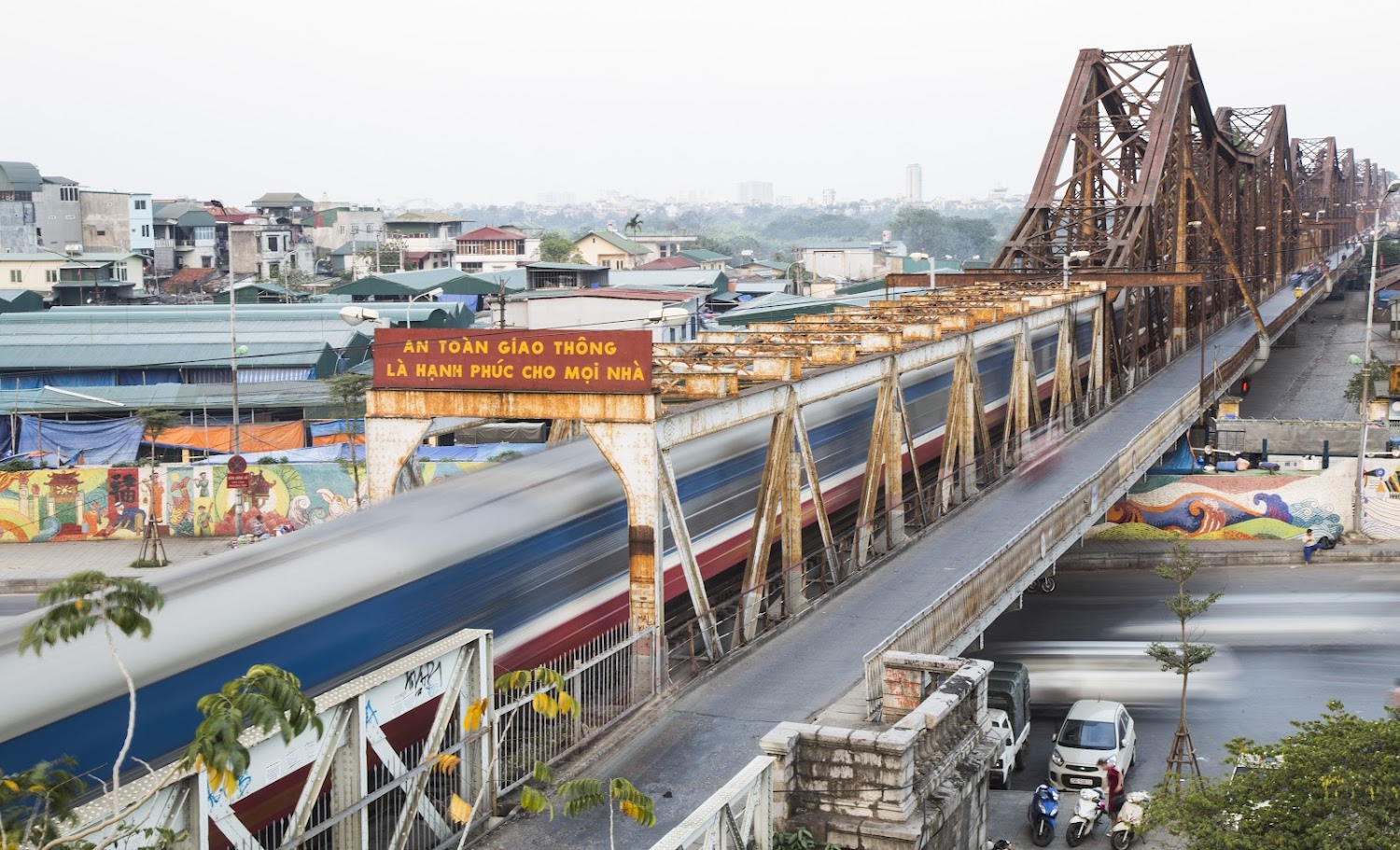
More than just a bridge connecting the two banks of the Red River, Long Bien is a silent witness to the ups and downs of history, a symbol of memory and the resilience of Hanoians. Though weathered by time with rusting steel spans, the bridge still stands tall in the middle of the city—an irreplaceable image in the hearts of Hanoi's people.
In this article, let's explore Long Bien Bridge—from its location and historical background to the unforgettable experiences awaiting visitors at this iconic structure by the Red River.
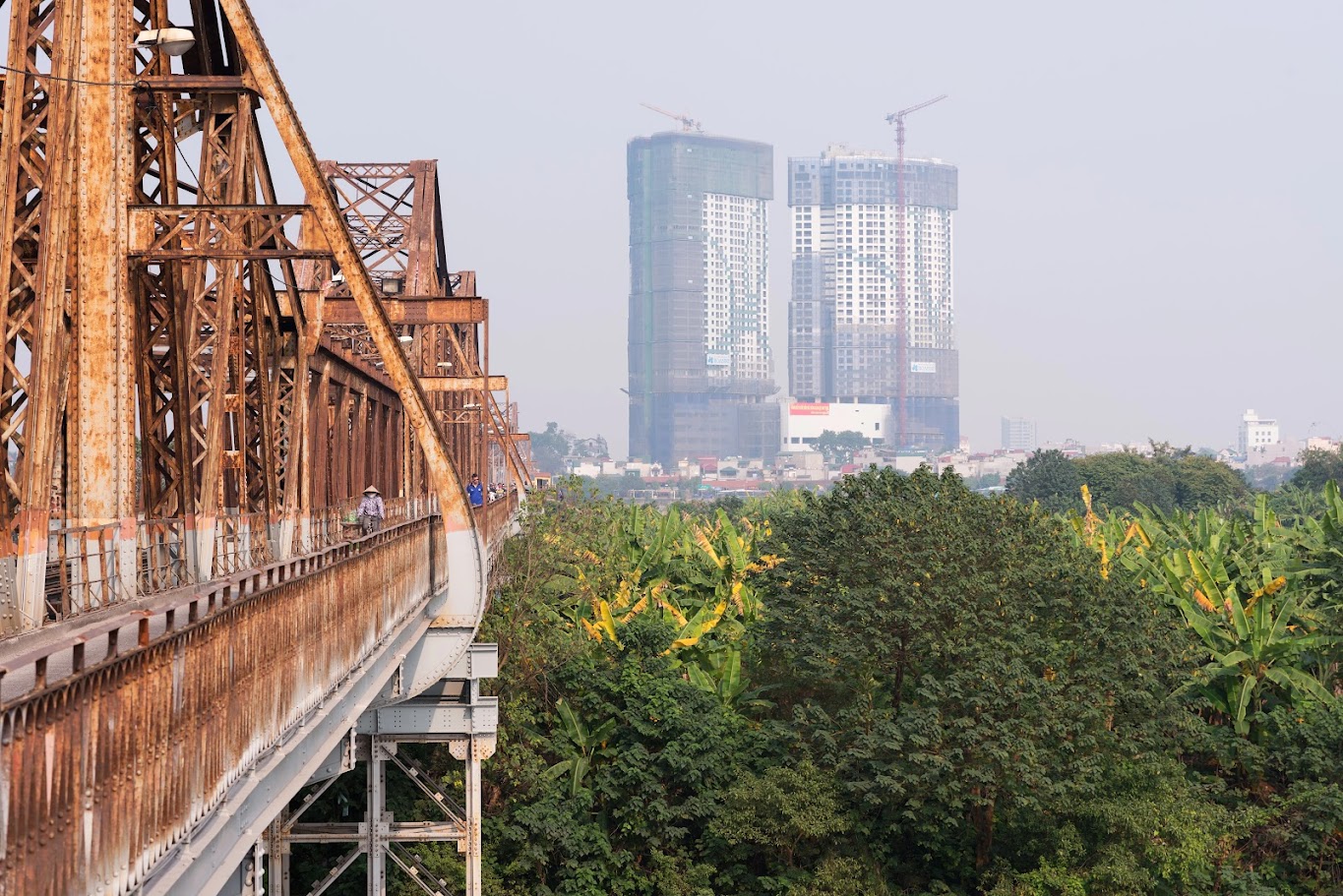
Long Bien Bridge – a historical witness deeply intertwined with Hanoi’s turbulent past.
1. Where is Long Bien Bridge? How to get there.
Long Bien Bridge spans the Red River, connecting Hoan Kiem and Long Bien districts, just 2–3 kilometers east of Hoan Kiem Lake. With its prime location in central Hanoi, the bridge is not only an important transport route but also a popular stop for travelers interested in history and old architecture.
Exact location: On the Hoan Kiem side, the bridge starts at Tran Nhat Duat Street, near Dong Xuan Market. On the Long Bien side, it begins at Long Bien 1 Street, close to Long Bien Station.
How to get to Long Bien Bridge:
- On foot or by bicycle: From the Old Quarter, you can walk or rent a bicycle to reach Long Bien Bridge. From Dong Xuan Market, simply go straight along Hang Khoai Street, then turn left onto Tran Nhat Duat and you’ll arrive at the foot of the bridge. This is an ideal option if you want to stroll while taking in the old Hanoi atmosphere.
- By motorbike or car: Long Bien Bridge has separate lanes for motorbikes and bicycles, but does not allow private cars. If you're driving, it's best to park near the Old Quarter or Long Bien Station and walk onto the bridge.
- By bus: Several public bus routes stop near Long Bien Bridge, including numbers 01, 14, 22, 34… You can check Google Maps to find the best route from your current location.
2. The history of Long Bien Bridge – A legacy over a century old
Long Bien Bridge is not only the first steel bridge built across the Red River but also one of the few surviving structures from the French colonial era, carrying deep architectural and historical imprints of Hanoi for over 120 years.
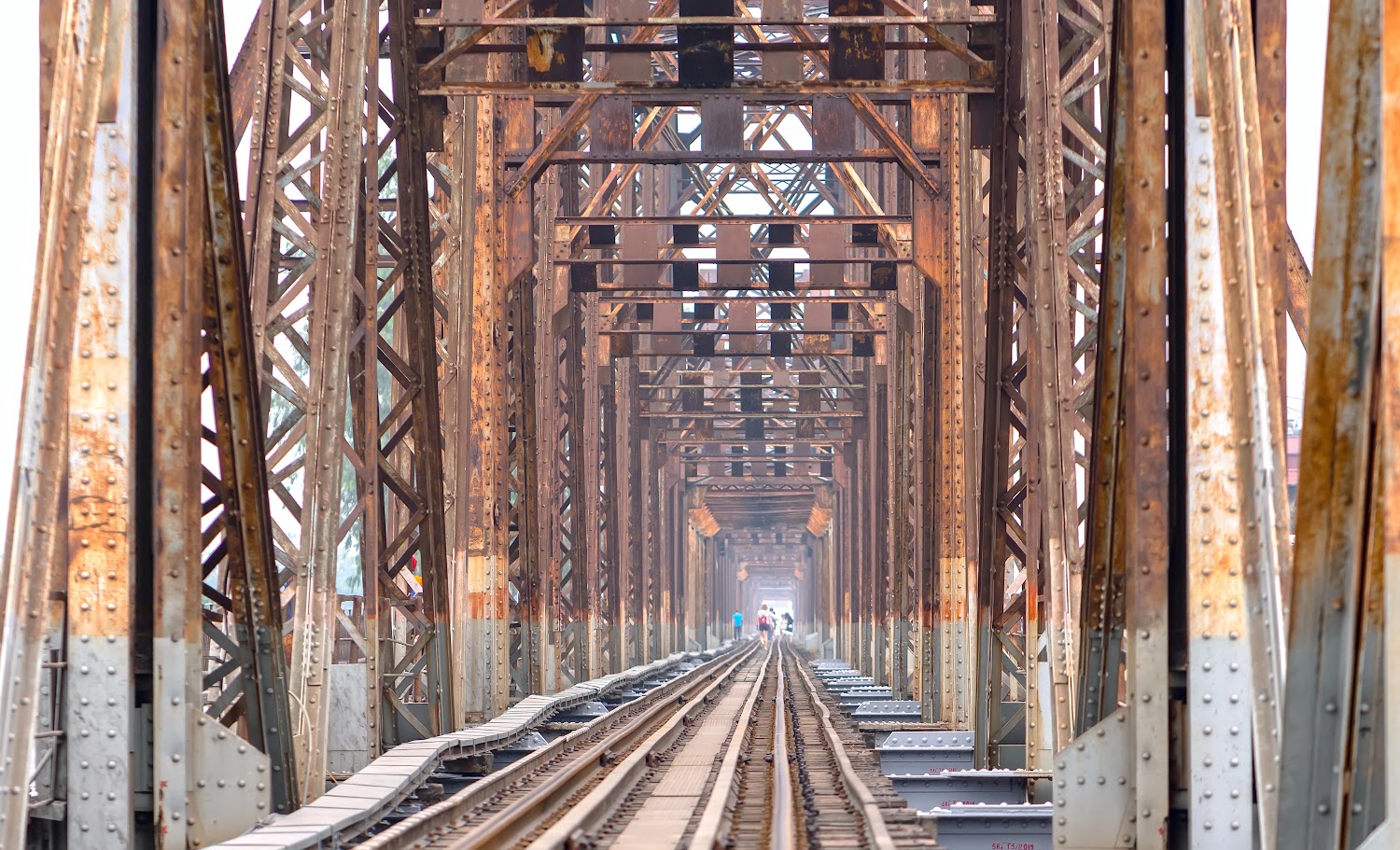
The old, nostalgic spans connect past and present.
- Construction period: Long Bien Bridge was commissioned by the French in 1899 and completed in 1902, designed by the Daydé & Pillé company. At the time of its inauguration, it was one of the largest steel bridges in Southeast Asia and was dubbed “the first steel bridge connecting both banks of the Red River.” When it was first built, Long Bien Bridge was a strategic project for the French to connect the Hanoi – Haiphong railway for colonial exploitation. The bridge has a total length of nearly 2,300 meters, including 19 main steel spans and access paths. It was designed in an arched style with large rivets, reflecting late 19th-century European engineering.
- War period: Through two major wars, Long Bien Bridge was heavily bombed and damaged, especially during the resistance against the Americans. Despite the destruction, Hanoi's people and authorities persistently restored the bridge span by span, turning it into a symbol of resilience and determination of the Vietnamese people.
- Today: Long Bien Bridge still serves the North–South railway line (with a single track in the middle), and also features lanes for motorbikes, bicycles, and pedestrians. Though it no longer functions as a major traffic route, it remains an irreplaceable cultural and historical icon, drawing locals, photographers, and visitors who seek to reconnect with the soul of old Hanoi.
3. Suggested Activities to Explore Long Bien Bridge
3.1 Walk or Cycle Across the Bridge
Long Bien Bridge is open only to motorbikes, bicycles, and pedestrians, making it a relaxing place to enjoy the views of the Red River, the lush green riverbanks below, and the quiet flow of life alongside the time-worn structure.
Early mornings or late afternoons are the ideal times to experience the serene atmosphere here, when the sun gently paints the ancient steel beams with warm golden light.
3.2 Photography and Check-ins
Long Bien Bridge is a paradise for photography enthusiasts. From its vintage steel structure and the railway line that runs through its length to the moss-covered walls, everything here exudes a nostalgic charm perfect for poetic photo compositions.
You can take photos at the curved sections of the bridge, where the view opens wide over the Red River, or try to capture the train crossing the bridge—a scene that looks like it's straight out of an old film.
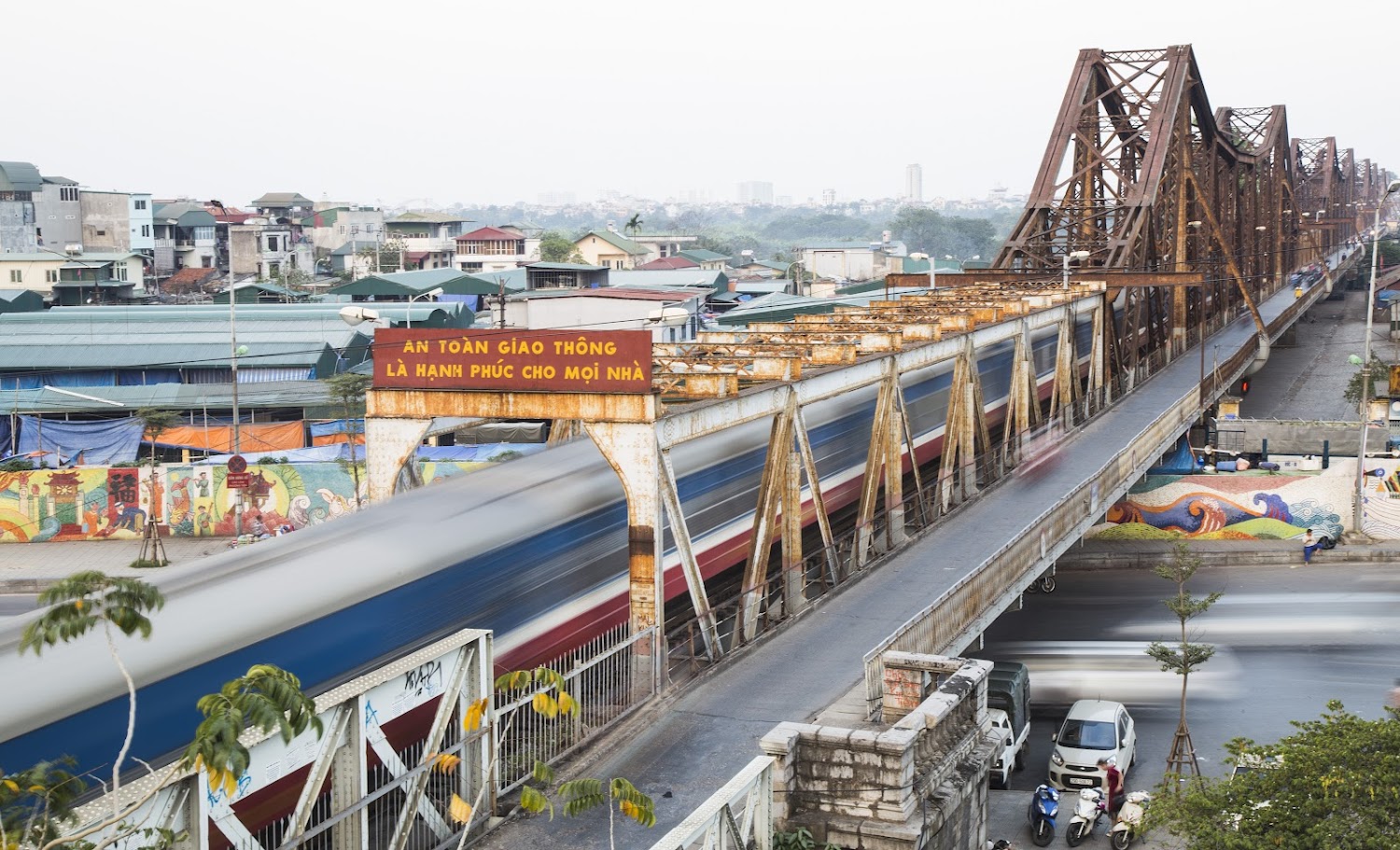
The image of a train crossing the bridge looks like a frame from a classic movie.
3.3 Explore the Red River's Mid-Islet
Right below Long Bien Bridge lies Bãi Giữa – a “green oasis” in the heart of the city. From the bridge, you can spot small trails leading down to this area, where banana groves, cornfields, wild grass meadows, and even small local huts can be found.
It’s a perfect place for walking, picnicking, taking photos, or simply watching the quiet sunset over the drifting river.
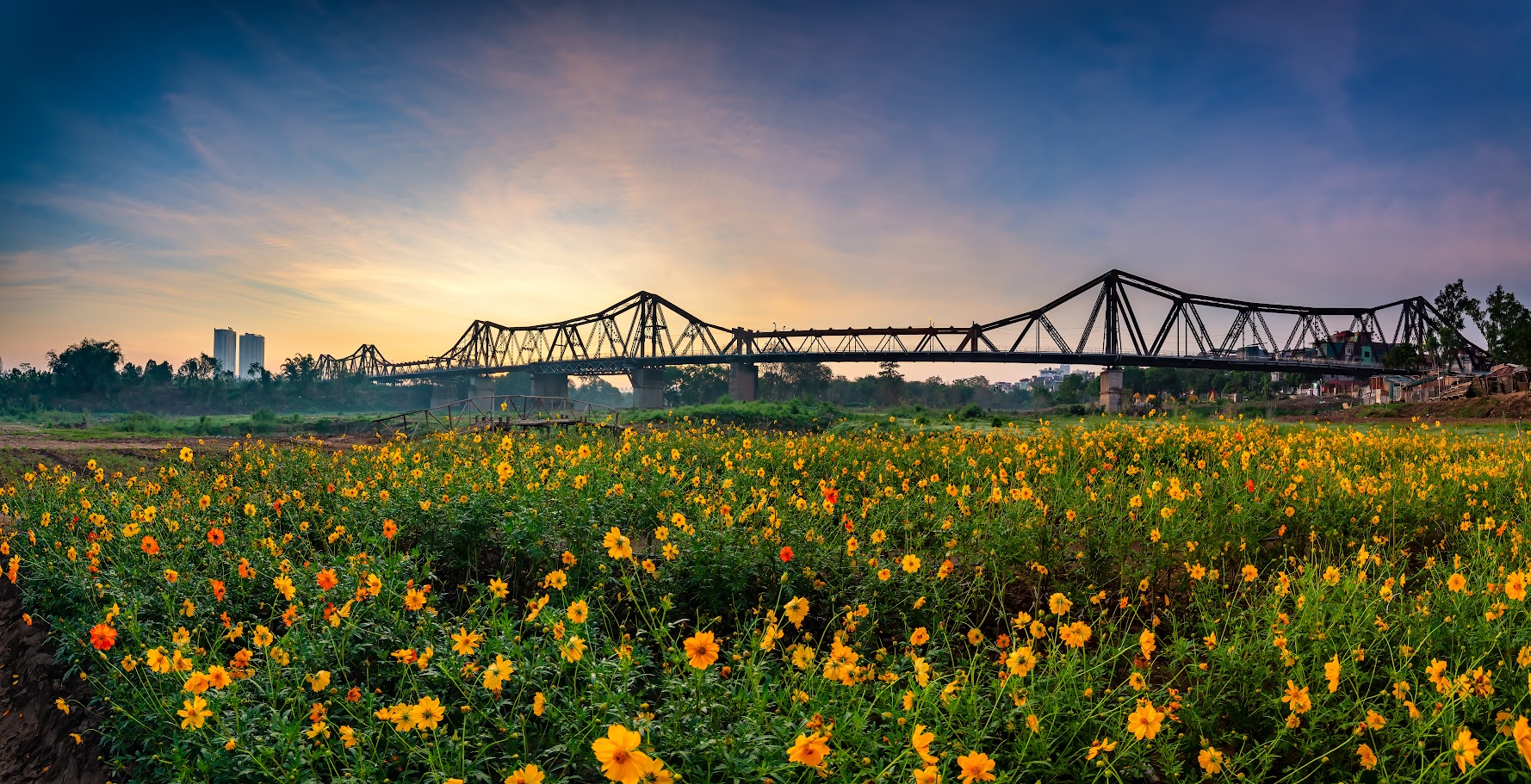
A poetic landscape right beneath Long Bien Bridge.
3.4 Enjoy Local Cuisine
Around Long Bien Bridge, there are many simple yet delicious sidewalk eateries, famous for traditional dishes like bún chả (grilled pork with vermicelli), phở bò (beef noodle soup), and bánh cuốn nóng (steamed rice rolls).
You can also walk to the end of the bridge, near Tran Nhat Duat Street or Dong Xuan Market, to explore the rich, flavorful local cuisine of Hanoi.
3.5 Visit Long Bien Market at Night
If you want to get a deeper glimpse into local life, visit Long Bien Market between 1:00 and 4:00 AM. This is one of Hanoi’s largest wholesale markets, bustling with the glow of yellow lights, the clamor of traders, and a constant stream of delivery trucks.The atmosphere is fast-paced, lively, and full of color. You can capture unique night photos of Hanoi’s late-night rhythm or simply immerse yourself in the energetic world of the capital’s night market.
Long Bien Bridge is not just a unique architectural structure—it is a living memory, preserving countless stories of Hanoi’s thousand-year history.If you're planning a trip to the capital, don’t miss out on this captivating destination.
Start your journey to Hanoi with Vietjet airfares from just 100,000 VND. Thousands of 0 VND tickets are up for grabs daily between 12 PM and 2 PM. See full details [here].
Follow Vietjet’s official channels for flight information, special offers, and travel guides.
- Website: https://www.vietjetair.com
- Facebook: https://www.facebook.com/vietjetvietnam
- Instagram: https://instagram.com/vietjet
- YouTube: https://www.youtube.com/VietjetOfficial
- TikTok: https://www.tiktok.com/@vietjetvietnam
- Zalo: https://oa.zalo.me/vietjet