Booking
 Skyshop
 Hotel
Hotel
 E-Voucher
 E-Sim
E-Sim
 E-Visa
 Buy foreign currency
 Insurance
 SkyJoy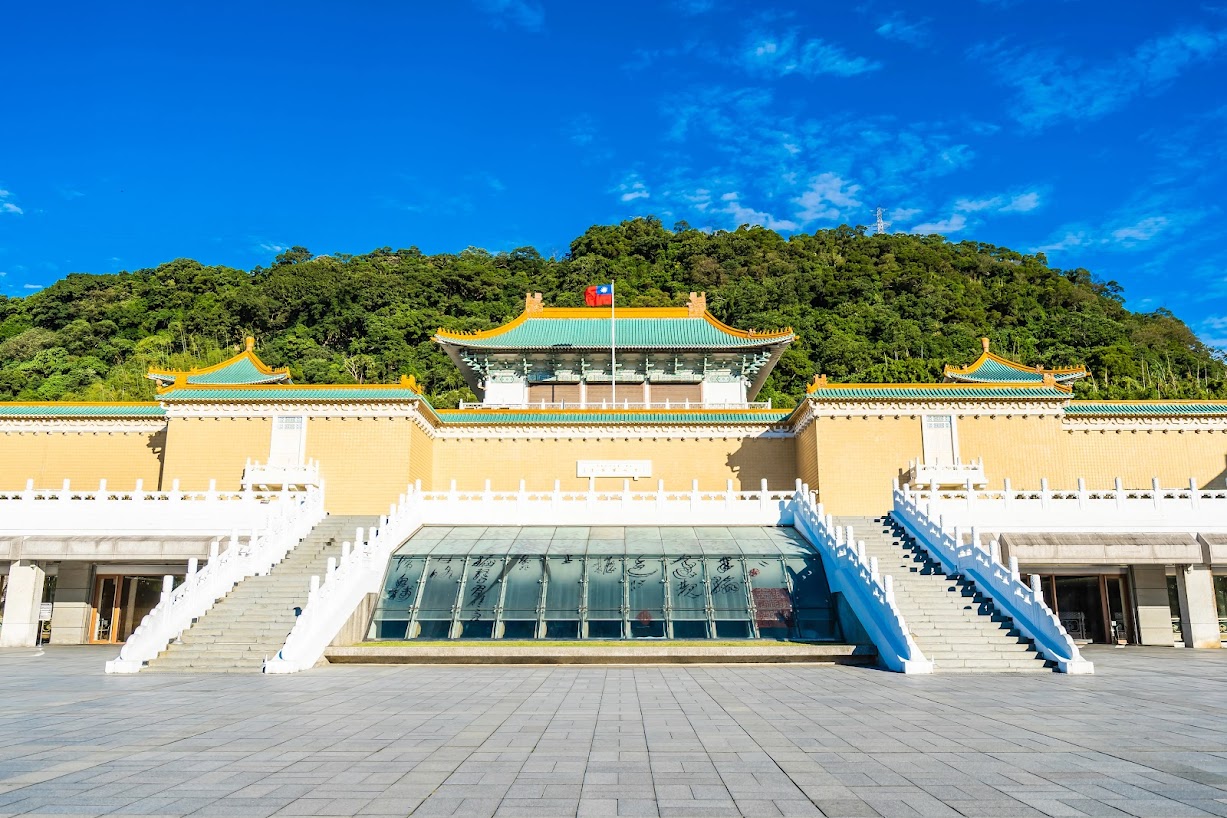
1. Overview of the National Palace Museum Taipei
The National Palace Museum Taipei (National Palace Museum Taiwan), located in Shilin District, Taiwan, is one of the 7 most visited museums in the world. This place is not the original "Palace Museum" in Beijing but a branch established in 1925.
With an impressive design, the overall architecture of the majestic palace museum reflects the rich Chinese style like a calligraphic painting. Especially, the museum has a very special planned location: it is nestled in the valley surrounded by natural rocky mountains. The project stands out with the wide and straight square axis extending from the main gate to the central building.
At the National Palace Museum Taipei, you can admire over 650 thousand historical treasures displayed on 4 large floors:
- From floor 1 to floor 3 is the display space of various items such as ceramics, bronze, weapons, etc.
- Floor 4, "Hall of Three Rare Treasures" - where important artistic artifacts with a lifespan of up to 5,000 years from the Song, Yuan, Ming to Qing dynasties are stored.
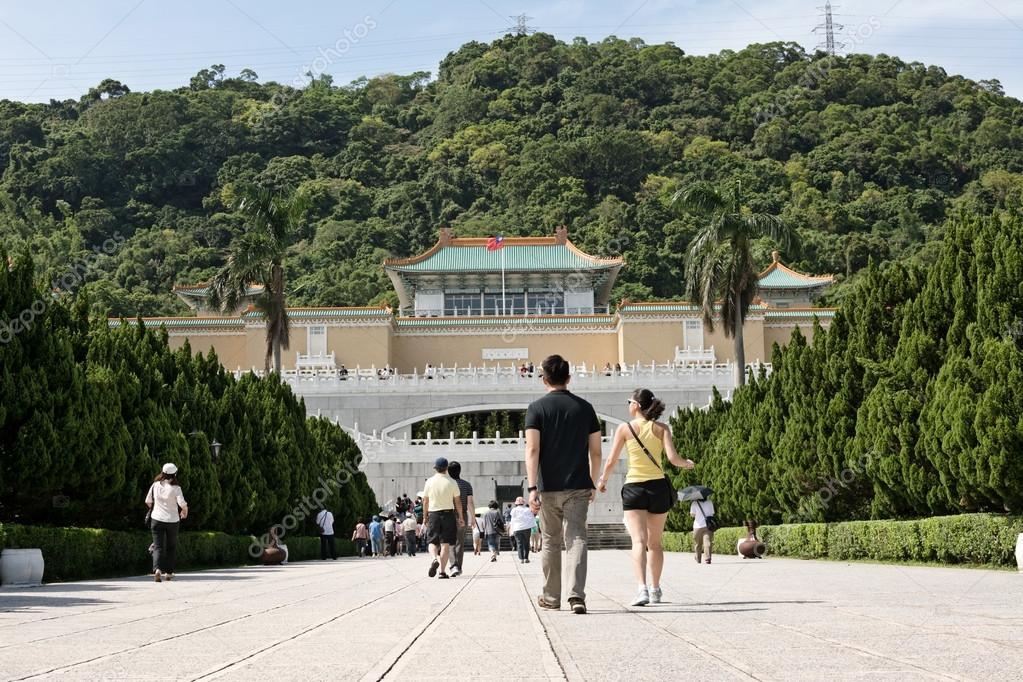
The museum also provides free guided tours in many different languages such as English, French, German, etc., allowing visitors to explore and enjoy interesting things on their own.
2. History of the National Palace Museum Taipei
The National Palace Museum Taipei preserves over 650,000 cultural and historical works of China from prehistoric times to the Ming Dynasty. It was established in 1925, initially as a branch to store hundreds of thousands of valuable artifacts from the Forbidden City. This place represents the artistic and historical essence of the feudal dynasties of China from the period of the new stone age to the Qing Dynasty.
According to many historical sources, as the war between the Nationalists and Communists intensified in 1948, Chiang Kai-shek decided to relocate rare historical artifacts to Taiwan. These precious artifacts were transferred from the Forbidden City in Beijing to Taiwan in 1949 when he and more than 2 million loyal soldiers, businessmen, and intellectuals left China.
Many people said that the entire collection was surrounded and kept secret in the mountains behind and interconnected with the museum. Later, the museum director cooperated with traffic transport supervisors to collect some collections and divide them into three groups from Nanjing to the port in Keelung, Taiwan from December 1948 to February 1949.
When the collections arrived in Taiwan, the Chinese Liberation Army controlled the remaining collections at the museum, so not all collections were sent to Taiwan. In total, 2,972 crates of artifacts from the Forbidden City were transferred to Taiwan, accounting for 22% of the originally planned number of crates to be transported. However, it can be said that the artifacts that were transferred and exist in the National Palace Museum today are the most representative, unique, and valuable artifacts.

The National Palace Museum is magnificent like an ancient fortress, with architectural features typical of China.
After many historical events, in 1965, the National Palace Museum Taipei officially became the place to store the historical essence of Taiwan until today.
3. How to get to the National Palace Museum Taipei
To get to the National Palace Museum Taipei, you need to follow these 2 stages:
3.1 Travel from Vietnam to Taipei, Taiwan
First, you need to book a flight departing from Noi Bai Airport (Hanoi), Tan Son Nhat Airport (Ho Chi Minh City), Da Nang Airport (Da Nang) to land at Taiwan Taoyuan International Airport.
Location: No. 9, Hang Tram Nam Street, Dai Viên Commune, Dao Vien District, Taiwan
Vietjet currently operates a variety of routes from Vietnam to Taipei. To update the latest airfare, please visit https://www.vietjetair.com/en/flight-tickets/flights-to-taipei/
3.2 Getting to the National Palace Museum Taipei
There are many public transportation options to help you easily find your way to the National Palace Museum Taipei, Taiwan.
- MRT (subway): This is the most economical and popular choice. You can choose to take the Tamsui-Ximen subway line to the main gate of the National Palace Museum.
- Bus: There are many bus routes to the National Palace Museum, including routes R22, R30, 304, 815, etc. To be more convenient, look up bus routes on mobile apps or ask local people to choose the most suitable route.
- Taxi: Although more expensive than the two options above, taking a taxi is faster and more comfortable. You can easily catch a taxi anywhere in Taipei and ask the driver to take you to the National Palace Museum.
4. Unmissable Experiences When Visiting the National Palace Museum Taipei
4.1 Explore the Structure of the National Palace Museum
The distinctive design of ancient Chinese palaces along with the historical artifacts always arouses curiosity and interest among tourists. Each floor will include different historical artifacts and documents for visitors to comfortably choose to explore and learn according to their interests.
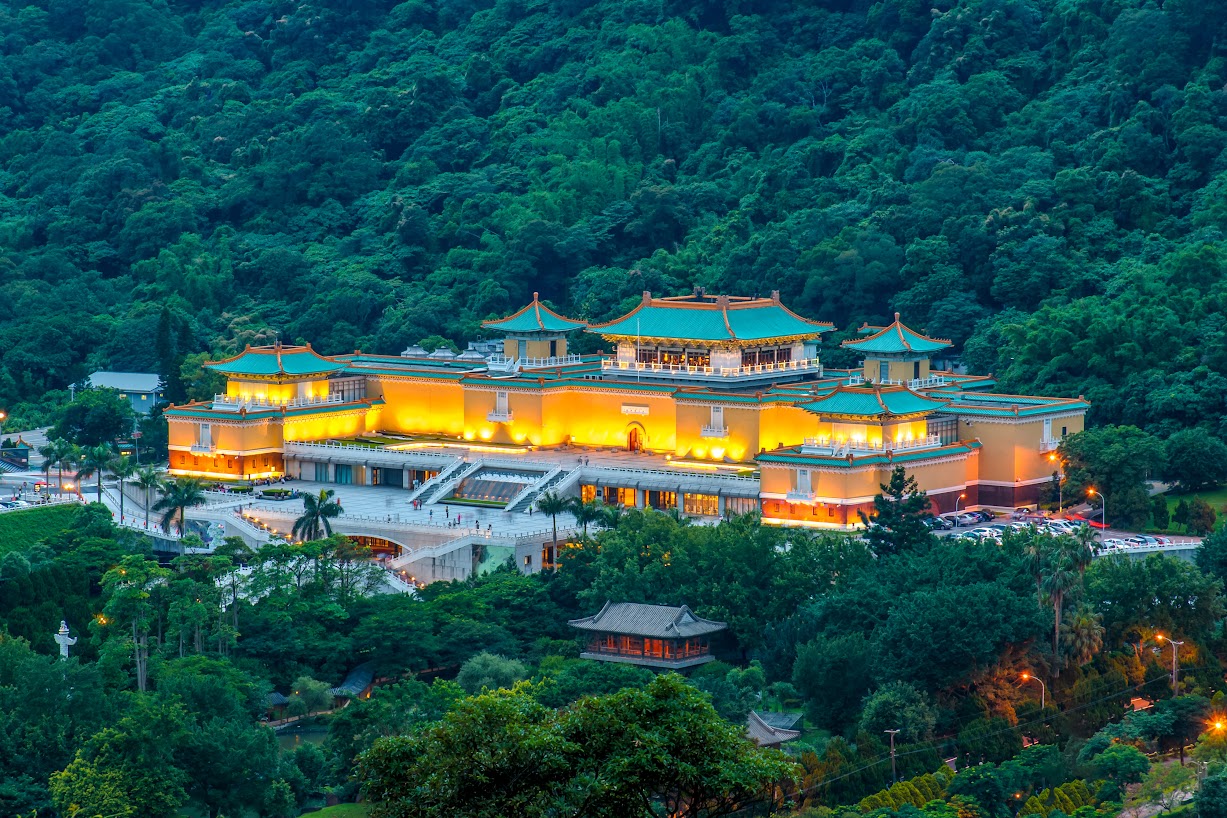
The towering spires are built according to the main structure of "2 towers 3 floors".
In addition, the palace is a particularly architectural building, built in classical Chinese style. You can admire the flagpoles, curved roofs, and other intricate details on the building.
4.2 Discover the Unique History
The National Palace Museum is a place that preserves and displays many precious artifacts about the history of Taiwan. Visitors come here not only for the beautiful scenery, splendid design, especially of the National Palace, but also for the deep historical significance hidden within. You can visit the exhibition rooms with artifacts from feudal times such as ceramics, paintings, jewelry, and clothing.
4.3 Learn About Precious Antiques and Artifacts
Surely, visitors will be overwhelmed by the hundreds of thousands of artifacts displayed here. All are arranged in chronological order, from each era, each historical figure. From ancient paintings, calligraphy to ancient costumes, weapons are all carefully preserved and displayed. Modern lights make the glorious history, the development through each period to the present of the Chinese people more vivid.
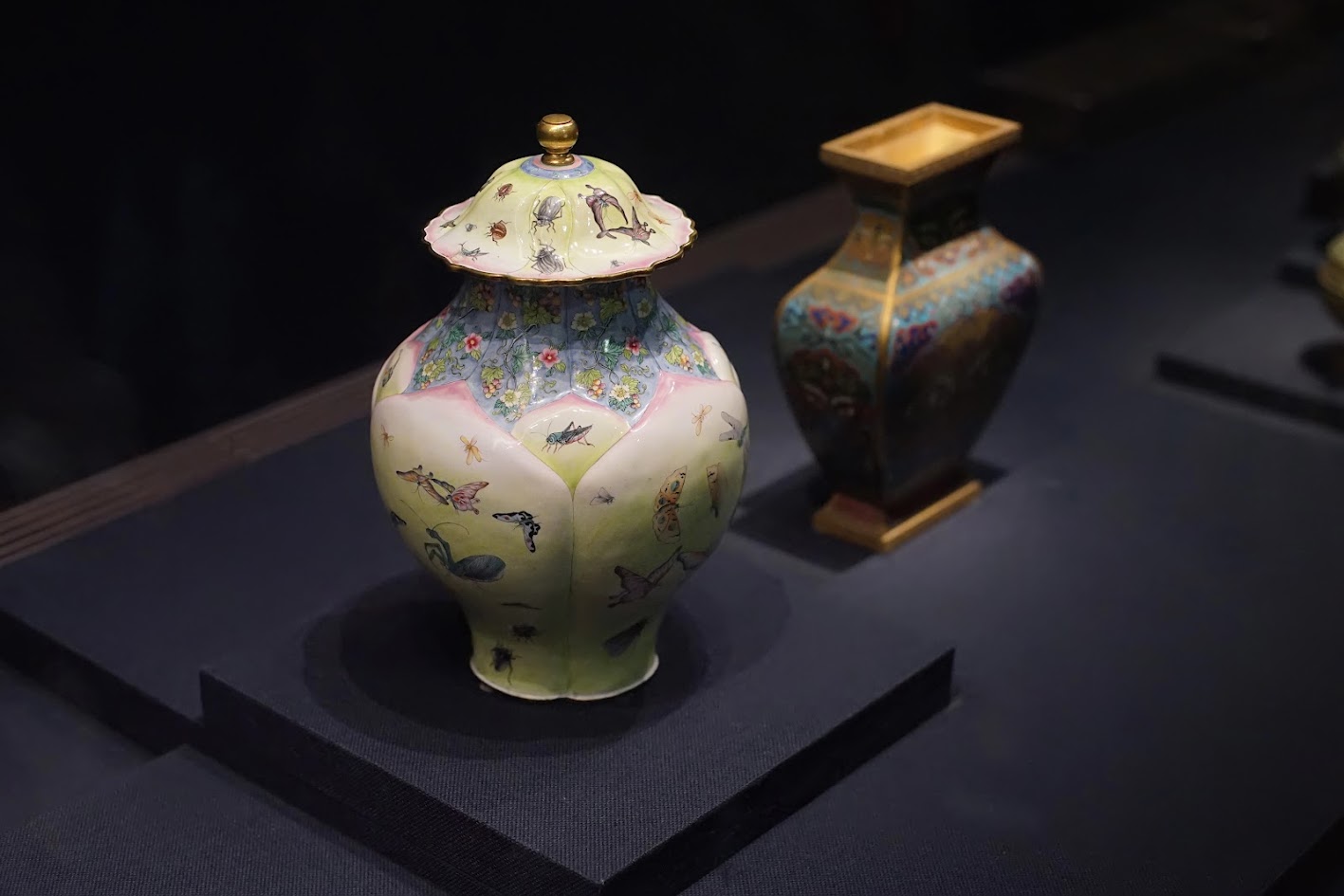
Collections are displayed in separate groups, stored in large glass cabinets.
4.4 Check-in at the Main Gate of the Museum
Attracting tourists from the first sight is surely the entrance gate to the museum. A combination of ancient design with a touch of modern delicate patterns highlights the entrance to the palace. From the entrance gate, visitors can capture the distant palace, which is the attraction for tourists to take pictures, film their trip to the National Palace.

The main gate with 5 entrances is intricately carved with raised decorative patterns.
4.5 Participate in Art Activities
The National Palace Museum also organizes many exhibitions and special art activities. You can participate in painting instruction sessions, traditional handicraft making, or attend courses on traditional Taiwanese art.
4.6 Stroll Around the Gardens
The National Palace Museum is located in a large campus with many lush gardens and fish ponds. You can stroll around the gardens, relax, and enjoy the peaceful space after visiting the museum.
5. Some Tips When Visiting the National Palace Museum Taipei
Traveling to a foreign country to explore and experience will probably pose some challenges. Therefore, you need to remember some tips below to carefully plan your trip to the National Palace Museum Taipei. Specifically:
- Visiting Time: The National Palace Museum is one of the largest and most important museums in the world, with thousands of artifacts stored from ancient Chinese dynasties. To fully enjoy the experience, allocate at least half a day for the visit.
- Pre-purchase Tickets: The National Palace Museum can attract a large number of visitors, especially on weekends and holidays. To avoid long queues, consider purchasing tickets in advance through the museum's official website or via online booking services.
- Tour Guide: To better understand the history and significance of the exhibited artifacts, you can hire a guide at the museum. The guide will help you see interesting details and explain about valuable artworks.
- Map and Directions: The reception at the National Palace Museum provides maps and guide documents in many different languages. Make sure to get a map and guide for easy understanding of the location and information about the collections.
- Best Time to Visit: The National Palace Museum is open from early morning until late at night. To avoid crowds, try to arrive early in the morning or after 3:00 PM, after large tourist groups have left.
- Other Regulations: The museum is a place that respects and preserves cultural heritage. Please adhere to behavioral regulations such as no photography in special exhibition rooms, no touching artifacts, and limit noise to maintain a quiet space.
- Souvenir Counters: The National Palace Museum has several souvenir counters selling electronics, books, traditional ceramics, and other art products. Take the time to explore and buy unique gifts to preserve memories of your trip.
With its majestic and ancient beauty, the National Palace Museum Taipei promises to be an ideal destination where you can explore, experience, and learn about the history and traditional culture of China. If you plan to visit Taipei in the near future, surely the National Palace Museum Taipei will make your journey more interesting and complete!
See more: Taiwanese culture and things to note when traveling
Don't hesitate any longer to grab tickets for 0 Dong flights every Friday to optimize the cost of your Taiwan trip!
Stay updated with Vietjet's travel guide through the channels below:
- Fanpge: https://www.facebook.com/vietjetvietnam
- YouTube: https://youtube.com/c/VietjetOfficial
- TikTok: https://www.tiktok.com/@vietjetvietnam
- Instagram: https://instagram.com/vietjet
- Zalo: https://oa.zalo.me/vietjet