Booking
 Skyshop
 Hotel
Hotel
 E-Voucher
 E-Sim
E-Sim
 E-Visa
 Buy foreign currency
 Insurance
 SkyJoy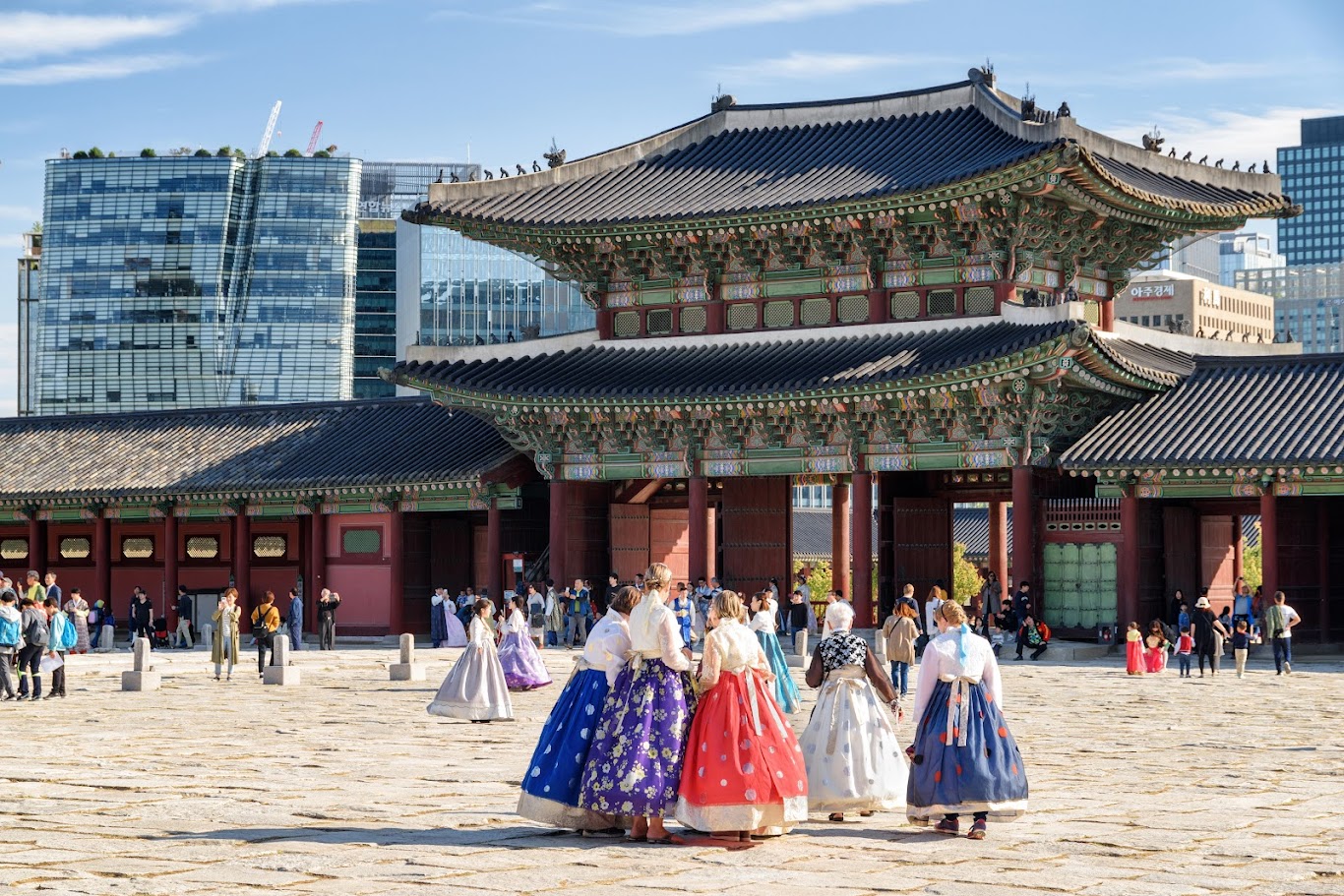
One of the unmissable travel experiences when visiting Korea is trying on a traditional Hanbok, strolling through the ancient streets or the magnificent palaces of Seoul. So, what exactly is hanbok, how should it be worn properly, and where can you rent one? Let’s explore with Vietjet the complete guide to experiencing hanbok in Korea in the article below!
1. Introduction to Hanbok – Korea’s Traditional Attire
1.1 What is Hanbok?
The word hanbok literally means “Korean clothing.” It is the traditional attire of the Korean people, with a history spanning thousands of years, reaching its peak during the Joseon dynasty. With its loose-fitting silhouette, soft materials, and elegant colors, the Korean hanbok not only carries strong aesthetic value but also embodies the cultural essence and virtues of the Korean people: modesty, grace, and harmony with nature.
Today, traditional hanbok is still worn during festivals, weddings, and important family events. For travelers visiting the Land of Morning Calm, wearing hanbok and taking photos at cultural heritage sites is an experience not to be missed.
Even now, hanbok remains an important part of Korean culture. These traditional garments are commonly worn by Koreans on special occasions such as weddings and family celebrations.
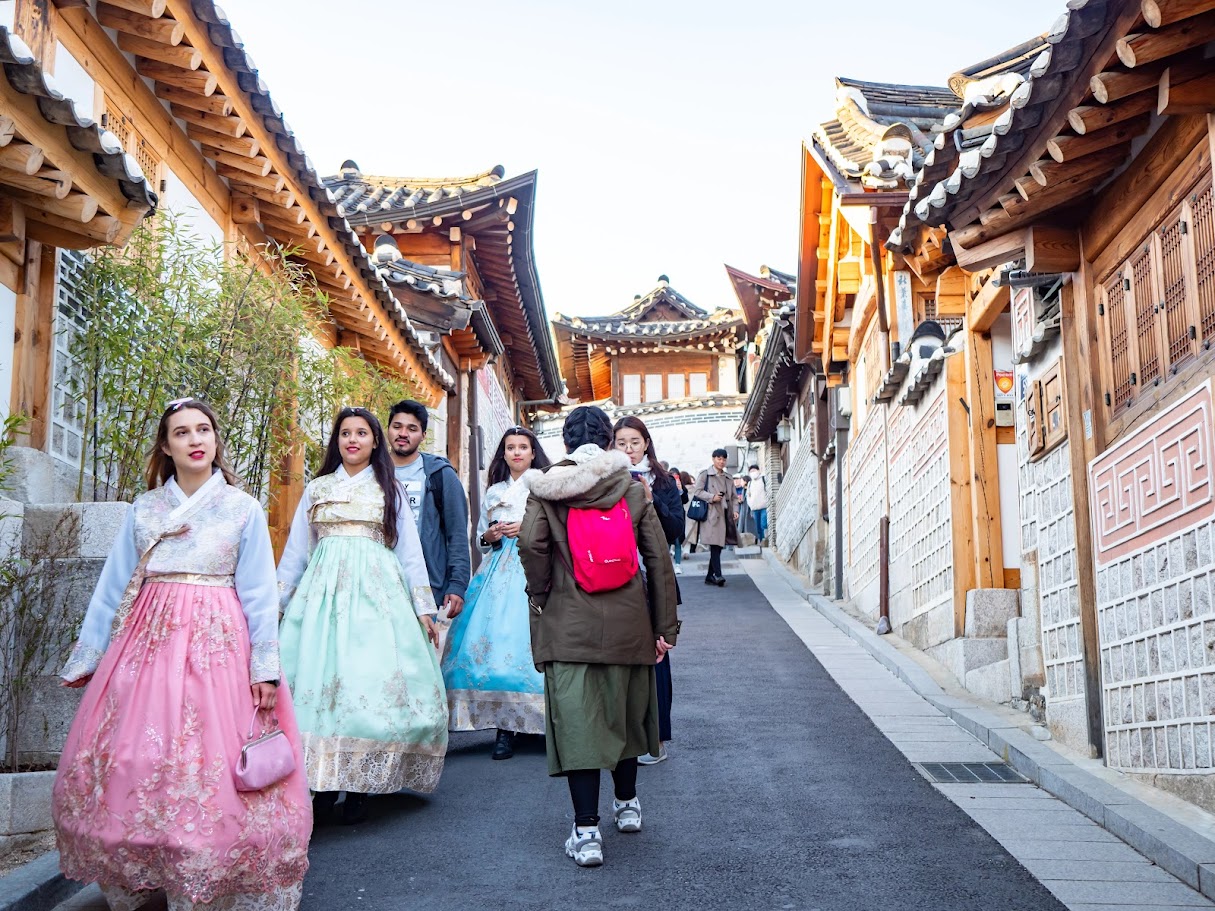
One of the must-try travel activities in Korea is wearing a traditional Hanbok.
1.2 Types of Hanbok
During the Joseon dynasty, social classes were distinguished by their hanbok styles—commoners typically wore white cotton, while the royal family wore vibrant colors and silk.
Today, hanbok comes in different designs depending on gender, age, and purpose. Here are three popular types of hanbok that travelers can rent and experience:
- Men’s hanbok: Typically consists of an outer jacket (jeogori), wide pants (baji), and a long coat or vest (durumagi), often paired with a traditional hat. Men’s hanbok is designed to appear strong yet refined, carrying a classic charm.
- Women’s hanbok: Characterized by a short jacket (jeogori) paired with a long flared skirt (chima). Women’s hanbok often comes in bright, youthful colors such as pink, pastel blue, or lavender. Modern designs may also include lace, floral embroidery, or eye-catching color combinations.
- Children’s hanbok: Designed to be simpler yet adorable, children’s hanbok features cheerful colors suitable for traditional holidays or family photoshoots.
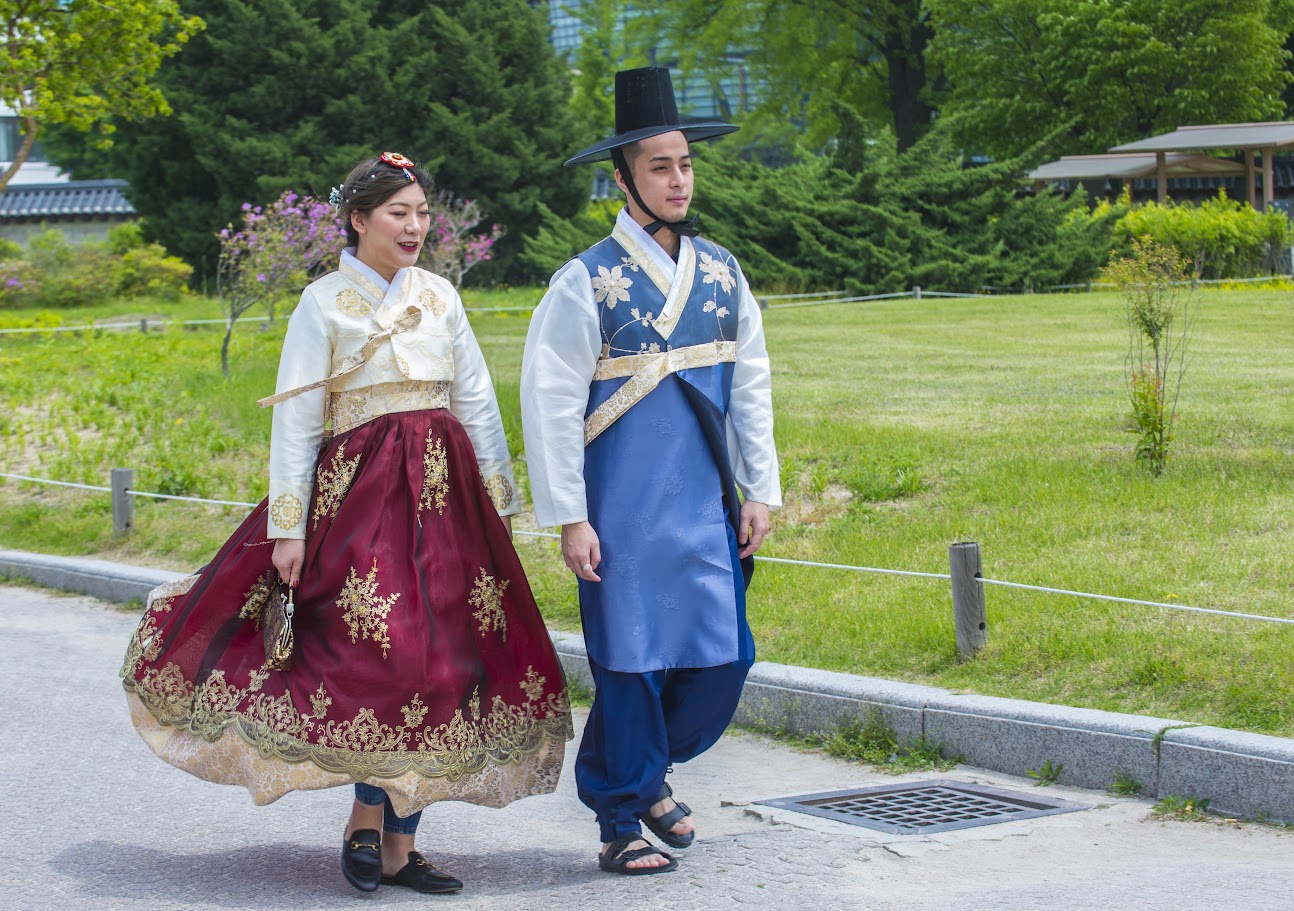
One of the must-try travel activities when visiting Korea is wearing a traditional Hanbok.
1.3 How to Wear Hanbok
If it’s your first time experiencing Hanbok, knowing the proper way to wear it will help you feel more comfortable and confident:
- For women, start with the skirt (chima); for men, start with the pants (baji).
- Next, put on the jeogori (jacket) and adjust the collar so it sits evenly.
- Finally, tie the ribbon (otgoreum). Usually, the staff at the rental shop will help adjust it neatly for you.
- Some outfits also include a Duyong (underskirt) to give the attire more volume and elegance.
In addition to the main outfit, many hanbok rental shops also offer hairstyling, makeup, and accessories like traditional bags, paper fans, and headpieces—helping you create the perfect photo set.
2. Steps to Rent Hanbok in Korea
If you’ve never rented a Hanbok before, the process might feel a little daunting. To stay in control and fully enjoy the experience, here’s a step-by-step guide:
- Online reservation: Book online in advance to avoid waiting and ensure clothing availability. This also helps you choose the store location beforehand. When you arrive, show your reservation voucher to the staff.
- Walk-in rental: If you haven’t booked, you can simply walk around Bukchon Hanok Village or Gyeongbokgung in Seoul, where many rental shops are clustered.
- ID requirement: You will be asked to present a valid passport or ID, which will be returned when you return the hanbok.
- Trying on outfits: At most shops, you can try up to two hanboks before making your choice. Staff will guide you through the dressing steps—starting with the chima or baji, then the jeogori, and they’ll help tie the ribbon. Lockers are provided for your belongings.
- Makeup & hair: Some rental packages include hairstyling and makeup. You can also borrow accessories for an additional fee.
- Return on time: Be sure to return the hanbok within the agreed time to avoid extra charges.
See also: [Answered] What is the best season to travel to Korea?
3. Where to Rent Hanbok?
Here are some popular hanbok rental locations favored by tourists:
3.1 Seohwa Hanbok (Gyeongbokgung – Seoul)
Located near Gyeongbokgung Palace, Seohwa Hanbok offers a wide variety of styles from traditional to modernized hanbok, suitable for men, women, and children. A special perk is free hairstyling service for female customers.
- Location: Near the main gate of Gyeongbokgung
- Rental price: 13,000 – 18,000 KRW (approx. 235,855 – 326,000 VND)
- Opening hours: 9:00 – 19:00
3.2 Hanboknam
One of the most popular rental chains in Seoul and Jeonju, located near major palaces like Gyeongbokgung and Changdeokgung. Customers can rent by the hour (1–4h) or a full day, with packages ranging from traditional hanbok to premium, themed, or wedding styles. Free hairstyling services are included; accessories are charged separately.
- Seoul branch: 133-5 Sajik-ro, Jongno-gu
- Jeonju branch: 72-7 Pungnam-dong 3-ga, Wansan-gu, Jeonju
- Rental price: from 15,000 KRW (approx. 272,000 VND)
- Hours: 9:00 – 19:30 (last admission: 17:00)
3.3 Oneday Hanbok
Located between Gyeongbokgung and Changdeokgung Palaces, about 300m from Anguk Station. Known for its diverse collection of traditional and modern hanbok. Reasonable rates, starting from 17,000 KRW for 4 hours.
- Address: Near Anguk Station (300m) – Bukchon area
- Rental price: from 17,000 KRW / 4h (approx. 308,000 VND)
- Hours: 9:00 – 19:00
3.4 Gamcheon Romantic Hanbok (Gamcheon – Busan)
Situated in Gamcheon Culture Village, a famous photo spot in Busan. Offers not only hanbok but also Enlightenment-era costumes and vintage school uniforms.
- Address: Gamcheon Culture Village, Busan
- Rental price: 15,000 – 20,000 KRW (approx. 272,000 – 362,000 VND)
- Hours: 9:00 – 17:30
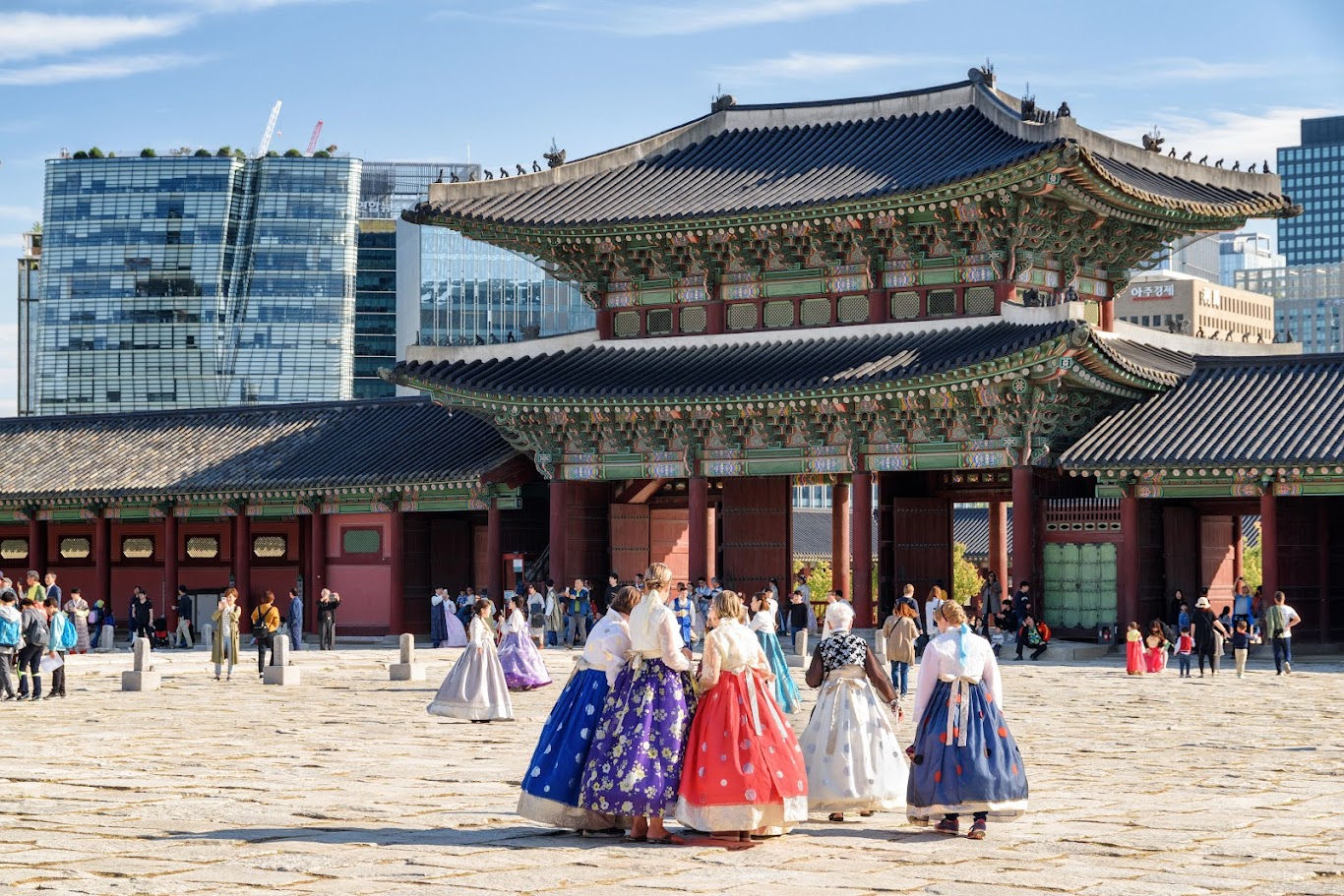
Gyeongbokgung Palace is one of the most popular hanbok photo spots.
4. Must-Visit Check-in Spots in Hanbok
After renting a Korean hanbok, you simply cannot miss the chance to take some picturesque check-in photos. In particular, one of the best perks of renting a hanbok is that you get free admission to certain tourist attractions in Seoul. Below are the must-visit spots you should not miss:
4.1 Palaces in Seoul – Immerse in the Royal Atmosphere
- Gyeongbokgung Palace: The largest and most famous in Seoul, representing Joseon dynasty architecture. Its grandeur makes it a perfect hanbok photo spot.
- Changdeokgung Palace: Famous for its “Secret Garden” (Huwon), a UNESCO World Heritage site. Hanbok photos taken here exude poetic beauty.
- Deoksugung, Changgyeonggung, and Gyeonghuigung Palaces are also ideal places to capture hanbok moments in peaceful, historic settings.
Note: Wearing hanbok grants you free admission to all these palaces – a great perk you shouldn’t miss!
4.2 Bukchon Hanok Village – A Traditional Neighborhood in Seoul
Bukchon Hanok Village is a must-visit for hanbok photos, with hundreds of traditional hanok houses clustered on stone-paved alleys. The tranquil, rustic setting makes it highly photogenic for both men’s and women’s hanbok styles.
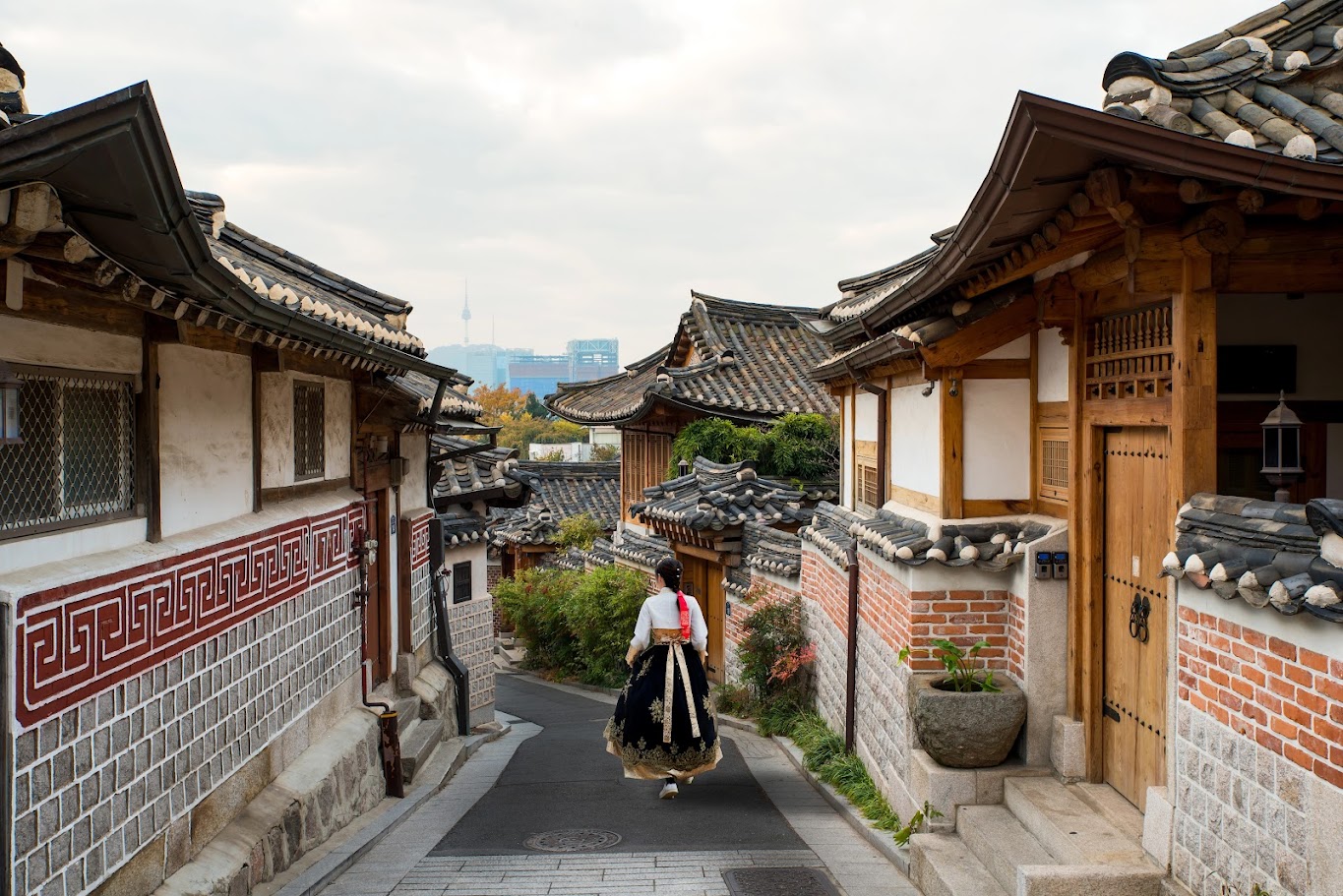
Bukchon Hanok Village is also one of the most famous destinations when it comes to taking photos in Hanbok.
4.3 Insadong – Culture and Art in Every Step
Insadong is a historic neighborhood well-known for its narrow alleys, traditional craft shops, teahouses, and Korean folk art galleries. Walking around Insadong in a Hanbok allows you to feel the blend of tradition and modernity—a relaxing yet artistic experience. This is also a place where you can easily spot locals in Hanbok taking commemorative photos or joining workshops such as making paper fans or woodblock printing.
4.4 Jeonju Hanok Village – Preserving the Soul of the Joseon Era
If you have the chance to travel outside Seoul, make sure to visit Jeonju Hanok Village—one of the most beautiful and best-preserved traditional villages in Korea. With over 700 ancient Hanok houses, stone-paved alleys, stalls selling traditional food, and a peaceful atmosphere, Jeonju is the ideal place to put on a Hanbok and “time travel” back to the Joseon dynasty.
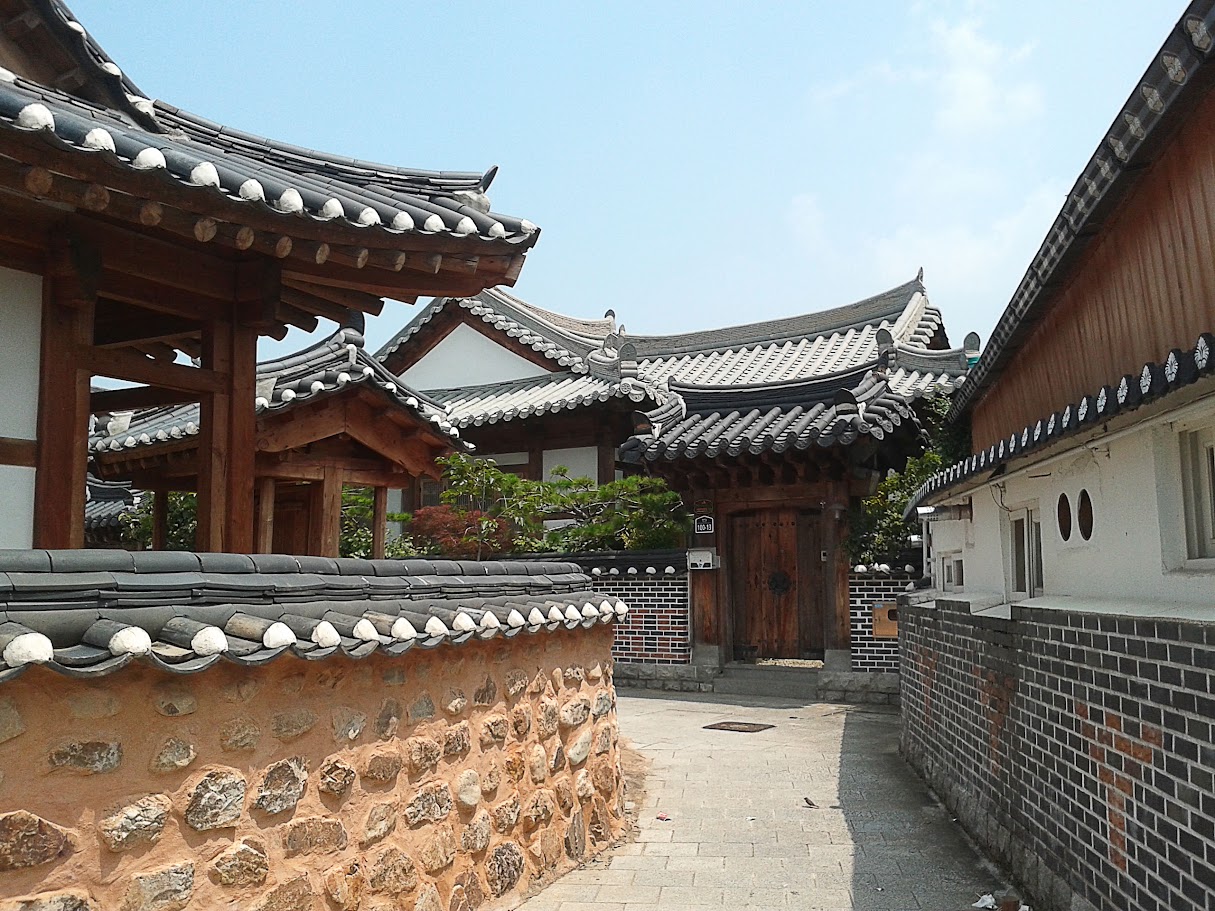
Jeonju Hanok Village is the perfect place for visitors to take photos and explore Korean culture.
Here, you can not only take photos but also join cultural activities such as making Hanji paper, practicing calligraphy, or enjoying local cuisine. Every street corner and tiled roof provides the perfect backdrop for you to transform into a graceful Korean noblewoman.
See also: [Itinerary & Cost for 5 Days 4 Nights Traveling in Korea]
5. Tips for Renting Hanbok
- Each hanbok rental shop has its own policies regarding rental period, deposits, and late-return penalties. Read the details carefully before confirming your booking to avoid unexpected costs.
- You may be asked to present your passport or leave a cash deposit (around 50,000 KRW – approximately 907,000 VND) when renting. The passport and deposit will be returned once you return the hanbok on time and in good condition.
- Accessories are often charged separately. If you want to use items such as bags, fans, or headpieces, you’ll need to pay an additional fee. Some shops offer combo packages, so be sure to ask in advance.
- Avoid choosing hanbok that are too tight or too loose, as you’ll be wearing them for several hours and moving around quite a bit—especially at places with stairs such as Gyeongbokgung Palace or Bukchon Village.
- Returning the hanbok late can incur a penalty. Plan your schedule accordingly and, if unsure, book a 4-hour or full-day package.
- Be mindful of the opening days: palaces in Seoul are usually closed on Mondays or Tuesdays, so it’s best to rent hanbok between Wednesday and Sunday. Also, try to arrive at the rental shop early (around 9:00 – 9:30 AM) to avoid crowds and get the best selection. After 10 AM, especially on weekends and during peak travel seasons, shops become crowded.
- Opt for pastel tones or lightly patterned hanbok, which look more photogenic against the historical backdrops.
- Do not venture too far from the rental area unless you’ve booked a full-day package. Some shops require returns before closing time or limit where you can go while wearing the hanbok.
Experiencing Hanbok in Korea not only lets you transform into a character from the past in the heart of Seoul, but also offers a great opportunity to gain deeper insights into traditional Korean culture. From vibrant hanbok outfits to the grand palace settings, everything combines to create an emotional and unforgettable journey.

Vietjet currently operates a wide range of direct flights from several cities in Vietnam to popular destinations in Korea.
To kickstart your trip affordably, don’t forget to grab flight tickets to Korea with Vietjet. The flights only take about 3–5 hours, making travel quick and convenient, with fares starting from just 890,000 VND.
Especially during the golden hour “It’s 12 o’clock, time for Vietjet!”, you’ll have the chance to hunt for 0 VND tickets (excluding taxes and fees) to explore the beauty of Korea and stroll in hanbok like a local. See details here!
Stay updated with the latest flight schedules, flight tickets to Korea, and Vietjet’s travel guides through the following official channels:
- Website: https://www.vietjetair.com
- Facebook: https://www.facebook.com/vietjetvietnam
- Instagram: https://instagram.com/vietjet
- YouTube: https://www.youtube.com/VietjetOfficial
- TikTok: https://www.tiktok.com/@vietjetvietnam
- Zalo: https://oa.zalo.me/vietjet