Booking
 Skyshop
 Hotel
Hotel
 E-Voucher
 E-Sim
E-Sim
 E-Visa
 Buy foreign currency
 Insurance
 SkyJoy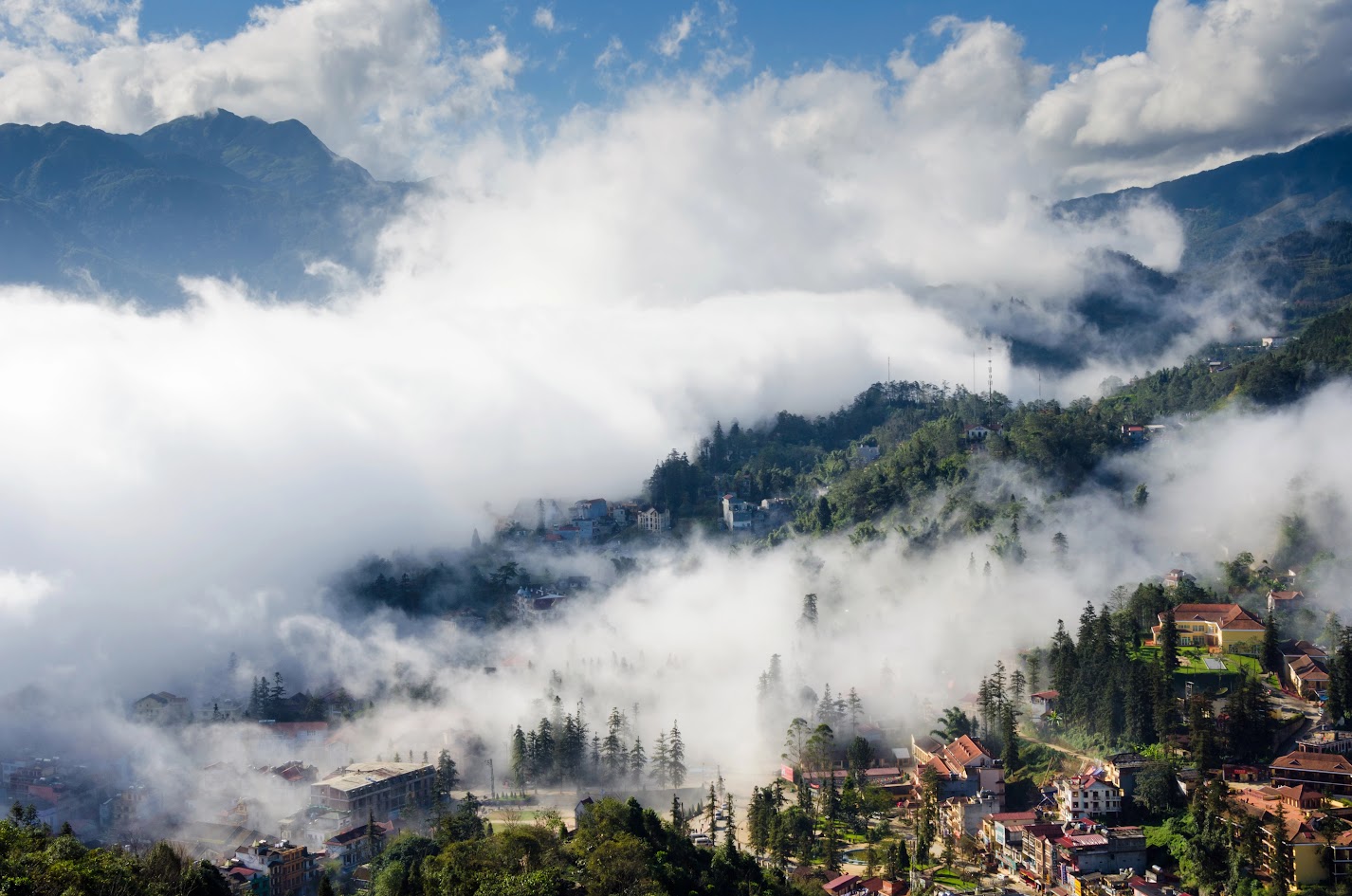
In recent years, the trend of adventure travel and conquering majestic peaks has become increasingly popular. Among them, Fansipan, known as the "Roof of Indochina," stands out as one of the most captivating destinations. Alongside it, the breathtaking natural beauty of Sapa creates a challenging yet equally fascinating journey for travelers.
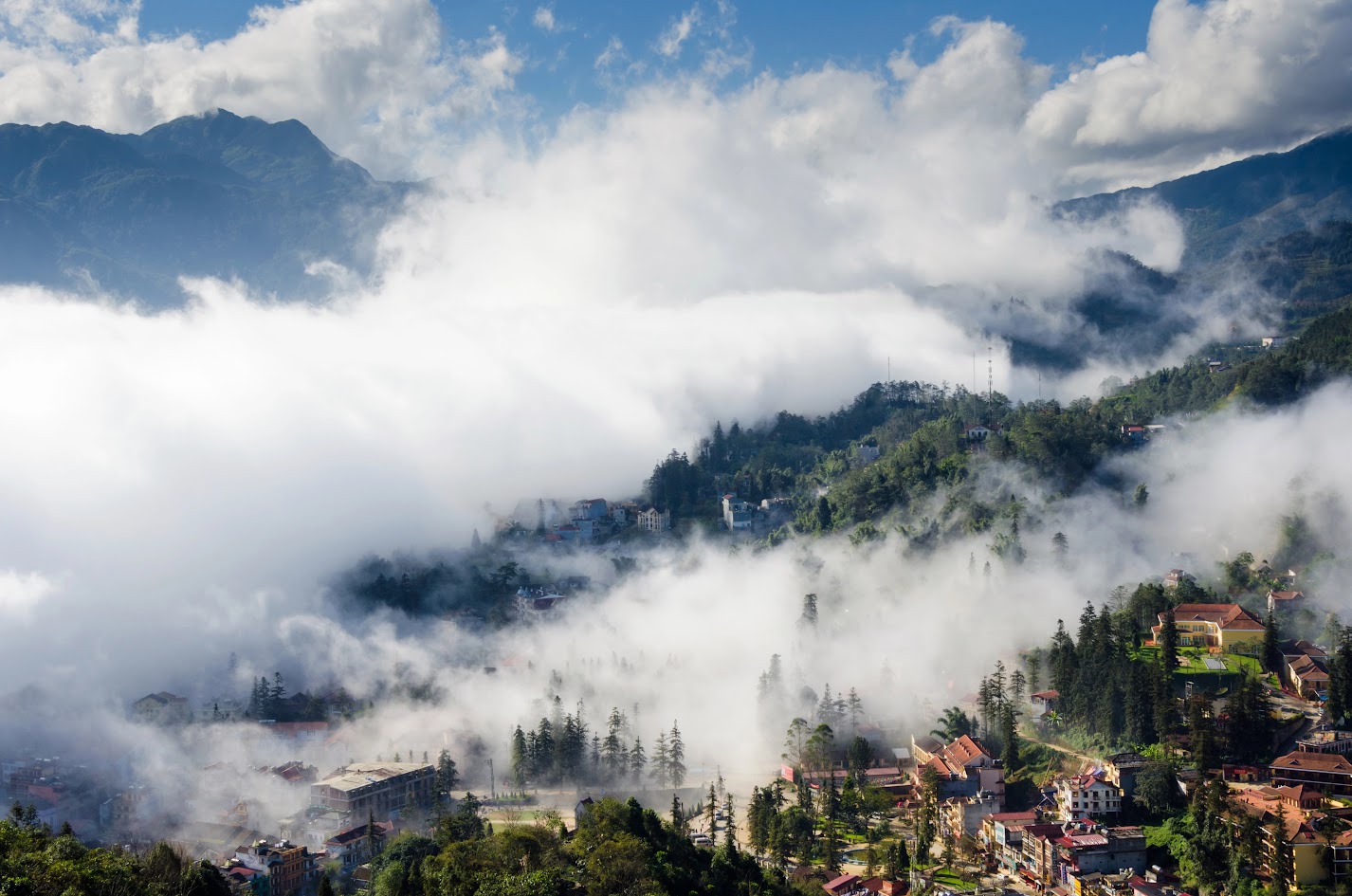
Standing atop the highest mountain in Indochina is truly an unforgettable life experience.
1. Where is the Roof of Indochina?
The Roof of Indochina refers to Fansipan Peak, the highest mountain in Vietnam and the Indochina Peninsula, standing at 3,143 meters above sea level. Fansipan is part of the Hoang Lien Son Mountain Range, located about 9km southwest of Sapa town, lying between Lao Cai and Lai Chau provinces, with the summit positioned in Lao Cai.
In the local language, Fansipan is known as "Hua Xi Pan", meaning "a giant precarious rock." According to geological sources, Fansipan was formed during the Permian - Triassic periods of the Paleozoic and Mesozoic eras, around 250-260 million years ago.
This peak is not only a symbol of magnificence but also a dream destination for adventurers aiming to conquer the Roof of Indochina. The journey to Fansipan offers breathtaking natural scenery, from vast forests to rugged cliffs.
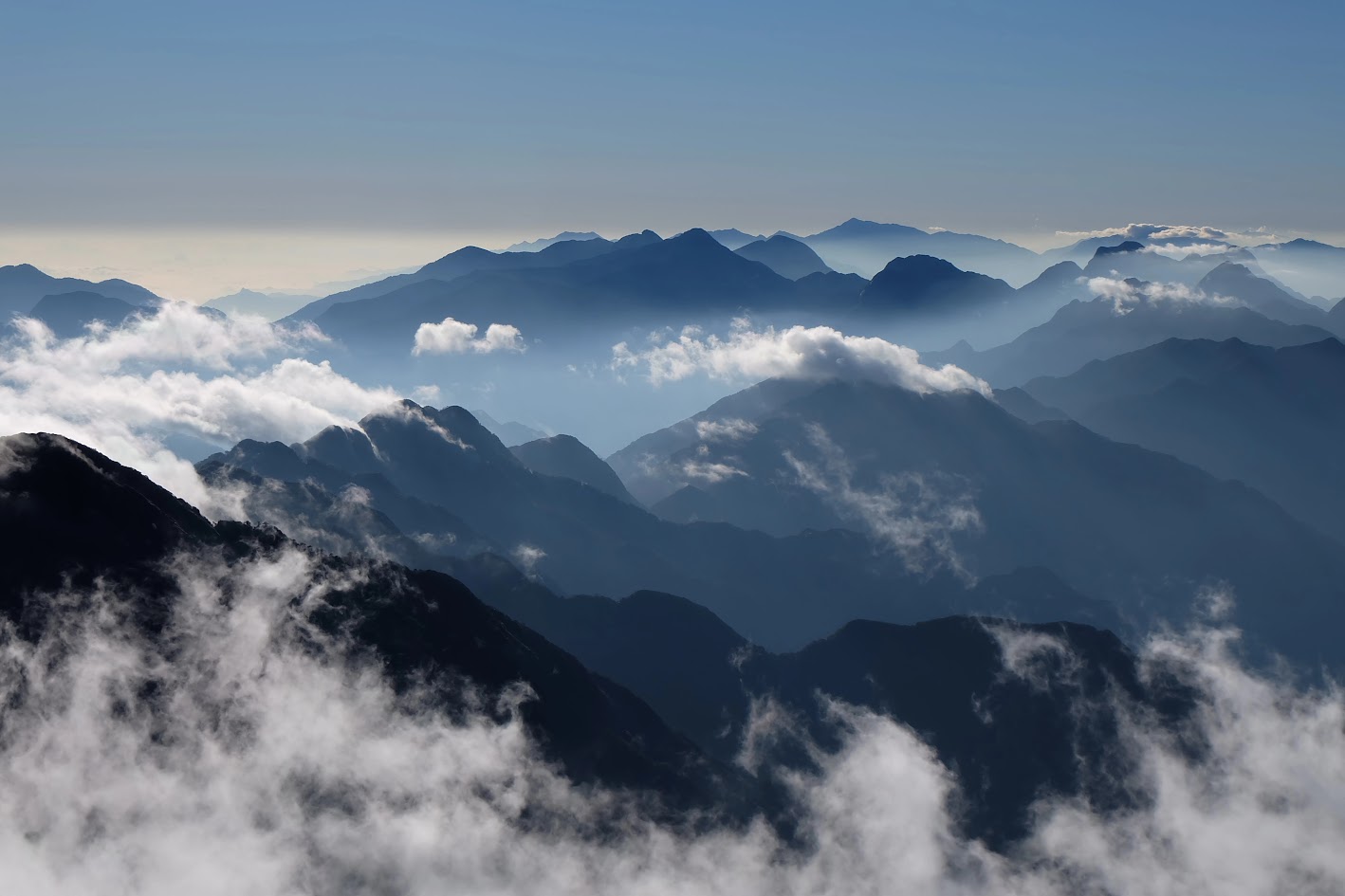
Fansipan boasts pristine and majestic beauty.
2. When is the Best Time to Conquer the Roof of Indochina?
Fansipan’s terrain and weather are unique, making it attractive all year round, with each season offering a different charm. Depending on your preferences, here are some ideal times to plan your trip:
- October - November: According to experienced trekkers, this is the best time to visit Fansipan. The weather is pleasant, and from above, you can admire the golden terraced rice fields while breathing in the fresh, cool air.
- December - February: If you love chasing snow or want to experience snowfall, this is the time to visit. However, cold drizzle is common during this period, so you should pay extra attention to your health. It is recommended to take the cable car instead of hiking for safety reasons.
- February - March: This marks the start of spring in the Northwest mountains, with flowers blooming everywhere. The weather is beautiful, with occasional light spring rains.
- March - April: This is the season when rhododendrons bloom across Fansipan, creating a dreamy and colorful natural landscape. You’ll witness the mountains adorned with vibrant flowers stretching across the sky.
See more: Top 10 Best Cloud-Hunting Spots in Sapa You Shouldn’t Miss
3. Ways to Conquer the Roof of Indochina
3.1 Trekking
Trekking is the ideal choice for those who love adventure and want to truly experience the feeling of conquering a mountain peak. However, the journey is physically demanding and requires good health.
Trekking is undoubtedly one of the most thrilling and meaningful challenges for adventure and exploration enthusiasts. Despite the tough and exhausting journey, every milestone you pass on the way up Fansipan fills you with pride and excitement, especially when admiring the sea of clouds from the summit.
To conquer this journey, you need thorough preparation — from safety equipment, climbing techniques, to personal belongings. Additionally, hiring an experienced porter is highly recommended for physical and mental support, as well as for their knowledge of the terrain and handling unexpected situations.
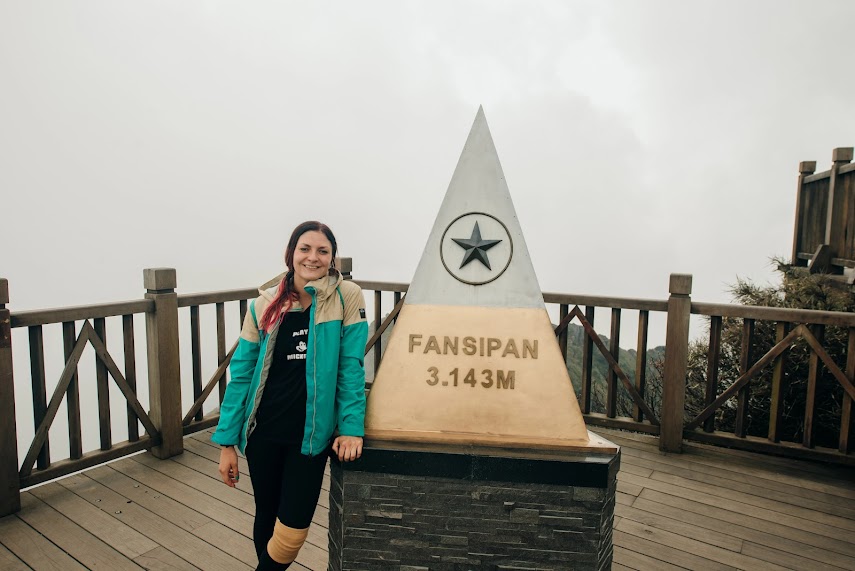
An adventure to Fansipan Peak can take 2 to 7 days, depending on each individual’s ability.
3.2 Taking the Cable Car
Nowadays, the cable car is the most popular and convenient way to reach the Roof of Indochina, chosen by most tourists. The Fansipan cable car, spanning 6,292.5 meters, connects Hoang Lien Station to Fansipan Station. It is one of the most modern and safest cable car systems, capable of operating stably under various weather conditions.
Officially launched in 2016, this modern cable car system takes visitors to the peak of Fansipan in just a short time. Specifically, the ride to the station takes only 15 minutes, after which you can either climb about 600 steps or take the mountain train to reach the highest point of Indochina.
This is truly a memorable and meaningful experience for every travel lover.
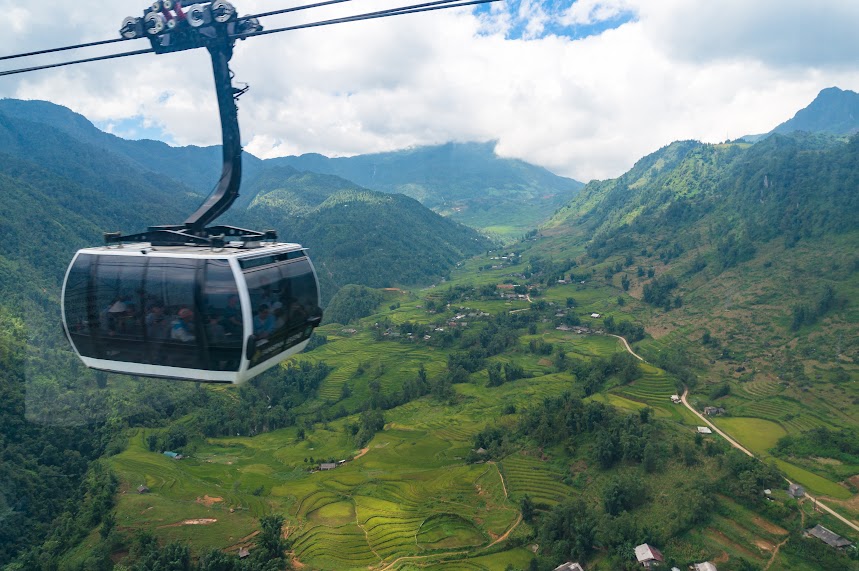
Visitors of all ages can experience the Fansipan cable car to conquer the peak of Fansipan.
4. Must-Try Experiences at the Roof of Indochina
4.1 Check-in & Flag-Raising Ceremony at the Flagpole
When visiting Fansipan, don’t miss the chance to check in at the 25-meter-high flagpole. This flagpole is made from rare Thanh Hoa green stone, with its base beautifully decorated with cultural symbols of Vietnam such as the Gong culture of the Central Highlands, Cham towers, Northwest cultural motifs, and Ha Long Bay.
Every week, a solemn flag-raising ceremony takes place here from 10:00 to 10:30 AM on Fridays, Saturdays, and Sundays.
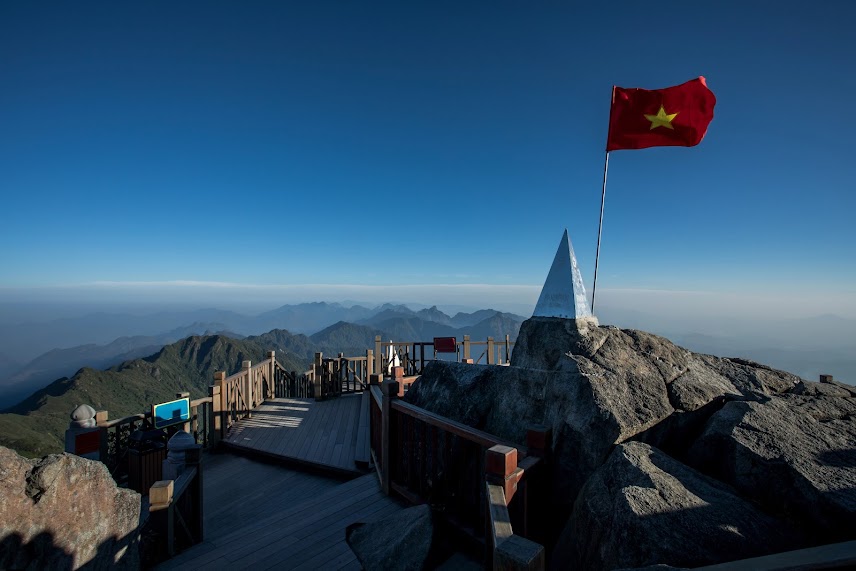
Witness the red flag with a yellow star fluttering proudly against the deep blue sky.
4.2 Muong Hoa Mountain Train
During your Fansipan journey, you can also experience the Muong Hoa mountain train, traveling from Sapa Station to Hoang Lien Station. Though the ride lasts only 6 minutes, it offers breathtaking views of the magnificent and romantic Muong Hoa Valley, where nature paints a beautiful scene of mountains, green forests, and winding paths.
The Muong Hoa mountain train is also highly praised by tourists as a masterpiece of art, designed in a classic European style that adds charm to the journey.
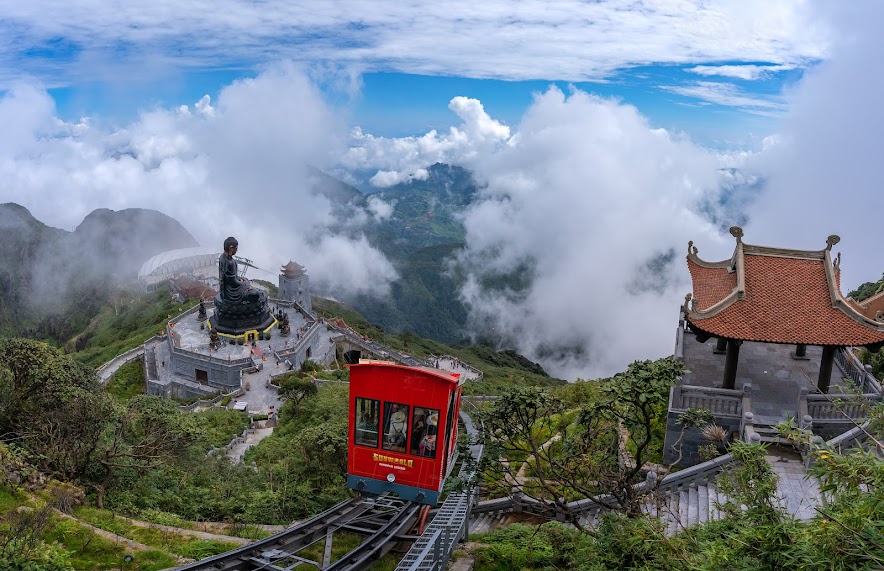
An elegant and impressive interior space inside the Muong Hoa mountain train.
4.3 Offering Incense at Trinh Pagoda – Bao An Zen Monastery
Trinh Pagoda, also known as Bao An Zen Monastery, is located at an altitude of over 1,600 meters within the stunning natural surroundings of Hoang Lien Station. Nestled in Vietnam's Northwest region, this pagoda is a place where visitors come to pray for peace and admire its unique architecture made of wood and brick.
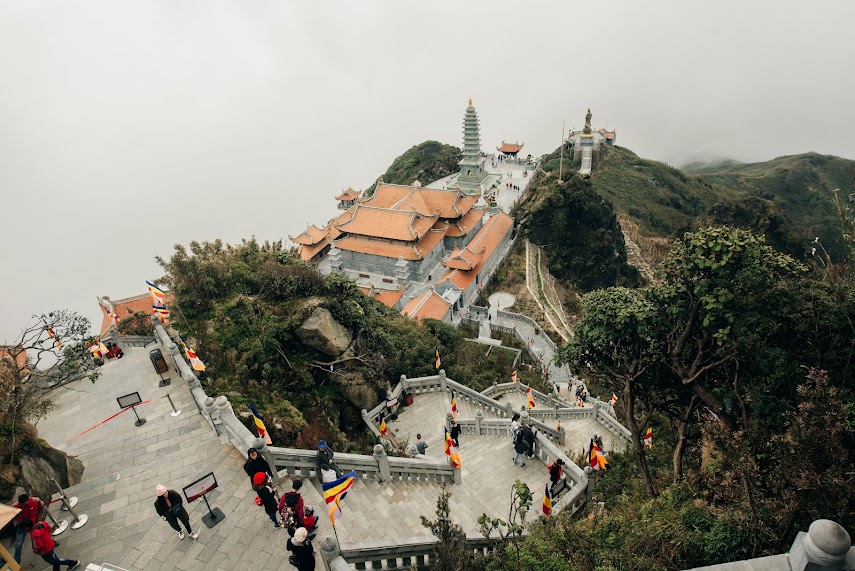
Trinh Pagoda – Bao An Zen Monastery is a perfect destination for those seeking peace and serenity.
4.4 Bich Van Zen Monastery
Perched at an altitude of over 3,000 meters near the summit of Fansipan, Bich Van Zen Monastery is a spiritual masterpiece that leaves visitors in awe. Built in the architectural style of the Tran Dynasty, the monastery reflects the deep history and rich culture of Vietnam.
In front of the monastery lies a vast courtyard where visitors can immerse themselves in the peaceful atmosphere and gaze out at the breathtaking natural landscape.
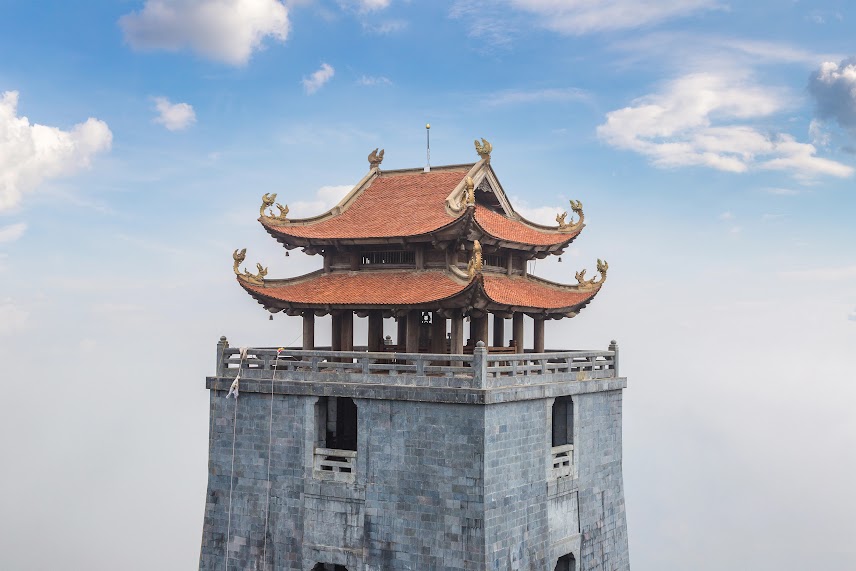
Bich Van Zen Monastery is designed with exquisite details, showcasing the richness of Vietnam's traditional culture.
4. 5 Vong Linh Cao Dai – Great Bell Tower (Dai Hong Chung)
Vong Linh Cao Dai – Dai Hong Chung is a prominent monument at the Fansipan tourist complex. Positioned along the main axis of Bich Van Zen Monastery, the Great Bell Tower is a unique architectural masterpiece. With its vertical layout and 8-layer curved roof, this grand monument is reminiscent of traditional Cao Dai architecture.
5. How Much Does a Trip to the Roof of Indochina Cost?
The cost of traveling to Fansipan depends on various factors such as duration of stay, transportation, accommodation, and entertainment activities.
5.1 Transportation
To conquer the “Roof of Indochina” – Fansipan Peak, you first need to get to Sapa. There are two main ways: by bus, by train
- Bus Ticket: Prices range from 200,000 VND to 400,000 VND per one-way ticket. The bus goes directly to Sapa town and takes around 8 hours from Hanoi.
- Train Ticket: Prices range from 250,000 VND to 500,000 VND per one-way ticket, depending on the class.
If traveling from other provinces, you can fly to Hanoi with Vietjet Air, with tickets starting from 72,000 VND. [See detailed information HERE].
5.2 Accommodation
Sapa offers a wide range of hotels and homestays with various price levels and styles to meet the needs of both domestic and international tourists.
If you prefer staying in the town center, along bustling streets like Fansipan, Muong Hoa, Ngu Chi Son, Ham Rong, you’ll find options ranging from budget to luxury hotels, as well as affordable homestays. The central area is ideal for activities such as sightseeing, shopping, and exploring attractions.
For those who love tranquility and nature, accommodations in Ta Van or Lao Chai villages are great options. However, staying in these areas might be a bit quiet at night with fewer entertainment options.
- Estimated accommodation cost per person per night in Sapa ranges from 300,000 VND to 4,000,000 VND, depending on your preferences.
5.3 Food & Dining
In Sapa, you can enjoy specialties of the Northwest ethnic groups, such as: Com Lam (Bamboo Sticky Rice): Fragrant sticky rice grilled in bamboo tubes. Roasted Pig (Cap Nach Pig): Tender, flavorful pork served hot. Khau Nhuc: A dish inspired by Chinese cuisine, loved by many tourists
- Food prices in Sapa are quite reasonable, ranging from 50,000 VND to 200,000 VND per meal.
5.4 Other Fun and Entertainment Activities:
Besides conquering Fansipan, you can also enjoy other activities such as trekking, hot spring bathing, climbing Ham Rong Mountain, and visiting Cat Cat Village or Can Cau Market.
- Entrance fees to ethnic villages like Cat Cat, Lao Chai, Ta Phin range from 50,000 to 100,000 VND.
- Entrance fee to Ban Ho Lake area is around 20,000 to 50,000 VND.
- Sun World Water Park tickets range from 200,000 to 500,000 VND, depending on the ticket type and services.
- Fansipan Cable Car ticket price ranges from 550,000 to 800,000 VND depending on the type of ticket.
- Fansipan trekking tours with a guide cost from 1,500,000 to 3,000,000 VND, depending on the tour type and included services.
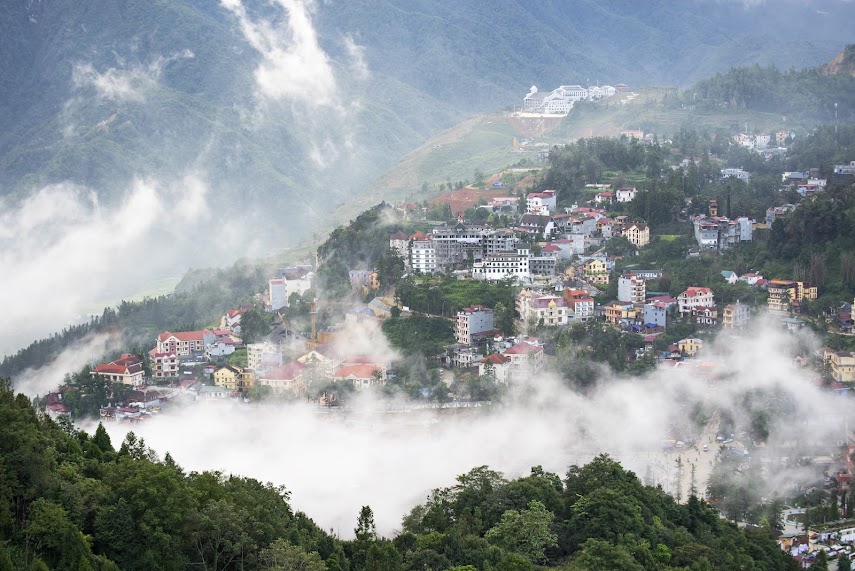
The total cost of a Sapa trip depends on various factors such as services, amenities, and the traveler’s preferences.
6. Tips for Conquering the Roof of Indochina
- Prepare your health: Train regularly before your trip to build enough stamina to conquer the mountain.
- Bring essential gear: Warm clothes, trekking shoes, gloves, hat, umbrella, sunscreen, and personal medication.
- Follow the rules: Listen to local guides and rescue staff.
- Protect the environment: Do not litter or damage the plants and surroundings.
- Pro Tip: Plan your trip carefully, book hotels and train/flight tickets in advance to ensure a smooth and budget-friendly journey.
See more: Sapa Travel 3 Days 2 Nights: Itinerary & Tips
Conquering Fansipan is not just about reaching the summit but also a journey of self-discovery. It's a chance to push your limits, explore the beauty of nature, and immerse yourself in vibrant culture.
If you get the chance, challenge yourself with the journey to the Roof of Indochina. To make your trip even more complete, you can book your Vietjet flight to Hanoi today.
Also, don’t forget to check out Vietjet’s special promotions with 0 VND domestic and international tickets available daily from 12 PM to 2 PM for the best deals! [See details HERE]
Stay tuned with Vietjet for the latest travel updates!
- Facebook: https://www.facebook.com/vietjetvietnam
- Instagram: https://instagram.com/vietjet
- YouTube: https://www.youtube.com/VietjetOfficial
- TikTok: https://www.tiktok.com/@vietjetvietnam
- Zalo: https://oa.zalo.me/vietjet