Booking
 Skyshop
 Hotel
Hotel
 E-Voucher
 E-Sim
E-Sim
 E-Visa
 Buy foreign currency
 Insurance
 SkyJoy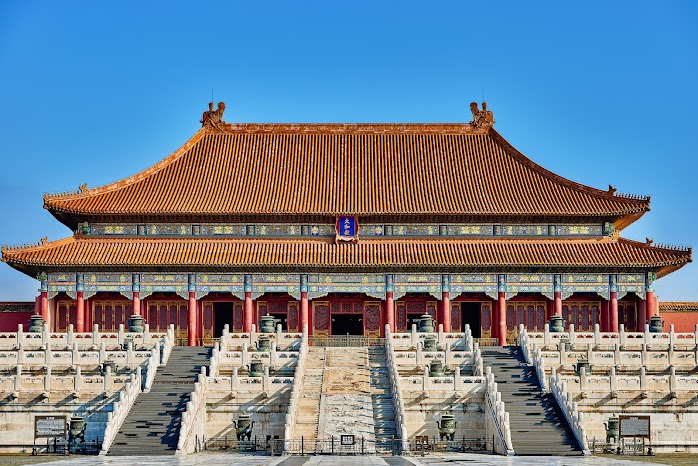
When thinking of China, travelers often get curious about the famous landmarks and historical sites that reflect the rich cultural heritage of this ancient nation. The Forbidden City is an irresistible tourist attraction and a heritage site representing a golden era that you shouldn't miss. If it's your first time visiting the Forbidden City, join Vietjet to explore some key highlights about this place!
1. Where is the Forbidden City?
The Forbidden City, also known as the Imperial Palace, is located in the capital city of Beijing, China. It lies to the north of Tiananmen Square and near Jingshan Park, in the heart of Beijing. The Forbidden City was recognized as a UNESCO World Heritage site in 1987.
Address: No. 4, Jingshan Front Street, Dongcheng District, Beijing, China.

Aerial view of the majestic Forbidden City, representing the grandeur of a bygone golden era.
Read more: What documents are needed for a tourist visa to China?
2. Overview of the Forbidden City, China
2.1 Meaning of the Name "Forbidden City"
The name "Forbidden City" originates from three Chinese characters: "紫" (Zi), "禁" (Jin), and "城" (Cheng). In English, it is known as the Forbidden City, or it is also called the Imperial Palace (故宫, Gugong).
- "紫" (Zi) symbolizes the color purple, which in ancient Chinese culture represents the supreme power and divinity of the emperor, as "Zi" also means "Son of Heaven" - referring to the emperors.
- "禁" (Jin) means "forbidden," indicating that this area was off-limits to commoners and reserved only for the royal family and officials.
- "城" (Cheng) means "city," reflecting the vast scale and grandeur of the structure.
The Forbidden City was not only the residence of the emperors but also the political and ceremonial center of the Chinese imperial government for centuries.
2.2 History of the Forbidden City's Construction
The Forbidden City was constructed from 1406 to 1420 during the reign of the Yongle Emperor, the third emperor of the Ming Dynasty, Zhu Di. Zhu Di, son of Emperor Zhu Yuanzhang, was an exceptionally talented and intelligent ruler. He successfully usurped the throne from his nephew, Jianwen Emperor, and ascended to the throne. To consolidate his power, he ordered the construction of a grand and magnificent palace - the Forbidden City.
The Forbidden City was completed after 14 years of continuous construction with the labor of hundreds of thousands of workers and skilled craftsmen. The project used the most luxurious materials available at the time, such as Suzhou bricks, precious wood from the South, precious stones from Fangshan, and Anhui jade enamel.
A noteworthy aspect is the architect behind the Forbidden City: Nguyen An, a eunuch from Ha Dong, Hanoi, Vietnam, known as A Luu in China. Captured and brought to China as a eunuch, Nguyen An's exceptional talent, intelligence, and quick wit earned him the responsibility of designing the Forbidden City.

The Forbidden City remains a "monument" of urban planning to this day.
The architecture of the Forbidden City is a perfect blend of artistic design, urban planning, and construction techniques, creating a space that is both vast and refined, with significant cultural, historical, and practical value even today.
After the Ming Dynasty's fall, the Qing Dynasty continued to use the Forbidden City as the residence and workplace of the emperors. The Forbidden City was not only the site of the imperial court's political and administrative activities but also the venue for important ceremonies such as coronations, the empress's honorific ceremonies, and royal festivals.
2.3 Area of the Forbidden City in China
The Forbidden City covers an area of approximately 720,000 square meters, with over 980 buildings and 9,999 rooms (this number symbolizes power and complete happiness), surrounded by walls over 7.9 meters high, 6 meters thick, and a moat about 52 meters wide. It is the largest royal palace in the world, built with exquisite and artistic architecture.
The structure of the Forbidden City includes main areas such as the Outer Court, the Inner Court, various palaces, temples, and imperial gardens. Each area has its unique architecture and profound symbolic meaning.

The vast Forbidden City in China was the residence of the entire royal family during the Ming and Qing dynasties.
2.4 Opening Hours and Ticket Prices for the Forbidden City
The Forbidden City is open year-round, with hours varying depending on peak and off-peak tourist seasons. On holidays and special events, the Palace Museum may adjust its opening hours, so visitors should check for updates before their visit.
Regular Opening Hours:
- April 1 – October 31: 8:30 AM – 5:00 PM (last admission at 4:10 PM)
- November 1 – March 31: 8:30 AM – 4:30 PM (last admission at 3:40 PM)
Ticket Prices for the Forbidden City:
- April – October: 60 CNY per person (~200,000 VND)
- November – March: 40 CNY per person (~130,000 VND)
Note: Children under 1.2 meters and seniors over 60 years old often receive discounted or free admission. Additionally, visitors can purchase tickets online in advance to avoid ticket shortages at the entrance and save time waiting in line.
3. Transportation to the Forbidden City, China
3.1 Traveling to Beijing
To visit the Forbidden City, travelers must first get to Beijing. Here are three popular methods of transportation:
By Plane
Flights from Vietnam to Beijing depart from major international airports such as Noi Bai (Hanoi), Tan Son Nhat (Ho Chi Minh City), and Da Nang (Da Nang).
The average flight time from Hanoi to Beijing is 3 hours, but longer if the flight has layovers. You can choose Vietjet for attractive offers when booking flights to Beijing. This is also the fastest, most convenient, and least exhausting way for travelers.
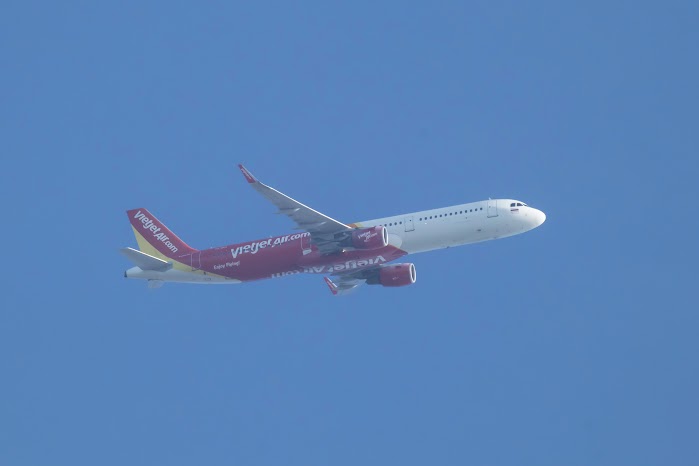
Vietjet Air is an excellent choice for travelers wishing to visit the Forbidden City, Beijing, China.
By Train
Travelers wishing to visit the Forbidden City can choose the train as their mode of transportation. China is one of the few countries with a railway connection to Vietnam, but the departure point is only in Hanoi.
There are two main train routes to consider:
- Hanoi – Nanning – Beijing
- Hanoi – Lao Cai – Hekou – Beijing
By Bus
Taking a bus is also a good option if you want to get to Beijing. You will travel to the Tan Thanh border gate (Lang Son), then complete the immigration procedures to enter China. Once in China, travelers can continue their journey by bus, subway, or high-speed train to Beijing. Currently, there are no direct bus routes from Hanoi to Beijing.
3.2 Traveling from Beijing City Center to the Forbidden City
From Beijing city center, you can visit the Forbidden City by taxi, bus, or subway.
- Taxi: Taxis are the most convenient and quickest way to travel within the city. You can easily catch a taxi at hotels, shopping centers, or on the street. However, you might encounter traffic jams during peak hours.
- Bus: Beijing has a well-developed public bus network with many routes passing by the Forbidden City. You can use a mobile app to find the suitable bus route and specific schedules.
- Subway: The subway is the fastest and most convenient mode of transportation. You can take subway line 1 and get off at Tiananmen West (西天安门) or Tiananmen East (东天安门) station, then walk to the Forbidden City. Beijing's subway system is easy to use, with signs and announcements in English for the convenience of tourists.
4. Exploring the Forbidden City from A to Z
4.1 Outer Court
The Outer Court is the area at the front of the Forbidden City, where grand ceremonies and important meetings of the imperial court took place. This is the only area where officials, courtiers, and foreign envoys were allowed to enter. The Outer Court includes the main buildings: the Hall of Supreme Harmony, the Hall of Central Harmony, and the Hall of Preserving Harmony.
To enter and explore the Forbidden City, you need to pass through the Meridian Gate. The Meridian Gate has five arched entrances: the central gate for the emperor, the two side gates for officials, and the outermost gates for eunuchs, soldiers, and maidservants.
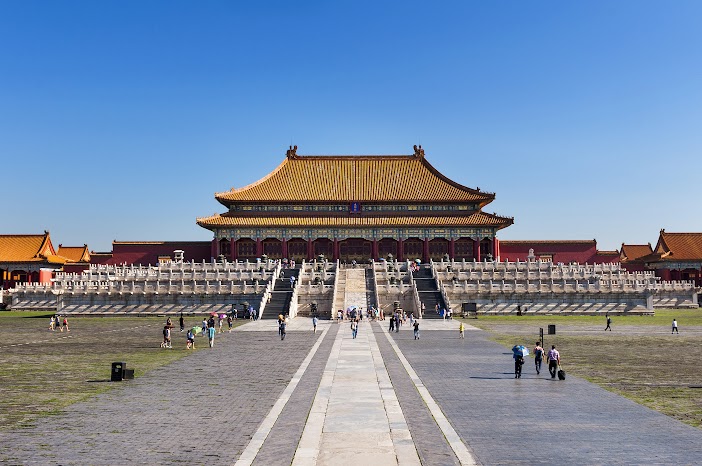
The Outer Court is the area at the front of the Forbidden City, where grand ceremonies and important meetings of the imperial court took place.
4.2 Inner Court (Rear Palace)
The Inner Court, or Rear Palace, is the living area of the emperor, empress, and concubines. The Inner Court was strictly managed and off-limits to commoners. The central area of the Rear Palace is divided into three main palaces: the Palace of Heavenly Purity, the Palace of Earthly Tranquility, and the Hall of Union. The emperor resided in the Palace of Heavenly Purity, the empress and concubines in the Palace of Earthly Tranquility, and the Hall of Union symbolizes the harmony of Yin and Yang, situated between the two palaces.
4.3 Palace of Heavenly Purity
The Palace of Heavenly Purity, also known as Qianqing Palace, was the workplace and resting place of the emperor. It is the largest building in the Inner Court and is luxuriously decorated, symbolizing the supreme power of the emperor.
The Palace of Heavenly Purity is built in traditional Chinese architectural style with glazed tile roofs and intricate decorations. Inside, there are many large rooms, each lavishly decorated with antique furniture and displaying valuable artworks. The palace is divided into two parts, each with 9 rooms and 27 beds. Each night, the emperor would randomly choose a bed to sleep in.
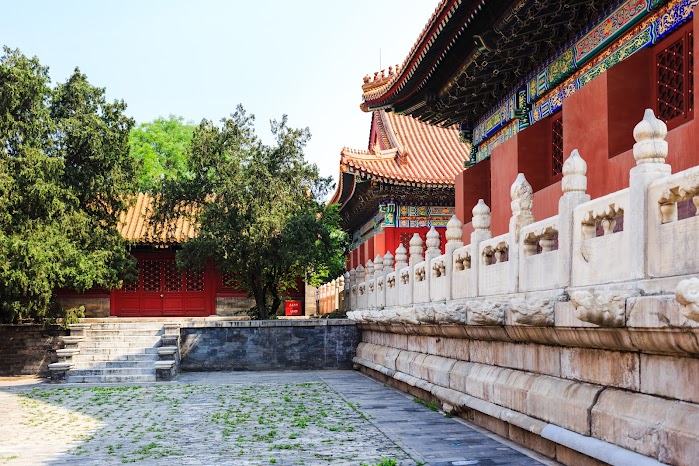
The Palace of Heavenly Purity is the largest building in the Inner Court, serving as the workplace and resting place of the emperor.
Visitors to the Palace of Heavenly Purity can also admire the splendid throne. Above the throne is a plaque with the inscription "正大光明" ("Upright and Honest"). Every detail in the palace is meticulously carved, reflecting the glory of power.
4.4 Hall of Supreme Harmony
The Hall of Supreme Harmony is where the grandest ceremonies, such as the emperor's coronation and important court meetings, were held. It is the most prominent architectural work in the Forbidden City, known for its grandeur and magnificence.
The Hall of Supreme Harmony is built on a high platform with a bright yellow tiled roof, symbolizing the emperor's majesty and power. Inside, every detail is meticulously crafted, from the finely carved pillars to the magnificent wall paintings.

The Hall of Supreme Harmony is where the grandest ceremonies, such as the emperor's coronation and important court meetings, were held.
4.5 Palace of Earthly Tranquility
The Palace of Earthly Tranquility is the residence of the empress and concubines. It is the site of important ceremonies related to royal life. The Palace of Earthly Tranquility has similar architecture to the Palace of Heavenly Purity but with a more feminine touch, featuring softer motifs and elegant decorations. Inside, the rooms are equipped with luxurious furniture, reflecting the opulent life of the royal family.
4.6 Imperial Garden
The Imperial Garden is the royal garden located at the north end of the Forbidden City. It is a place where the royal family relaxed and hosted garden parties. The garden features many ancient trees, ponds, and beautiful architectural structures. The Imperial Garden is harmoniously designed with nature, creating a serene and poetic space within the palace. The stone paths, small bridges, and intricately decorated buildings make the Imperial Garden an attractive destination for visitors.
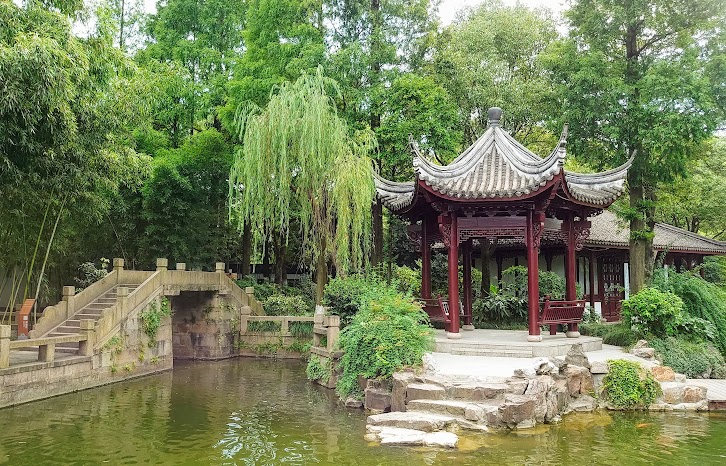
The Imperial Garden is harmoniously designed with nature, creating a peaceful and poetic space within the palace.
5. Important Tips for Visiting the Forbidden City
To make your visit to the Forbidden City memorable and complete, don't forget these important tips:
- Timing: Arrive early to avoid the crowds and enjoy the peaceful atmosphere. The best times to visit are early in the morning or late in the afternoon when the number of visitors decreases.
- Attire: Wear comfortable clothing and walking shoes as you will need to walk a lot. The Forbidden City is vast with many attractions, making extensive walking unavoidable.
- Guide: Consider hiring a guide or using a tour guide app to better understand the history and stories related to the Forbidden City.
- Pre-book Tickets:Buy tickets online in advance to avoid the risk of them being sold out at the entrance. This also saves you time queuing up and allows you to start your tour immediately upon arrival.
- Respect Rules: Follow the visiting rules, do not touch artifacts, and do not litter. The Forbidden City is a significant cultural heritage site, and protecting and preserving it is the responsibility of every visitor.
- Weather: Beijing has distinct four seasons, with hot summers and cold winters. Check the weather forecast before your trip and dress appropriately. Spring and autumn are the ideal times to visit the Forbidden City, with cool and pleasant weather.
Read more: How much does a trip to China cost? 7-day China travel guide.
Visiting the Forbidden City is a wonderful experience to learn more about Chinese history and culture. We hope the tips provided by Vietjet will help you have an enjoyable and memorable trip!
Don't forget, if you book tickets during the golden hour every Friday, you have a chance to get flight tickets to Beijing, China for 0 VND.
Stay updated with the latest travel guides and promotions at: