Booking
 Skyshop
 Hotel
Hotel
 E-Voucher
 E-Sim
E-Sim
 E-Visa
 Buy foreign currency
 Insurance
 SkyJoy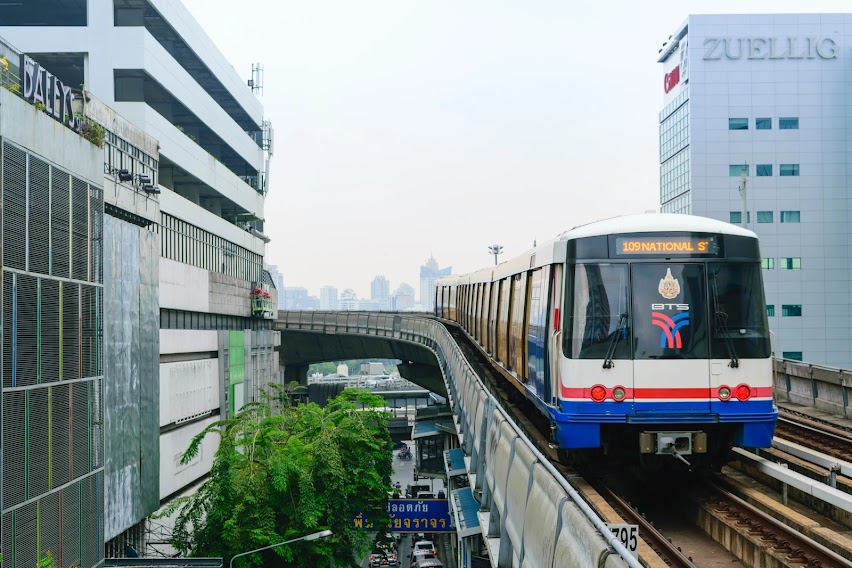
Traffic congestion is considered a "specialty" of Thailand due to the dense population and large number of tourists. Thus, to facilitate travel, the subway and skytrain are the optimal choices. Thailand's train system runs precisely to the minute, operating continuously from early morning until midnight, passing by most of the famous tourist spots, helping you save time and costs.
The article below will provide information about the subway system in Thailand and a detailed guide on how to use the train in Thailand.
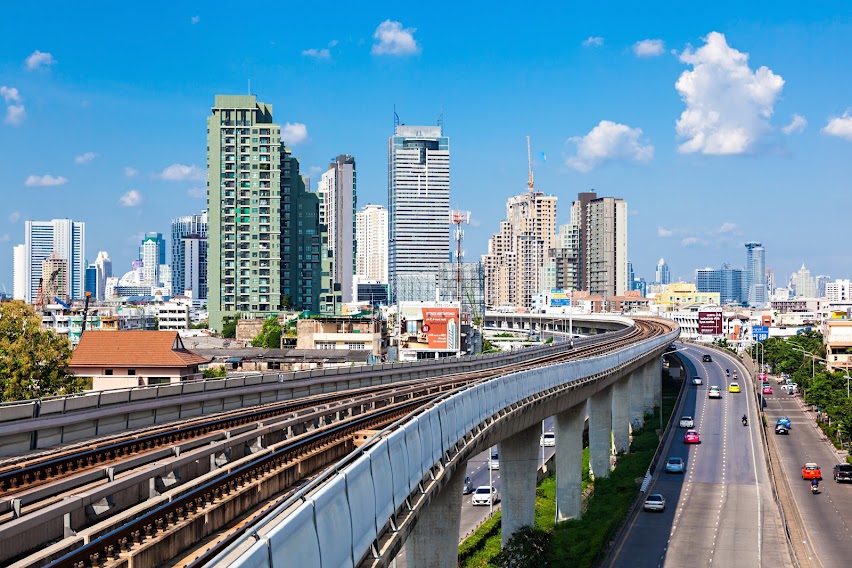
To facilitate travel in Bangkok, you should choose the subway and skytrain.
1. How to Use the Subway in Thailand
1.1 What is the Subway (MRT)?
The subway (MRT - Mass Rapid Transport) is an underground train system that operates continuously from 6:00 AM to midnight. On average, there is a train every 5-7 minutes, with ticket prices ranging from 16 - 42 baht per trip (approximately 11,000 - 30,000 VND per trip), helping you travel quickly and save costs.
1.2 Subway Stations in Thailand
The subway system in Thailand currently has about 18 stops, running from the North (near Chatuchak Market - Bang Sue Station) to the South (near Chinatown - Hua Lamphong Station). Here are some important stations for your trip:
- Chatuchak Park Station: next to Chatuchak Park, near the Chatuchak Weekend Market, where you can catch bus A1 to Don Muang Airport.
- Thailand Cultural Centre Station: near the theater for the Thai historical art show Siam Niramit, near the 3D Art in Paradise Bangkok museum.
- Phetchaburi Station: near R.C.A Plaza where the Cookin Nanta comedy show is held, interchange with Airport Rail Link (Makkasan Station) to Suvarnabhumi Airport.
- Sukhumvit Station: interchange with the BTS Sukhumvit line, near Terminal 21 shopping mall.
- Silom Station: interchange with the BTS Silom line.
- Hua Lamphong Station: near Chinatown, Yaowarat Food Street.
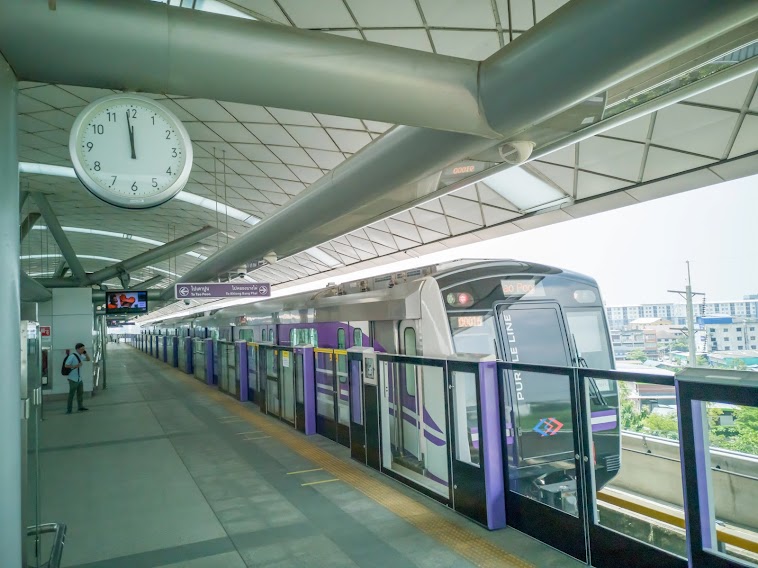
The subway system in Thailand has about 18 stops, running from Bang Sue Station to Hua Lamphong Station.
1.3 Guide on Using the Subway in Thailand
Step 1: You can buy tickets from automatic vending machines or queue to buy tickets directly at the counter. For counter purchases, simply tell the staff the station you want to go to.
For purchases from vending machines:
- Identify the station you want to go to and press the station name on the screen at position 1. The machine will inform you of the amount you need to pay.
- Insert coins or bills into the slot at position 2.
- Collect your change and ticket at position 3.
Step 2: You will receive a plastic coin as your ticket. Scan this coin to open the control gate. Note: You must keep this coin throughout your trip.
Step 3: Determine the direction of the train and queue up behind the yellow line, staying to the sides to allow people to exit before boarding.
Step 4: When exiting the station, insert the coin into the slot. The machine will retain the coin.
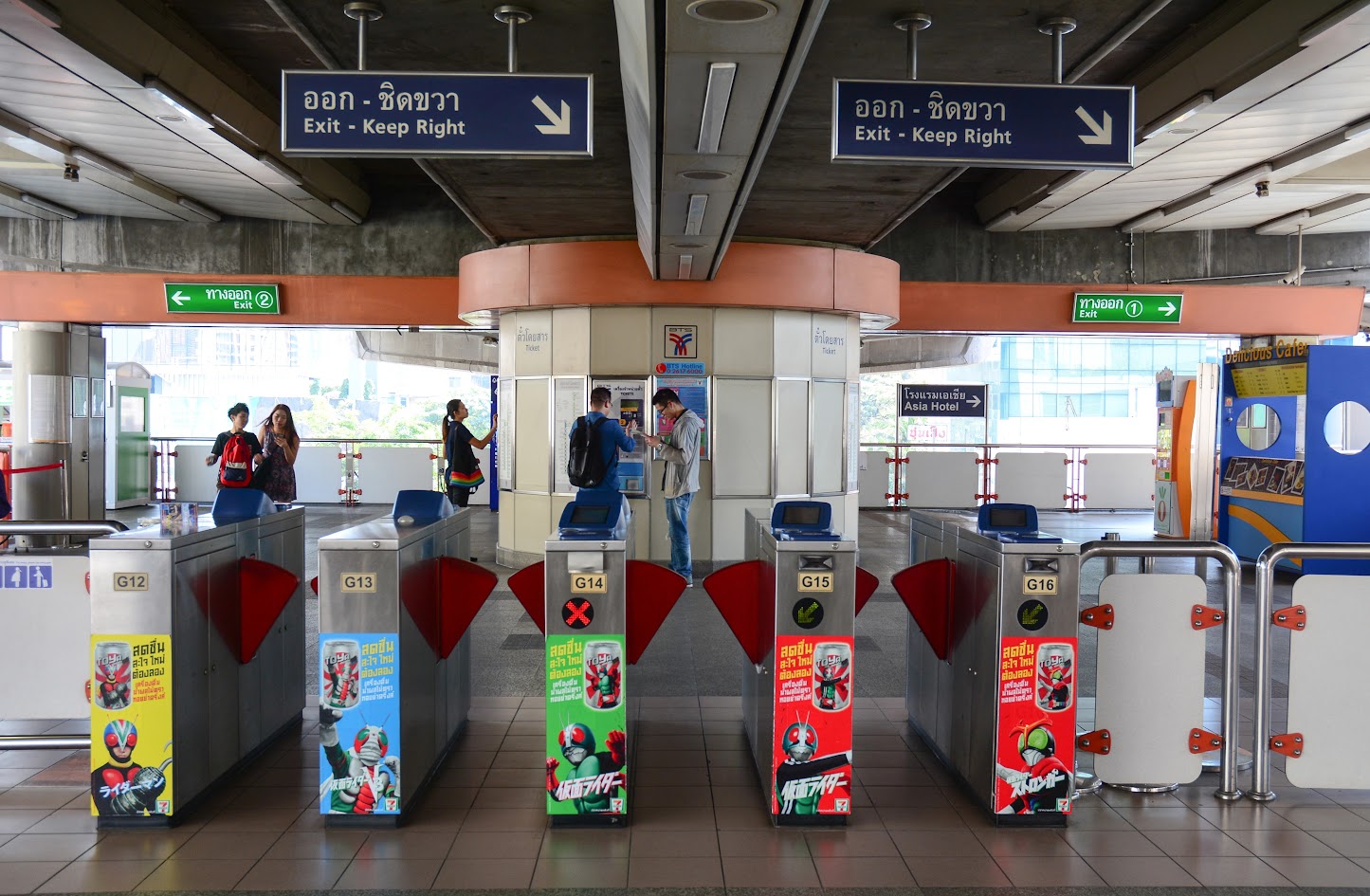
Scan the plastic coin (ticket) to enter the MRT control gate.
2. How to Use the Skytrain in Thailand
2.1 What is the Skytrain (BTS)?
The Bangkok Skytrain system (BTS - Bangkok Skytrain) operates on elevated tracks. The trains run daily from 6:00 AM to midnight, with a train arriving every 3-6 minutes. Ticket prices range from 15 to 59 baht per trip (approximately 10,000 - 30,000 VND per trip).
2.2 Skytrain Stations in Thailand
The BTS system in Thailand has two main lines:
Silom Line: runs from the west to the south, starting at National Stadium (W1) and ending at Bang Wa (S12) and vice versa. Key stations to note include:
- National Stadium (W1): near the National Stadium, MBK shopping center, Bangkok Art and Culture Centre, and Jim Thompson’s House.
- Siam (Central Station): the central and largest station of the BTS system, an interchange for the BTS Silom and Sukhumvit lines. Nearby are major shopping centers such as Siam Paragon, Siam Centre, and Central World, as well as Madame Tussauds Bangkok and Sea Life Ocean World.
- Sala Daeng (S2): interchange with the MRT line, close to the entertainment area of Silom Road, Patpong, and Silom Complex shopping center.
- Saphan Taksin (S6): the closest station to the Chao Phraya River, located under the Sathorn Pier, where you can take a free boat to the Asiatique shopping area. Near Si Phraya Pier, the starting point for many Chao Phraya River dinner cruises.
Sukhumvit Line: runs from the north to the east, starting at Mo Chit (N8) and ending at Bearing (E14) and vice versa. Key stations to note include:
- Mo Chit (N8): the closest station to Don Muang Airport, connected to the airport by bus line A1 (one bus every 30 minutes). Located next to Chatuchak Park, a 5-minute walk to Chatuchak Weekend Market, and an interchange with the MRT line and Mo Chit Bus Station (starting point for buses to Ayutthaya, Sukhothai, and Chiang Mai).
- Phayathai (N2): interchange with the Airport Rail Link (to Suvarnabhumi Airport). One more Airport Rail Link stop leads to Ratchaprarop Station, close to Baiyoke Sky Bangkok and the King Power complex.
- Ratchathewi (N3): near the Pratunam area (popular with Vietnamese tourists), about 1 km from Platinum shopping center and Pratunam market.
- Siam (Central Station): the central and largest station of the BTS system, an interchange for the BTS Silom and Sukhumvit lines. Nearby are major shopping centers such as Siam Paragon, Siam Centre, and Central World, as well as Madame Tussauds Bangkok and Sea Life Ocean World.
- Nana (E3): near Sukhumvit Soi 11, a vibrant area with numerous bars and nightclubs (exit 3) and Nana Plaza, known for its go-go bars (exit 2).
- Asok (E4): interchange with the MRT line, close to Terminal 21 shopping mall and Soi Cowboy, also famous for its go-go bars.
- Ekkamai (E7): near Ekkamai Bus Station, from where you can catch a bus to Pattaya.
- Udomsuk (E12): the nearest station to catch a shuttle bus to Mega Bangna.
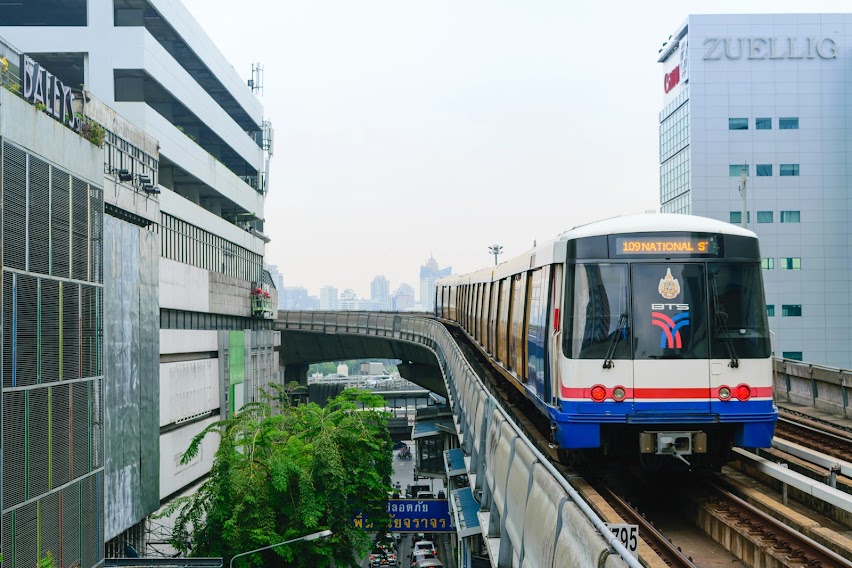
The BTS system in Thailand has two main lines, passing through most of Bangkok's famous locations.
2.3 Guide on Using the Skytrain in Thailand
Step 1: Exchange paper money for coins at ticket counters.
Step 2: Buy tickets at automatic vending machines.
- Identify the station you want to go to. Check the corresponding number to your desired station on the "Fare Information" board. This number is the ticket price you need to pay.
- There are four slots numbered 1 to 4. Press the button corresponding to the ticket price you need to pay in slot 1.
- Insert coins into slot 2; the amount must be equal to or greater than the ticket price.
- Once enough coins are inserted, a magnetic card ticket will be dispensed from slot 3.
- Change will be returned at slot 4.
Step 3: At the ticket gate, insert the card into the lower slot and retrieve it from the upper slot. Note: You must keep the card throughout your journey. When exiting, repeat the same procedure (insert the card following the arrow direction on the card).
Step 4: Determine the direction you need to go. Queue behind the yellow line, stand to the sides, allowing people to exit the train first before boarding.
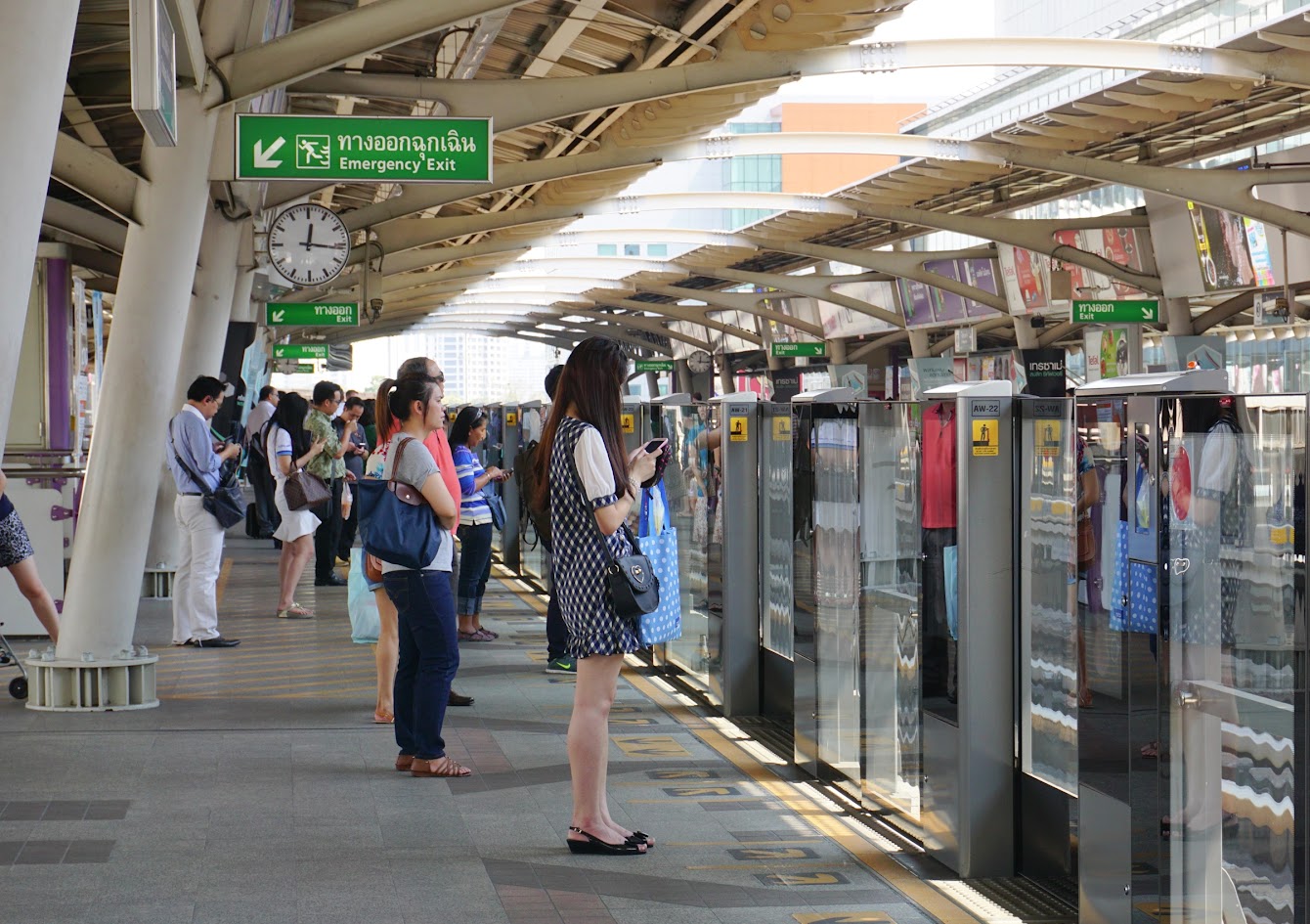
Queue behind the yellow line and allow people to exit the train first.
2.4 Buy a BTS One-day Pass
If you plan to travel to multiple stations in one day, buy a One-day Pass to travel freely until midnight on that day. The cost of one pass is about 140 baht (approximately 97,000 VND). To buy the pass, go to the ticket counter, ask for a "One-Day Pass" and specify the quantity you want to purchase, then make the payment.
Read more: How much does traveling to Thailand cost?
I hope this article helps you travel more conveniently during your upcoming trip to Bangkok. Don’t miss the chance to hunt for Vietjet's flight tickets to Thailand starting from 210,000 VND (excluding taxes and fees). You can also look forward to the 0 VND ticket promotion for international flights every Friday HERE.
Don’t forget to follow Vietjet for the latest travel information and offers.