Booking
 Skyshop
 Hotel
Hotel
 E-Voucher
 E-Sim
E-Sim
 E-Visa
 Buy foreign currency
 Insurance
 SkyJoy
Not only famous for its pristine blue sea, Sa Huynh (Quang Ngai) is also known as the cradle of one of the oldest traditional crafts in Central Vietnam - Sa Huynh Salt Village. With its sprawling white salt fields by the coast, the diligent working rhythm of salt farmers, and a cultural value that has been intertwined for hundreds of years, this place is gradually becoming an attractive destination for travelers who love local experiences and photography. The journey to explore Sa Huynh Salt Village is not just a scenic trip but also an opportunity to touch the depths of life in a typical coastal craft village. Let's explore with Vietjet!
1. Sa Huynh Salt Village - Traditional Craft Village by the Coast of Quang Ngai
Sa Huynh Salt Village is located in Pho Thanh Ward, Duc Pho Town, now Sa Huynh Ward, Quang Ngai Province, right next to the gentle Sa Huynh coastline. This is the largest salt production area in the province, with salt fields covering hundreds of hectares, creating a vast and distinctive working space that is hard to confuse with any other place.
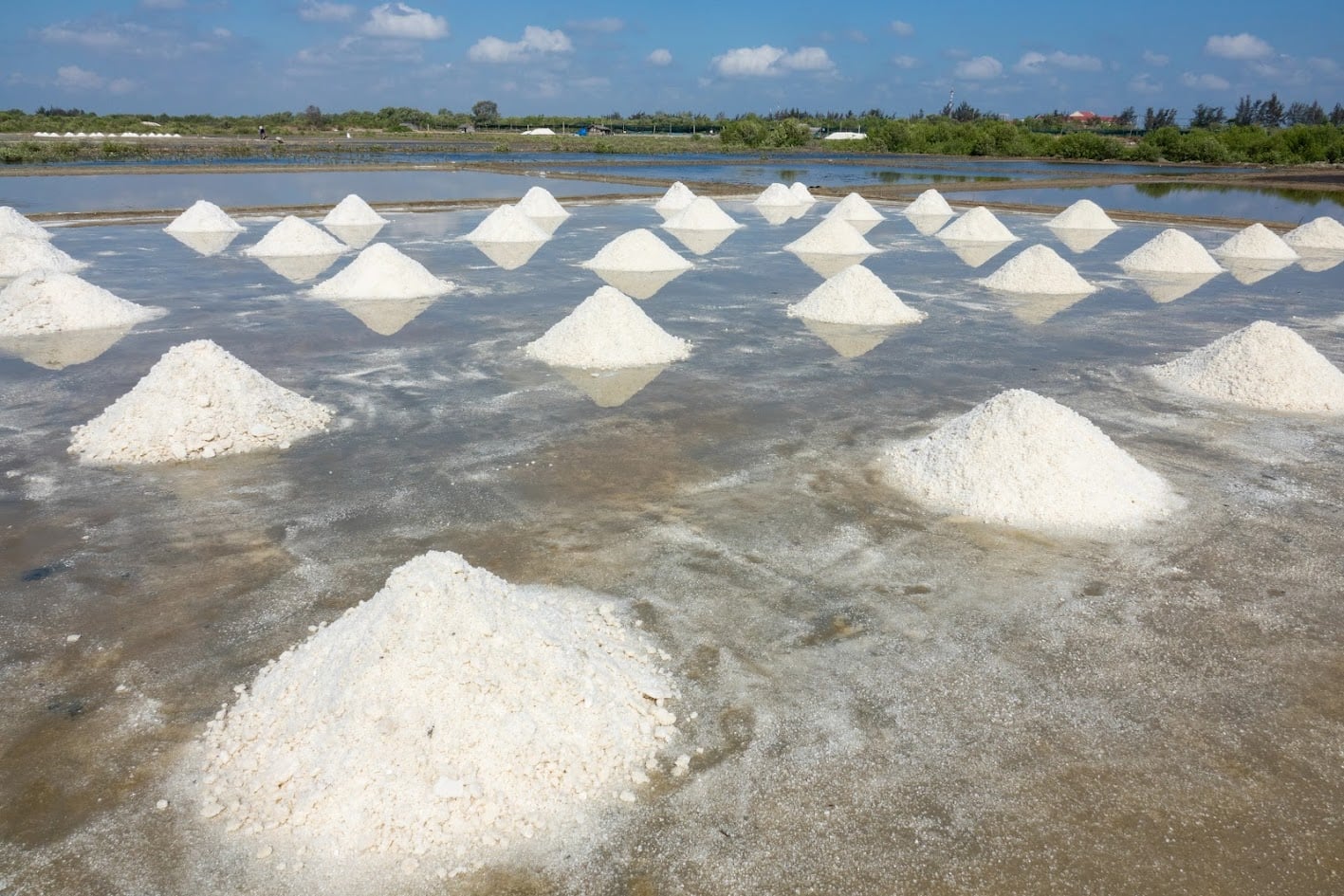
Sa Huynh Salt Village is a traditional craft village by the coast of Quang Ngai, famous for its sprawling white salt fields and a history intertwined with the lives of salt farmers in Central Vietnam for hundreds of years.
The history of Sa Huynh Salt Village is closely linked to favorable natural conditions, including plenty of sunshine, stable sea breezes, and coastal land suitable for salt crystallization. For hundreds of years, salt-making has become the main livelihood of the local people, passed down from generation to generation as an inseparable part of community life. Despite many fluctuations, the salt village has been maintained, not only as an economic role but also as a distinctive cultural symbol of the Sa Huynh land.
In the overall picture of salt villages in Central Vietnam, Sa Huynh holds a special position thanks to its large scale, stable production, and high-quality salt. Today, in addition to production activities, Sa Huynh Salt Village also contributes to enriching local tourism products, attracting visitors who love experiencing craft villages and learning about local culture.
2. The Salt-Making Profession in Sa Huynh - The Beauty of Labor in the Central Salt Village
Before delving into each specific step, let's take a look at the overall characteristics that make up the unique identity of the salt-making profession at Sa Huynh Salt Village – one of the typical salt villages in Central Vietnam that still retains traditional production methods.
2.1 Characteristics of Traditional Salt-Making
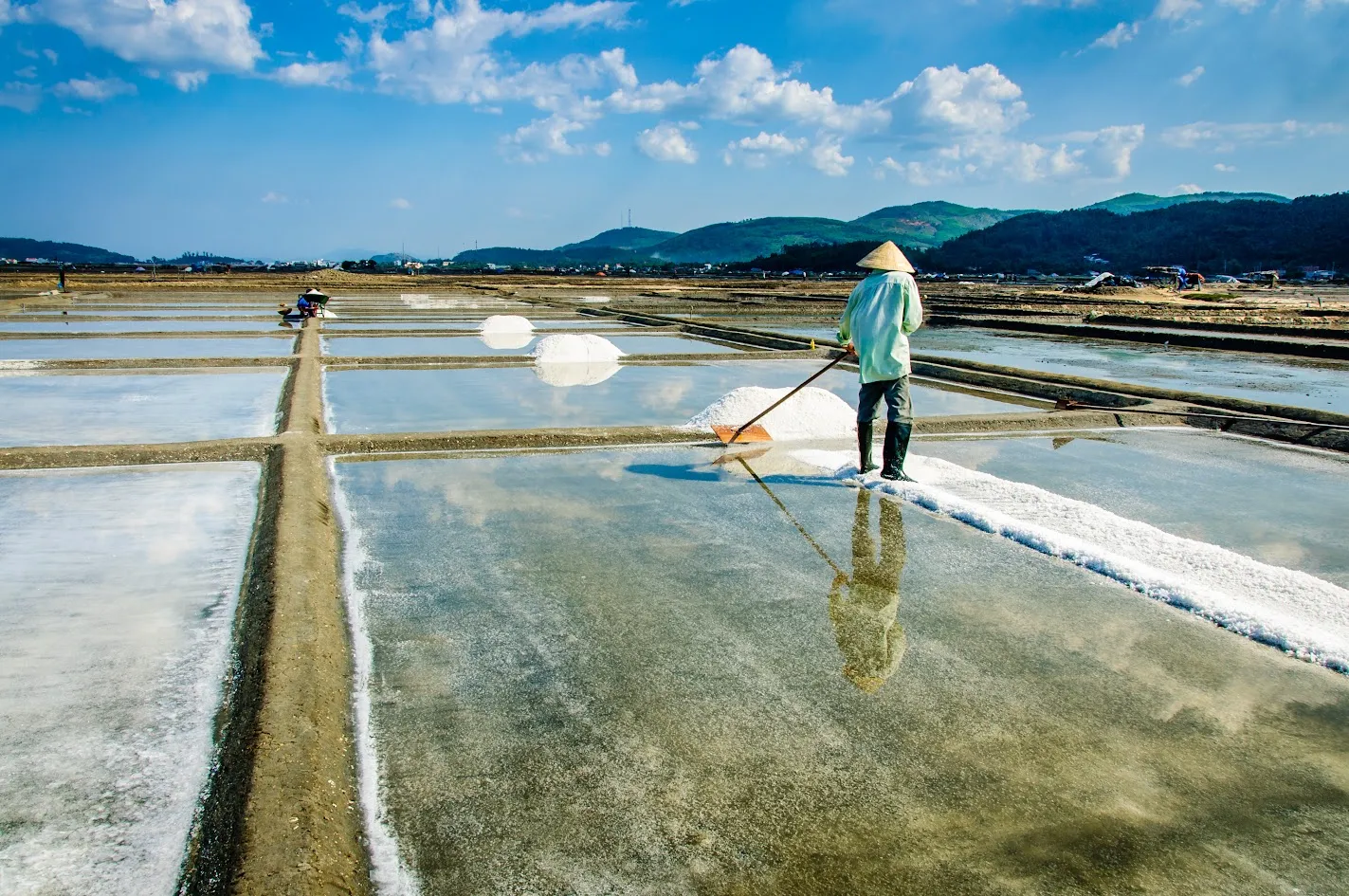
The salt-making profession in Sa Huynh still primarily relies on traditional manual methods, maximizing the use of sunshine and sea breezes. From leading seawater into the fields, drying the water, waiting for crystallization to harvesting, each step requires patience, experience, and the enduring labor of salt farmers. Under the harsh sun of Central Vietnam, the pure white salt crystals gradually form, crystallizing from the sweat and diligence of the people.
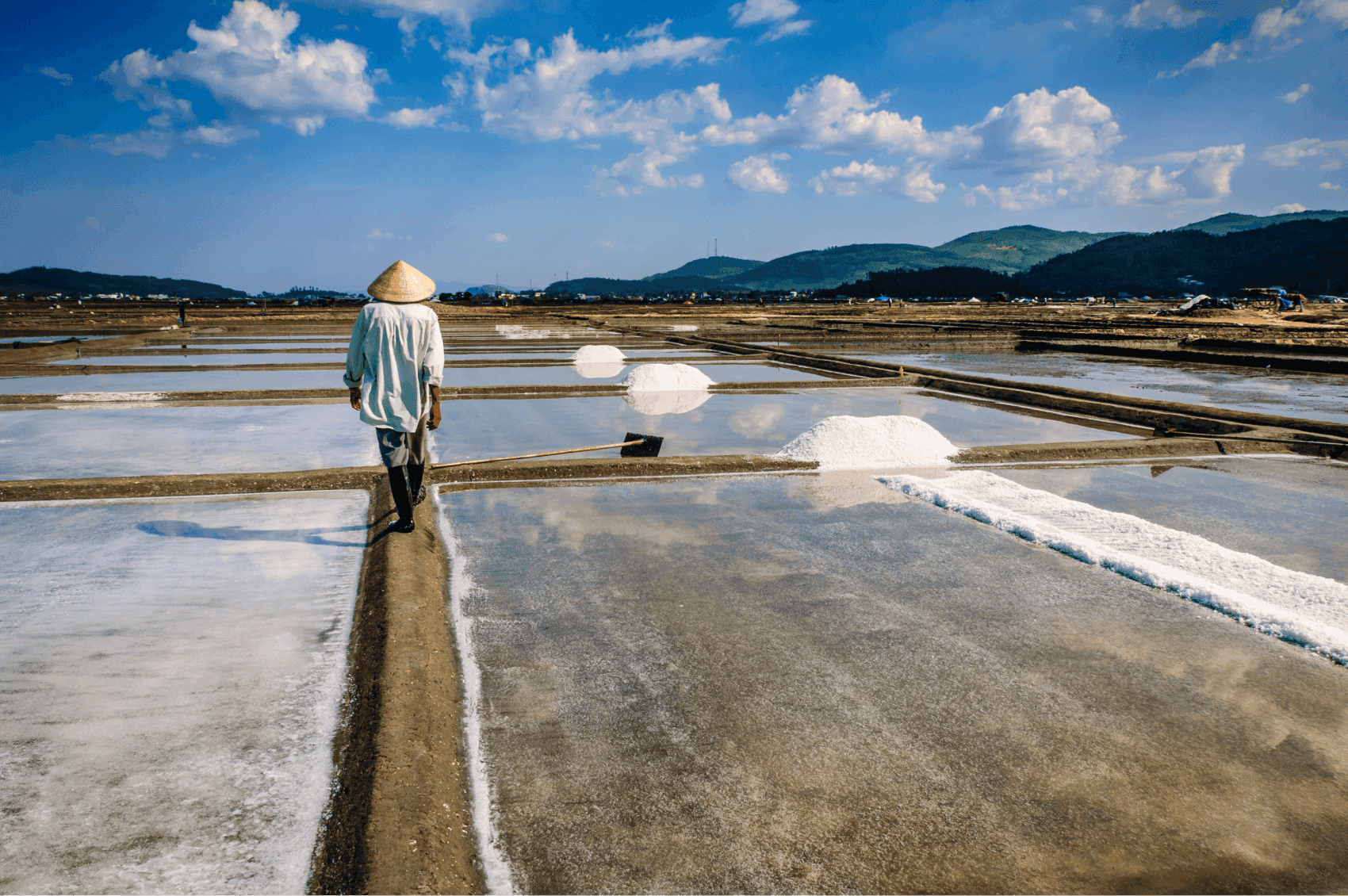
The image of salt farmers wearing conical hats, raking salt in the white fields has become a familiar symbol, reflecting the rustic yet vibrant beauty of the traditional coastal craft village.
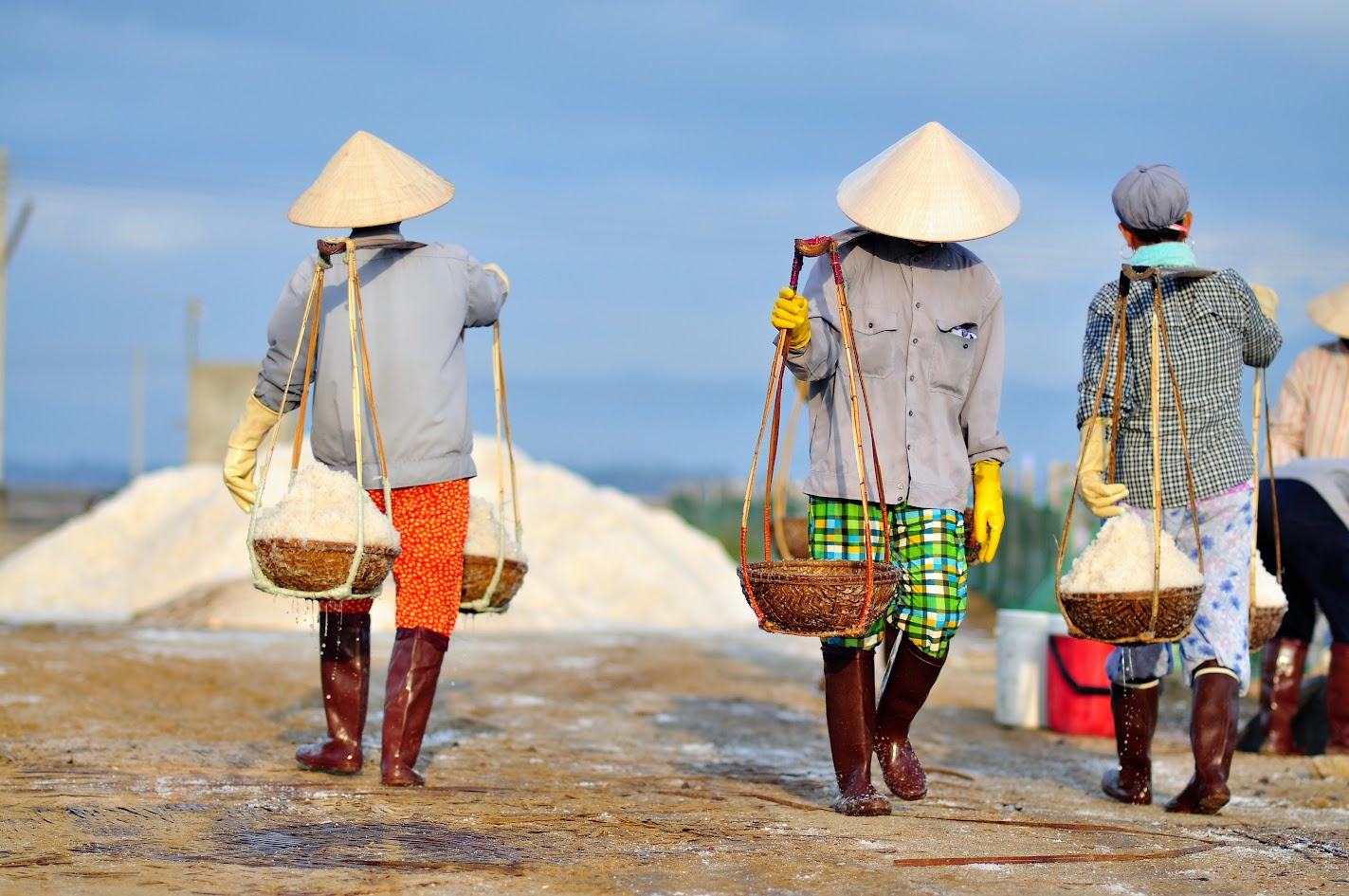
The farmers of Sa Huỳnh Salt Village dedicate their lives to the salt fields, diligently working under the sun and wind to preserve the traditional craft of the Central coastal region.
2.2 The Distinctiveness of Sa Huynh Salt Village
What makes Sa Huynh Salt Village stand out is the salt's strong salty flavor, firm grains, and high purity due to its unique natural conditions. Additionally, the salt fields located close to the sea create an open, spacious landscape, ideal for sightseeing and photography activities. Compared to many other salt villages in Central Vietnam, Sa Huynh still retains a clear traditional working rhythm, not overly commercialized, providing a genuine experience for visitors.
3. Experiences in Sa Huynh Salt Village
When visiting Sa Huynh Salt Village, there are many interesting activities for you to experience here. You can be an eager traveler capturing memorable moments, but you can also play the role of a salt farmer harvesting salt. Let's list some exciting experiences with Vietjet!
3.1 Check-in at Sa Huynh Salt Fields
One of the most loved activities when coming here is checking in at Sa Huynh Salt Fields. In the dry season, the salt fields reflect the sunlight, creating a shimmering scene, especially beautiful in the early morning or late afternoon. The contrast between the white salt background, the blue sky, and the diligent salt farmers provides emotionally rich frames, deeply rooted in coastal life.
No elaborate staging is needed; the simple beauty of labor has turned Sa Huynh Salt Village into a popular photo spot for many travelers and photographers.
3.2 Visiting and Experiencing Salt-Making
In addition to photography, visitors also have the opportunity to directly participate in some salt-making steps with local people. Trying to rake salt, carry salt, or listening to stories related to the profession makes the trip more meaningful, not just stopping at sightseeing but also understanding and sharing the life of the craft village.
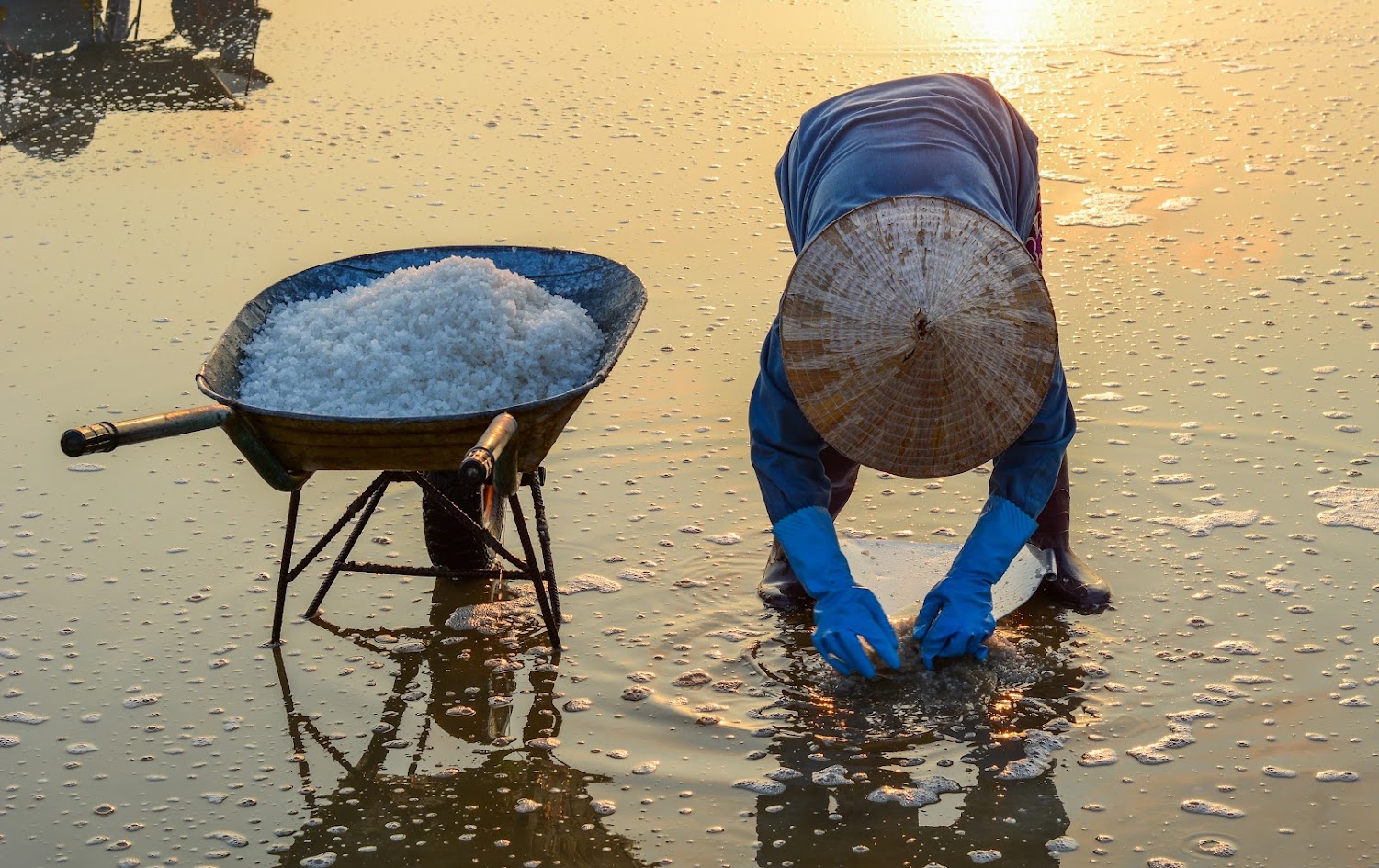
Experiencing salt-making with Sa Huynh salt farmers allows visitors to directly participate in traditional steps, feeling the diligent working rhythm and the long-standing cultural value tied to the sea.
3.3 Enjoying Sa Huynh Cuisine
After exploring the salt fields, visitors can enjoy local cuisine with fresh seafood dishes, simply prepared but rich in sea flavors. Sa Huynh salt - the product of the craft village - is also the seasoning that gives a unique touch to many dishes here, creating a complete connection between traditional craft and culinary life.
4. Tips for Visiting Sa Huynh Salt Village
The best time to visit Sa Huynh Salt Village is during the dry season, from around March to August, when the salt fields are bustling and the scenery is at its best.
Visitors should choose light, easy-to-move clothing and bring hats and sunscreen for convenient outdoor sightseeing.
When taking photos and experiencing, it is important to respect the working space of the salt farmers and avoid disrupting the production process.
Combining a visit to the salt village with Sa Huynh beach or nearby traditional craft villages will enrich and complete the journey.
To get to Sa Huynh, visitors from distant provinces can choose to fly to Chu Lai Airport (Quang Nam) or Phu Cat Airport (Binh Dinh) with convenient domestic flights from Vietjet. Flight tickets to Chu Lai start from only 90,000 VND (*). Especially, visitors have the opportunity to own tickets for 0 VND (*) when hunting tickets during the golden hour from 12 PM to 2 PM daily.
(*) Note, the ticket price does not include taxes and fees.
From the airport, continue traveling by car to Sa Huynh, taking about 2 - 3 hours. Combining air and road travel helps save time, especially suitable for short trips exploring Sa Huynh Salt Village and the coastal area of Quang Ngai.
See more: Experience traveling to Ly Son Island independently and economically
As a place that brings together cultural values, traditional labor, and distinctive coastal landscapes, Sa Huynh salt village is not only a tourist destination but also a space to feel the rustic rhythm of Central Vietnam. If you are looking for a unique, slow-paced, and profound experience, a journey to Sa Huynh salt village will surely leave many memorable impressions.
Please update your Vietjet travel guide through the options below: