
- My booking
- Online Check-in
- Flight extras
- Financial services


 Booking
 Skyshop
 Hotel
Hotel
 E-Voucher
 E-Sim
E-Sim
 E-Visa
 Buy foreign currency
 Insurance
 SkyJoy




Departure date

Return Date

The Ancient City of Lhasa in Tibet & What You Need to Know
Lhasa, Tibet is known as a Buddhist holy site with mysteries and sacredness waiting for tourists to explore. Visiting Lhasa, you will witness the majestic nature with towering mountains hidden in clouds, emerald lakes, and ancient solemn temples. This is definitely an attractive tourist destination that you cannot miss. Let's explore the interesting aspects of Lhasa with Vietjet!
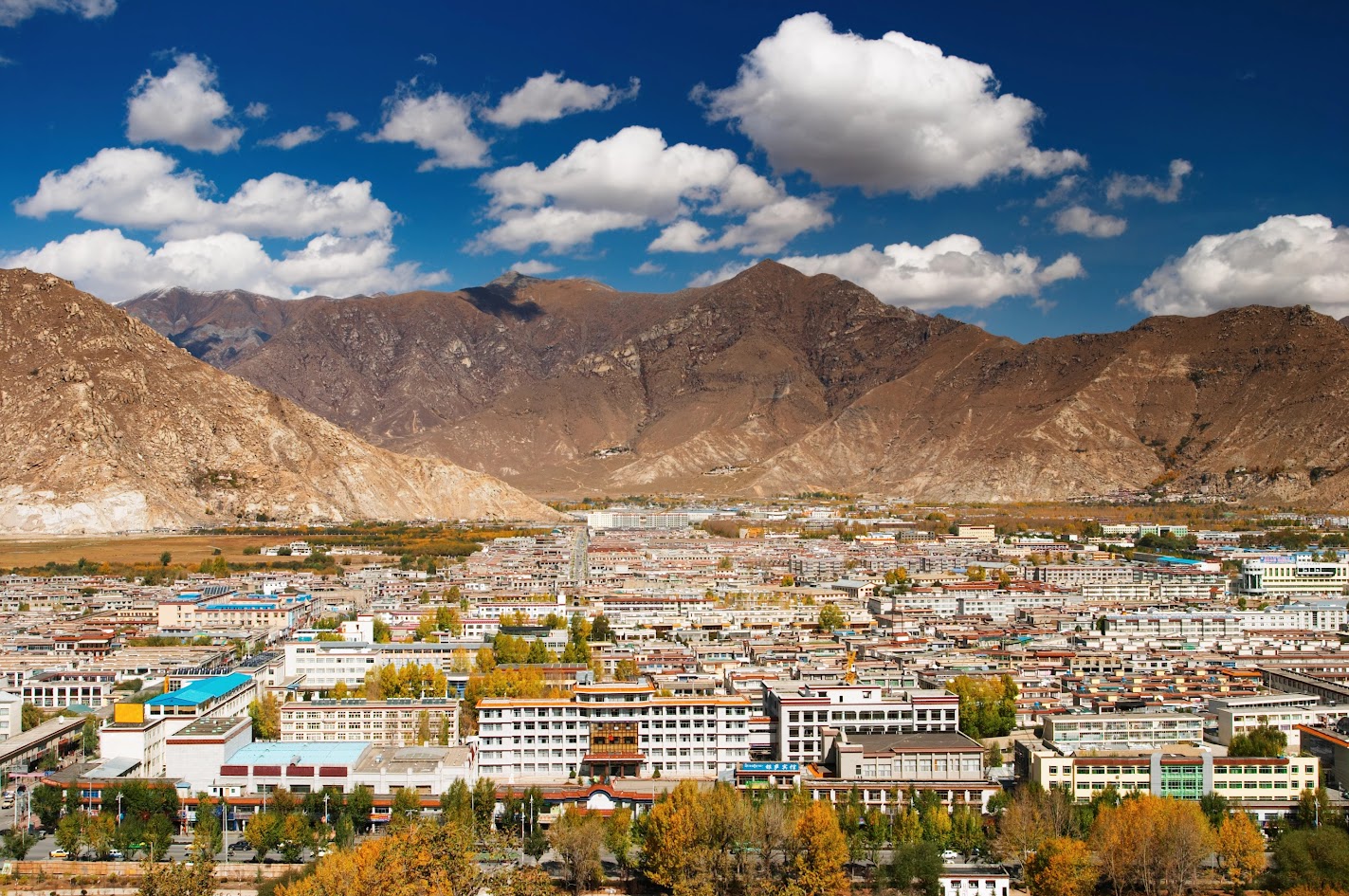
Lhasa, Tibet is known as a Buddhist holy site with mysteries and sacredness waiting for you to explore.
1. An Overview of Lhasa
1.1 Where is Lhasa?
Lhasa is the capital of Tibet, located on the northern bank of the Lhasa River, in the valley region of the Himalayas, covering an area of about 32km² with a population of about 300,000 people. Lhasa serves as the economic, political, cultural, and religious center of Tibet.
In Tibetan, Lhasa means "Land of the Gods," also known as the "Holy Land." The city is also referred to as the "City of Sunshine" with up to 3,000 hours of sunshine per year.
The city of Lhasa is divided into two distinct parts with contrasting lifestyles:
-
West: Often referred to as "Little Sichuan" with a bustling and lively atmosphere, featuring large commercial centers similar to other major cities in China.
-
East: In stark contrast to the West, the East is imbued with the sacred beauty of the Buddhist Land, with ancient and mysterious temples.
Lhasa is considered the origin of Buddhism, attracting millions of Buddhist devotees from both domestic and international origins for pilgrimage, worship, and prayer each year. The city also preserves and develops Tibetan culture with many unique festivals, distinctive art forms, diverse cuisine, and unique customs.
1.2 Altitude of Lhasa
Lhasa is the highest city in the world with an altitude of 3,700 meters above sea level. Due to its astonishing height, the oxygen concentration here is quite thin (about 40%). Therefore, in the first few days of visiting Lhasa, you may not be accustomed to the thin air and may experience altitude sickness symptoms such as headaches and shortness of breath, especially when walking or climbing stairs. These symptoms will disappear as you get used to the altitude. In case you need immediate oxygen supply, contact your tour guide for timely assistance.
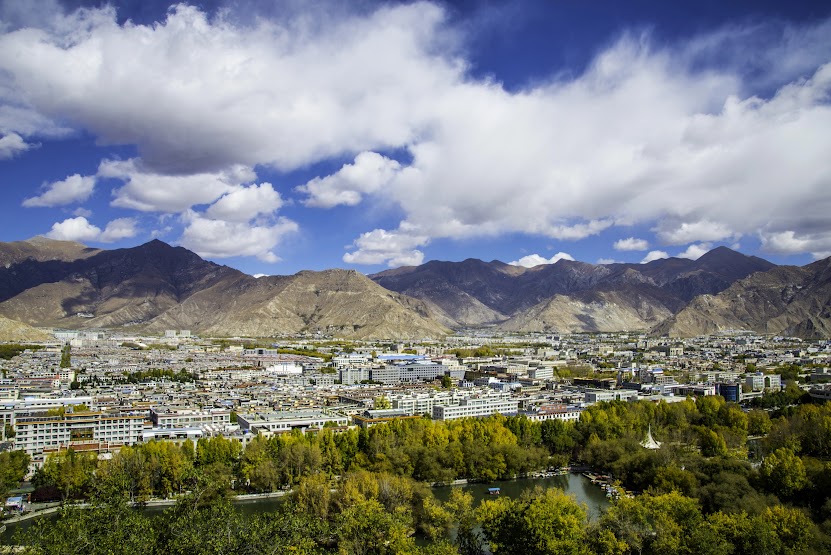
Lhasa is the highest city in the world with an altitude of 3,700 meters above sea level.
1.3 The Best Time to Visit Lhasa
Although it belongs to Tibet, the city of Lhasa does not have the harsh climate many people think. It is a highly developed economic center with a significant population.
You can visit Lhasa any time of the year. However, the best time is in spring and autumn when the weather becomes pleasant, the oxygen levels in the air increase, and the natural scenery is more beautiful for sightseeing.
If you want to enjoy the cold weather of Lhasa, visit during late winter and early spring. In winter, travel, food, and sightseeing costs will also be cheaper than in summer. Notably, in the first two months of the year, many classic Buddhist festivals and cultural events take place.
2. How to Get to Lhasa
There are two popular means of transportation chosen by tourists when traveling to Lhasa, Tibet: airplane and train.
If traveling by airplane, you will need to transit in major cities in China such as Beijing, Shanghai, Guangzhou, etc. After that, you will transfer to another flight to the only airport in Lhasa - Lhasa Gonggar International Airport, which is about 60km from the city center. The total flight time from Vietnam to Lhasa will range from 6 to 8 hours.
If you want to save costs and enjoy all the beautiful scenery of the Tibetan Plateau, you can travel by train. You will also start from China, at stations like Beijing or Qinghai. However, this is not a reasonable choice for those with limited time, as the train travel time will range from 22 to 55 hours depending on the departure point.
3. Do You Need a Visa to Go to Lhasa?
Since Tibet is an autonomous region of China, obtaining a Chinese visa is a mandatory condition to reach Lhasa. Once you have the visa, you will also need a Tibet Entry Permit issued by the embassy to travel to Lhasa.
Learn more: What are the procedures for applying for a Chinese tourist visa?
4. Prominent Landmarks in Lhasa
4.1 Potala Palace
Potala Palace is perhaps the most famous attraction in Tibet, located on Red Hill beside the Lhasa River, built in the 7th century. It is considered the symbol of Lhasa, Tibet, and is the highest palace, castle, and monastery complex in the world (3700m above sea level).
In Sanskrit, "Potala" is translated as "Potalaka," originally referring to the abode of Avalokitesvara (Guan Yin Bodhisattva). This palace was once the residence of the Dalai Lamas, the spiritual leaders of Tibetan Buddhism. Now, it has become a sacred place in the hearts of pilgrims heading towards the Buddhist Land.
Potala Palace has two main parts: the White Palace and the Red Palace. The White Palace is where the Dalai Lamas lived and worked. The Red Palace is for worship and entombment. The palace has 13 stories, 999 rooms, and about 10,000 Buddha statues, with an incredibly unique and grand architecture that still harmonizes with Tibetan nature. It is also home to many treasures, books, and valuable documents of Tibet.
Potala Palace was recognized as a UNESCO World Heritage Site in 1994. Notably, its image also appears on the 50 yuan banknote.
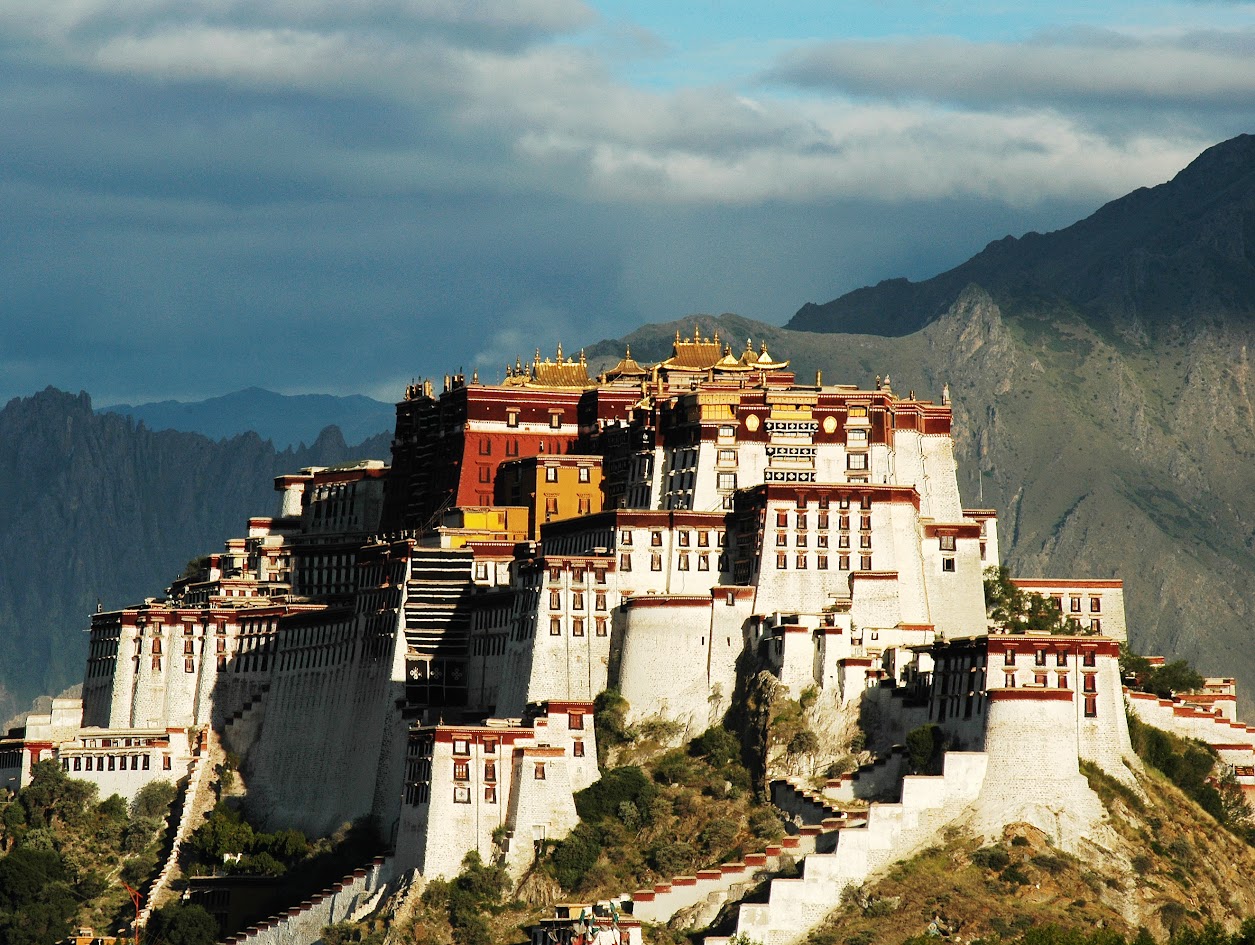
Potala Palace is considered the symbol of Lhasa, Tibet.
4.2 Jokhang Temple
Jokhang Temple is the most sacred and important Buddhist temple in Tibet. The temple was built in the 7th century, with a history of up to 1300 years. The overall architecture of the temple is a cultural fusion of Indian, Nepalese, and Tibetan styles.
Jokhang Temple is located in the old town of Lhasa, just a short walk from Potala Palace. The temple was also recognized as a UNESCO World Heritage Site in 2000 as an extension of Potala Palace.
To experience more of the local lifestyle, you can join the morning kora around the temple. All participants will walk on the gravel paths in a clockwise direction, following the direction of the sun, occasionally stopping to spin prayer wheels and prostrate.
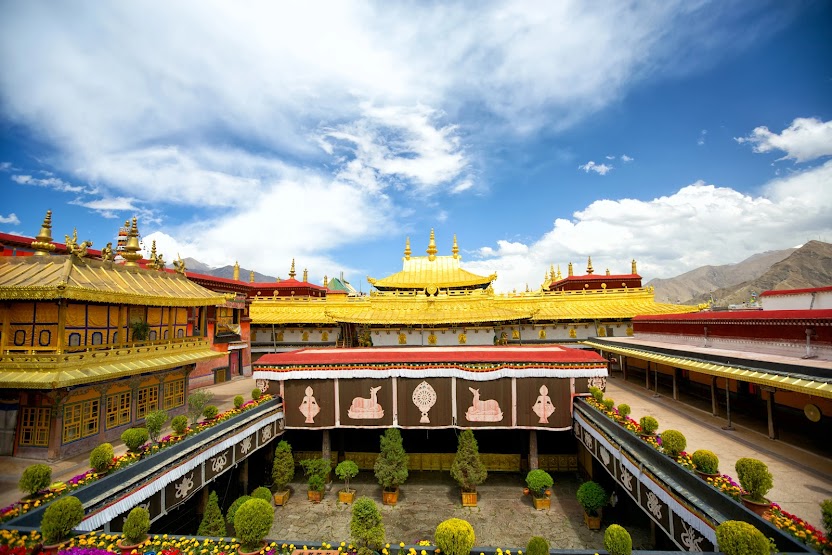
Jokhang Temple is the most sacred and important Buddhist temple in Tibet.
4.3 Sera Monastery
Sera Monastery is one of the oldest monasteries in Lhasa and one of the three great Gelug monasteries, along with Drepung and Ganden.
Sera Monastery is located at the foot of Tatipu Hill, about 2 km north of Lhasa. This place has long been a site where distinguished monks and those regarded as Living Buddhas have lectured on Buddhist scriptures. It was also once a place where lamas debated great Buddhist doctrines.
4.4 Drepung Monastery
Together with Sera Monastery, Drepung Monastery is one of the three largest and most influential monasteries of Tibetan Buddhism. Built in 1416, the monastery was a place for study, meditation, and enlightenment for thousands of monks. Every year, about 10,000 monks come here to live and practice.
The monastery is named "Drepung" because it is a magnificent structure that includes white buildings covering the hillside, looking like a giant pile of grain from a distance. It houses many halls, chapels, and residences with beautiful artworks, murals, and Buddha statues.
Every year, during the Shoton Festival, there is a Buddha thangka unveiling ceremony, displaying a giant Buddha thangka on the hillside, attracting many devotees and tourists to admire and seek blessings.
4.5 Namtso Lake in Tibet
Namtso Lake is the second largest saltwater lake in China, covering an area of about 1,900 km², and is the highest saltwater lake in the world at an altitude of 4,720 meters above sea level. This destination is characterized by its majestic, clear, and peaceful beauty. The lake is surrounded by the Nyainqentanglha Range to the south and the Trans-Himalaya Range to the north, giving the impression that the lake is a giant mirror on the northern Tibetan plateau. Pilgrims visiting this holy land often walk around the lake for 20-30 days to pay homage to the Holy Lake.
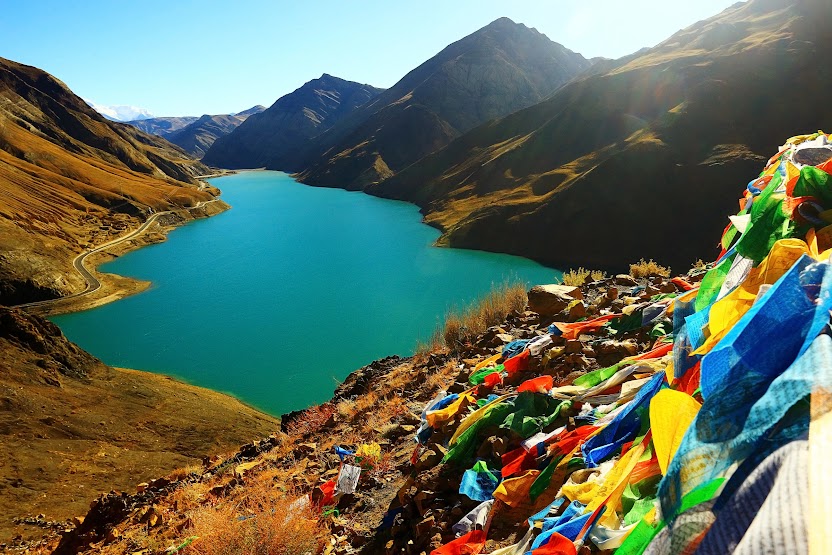
Namtso Lake is the highest large saltwater lake in the world, with its clear water resembling a giant mirror amid the mountains.
Learn more: Travel to Lijiang - Shangri-La: Experience and Cost
5. What to Eat in Lhasa?
Here are some dishes you cannot miss when visiting Lhasa:
-
Tibetan Noodles (Thukpa): This is a traditional Tibetan dish, rich and delicious, with main ingredients including noodles, beef, vegetables, and spices.
-
Tibetan Yogurt: Made from pure fresh yak milk and natural yogurt cultures, Tibetan yogurt has a slightly sour, smooth, and creamy taste. You can eat it directly or use it in other desserts like ice cream, cakes, or fruit juices.
-
Tibetan Butter Tea: This is a unique and interesting drink in Tibet, made from fresh tea leaves and ripe avocados, creating a wonderfully blended flavor. Butter tea also has health benefits such as boosting the immune system, improving digestion, cooling the body, and containing many antioxidants.
-
Momo Dumplings: Made from flour with fillings of beef, pork, or seafood. Some types have vegetable or mushroom fillings. Momos are usually steamed or fried and served with soy sauce, peanut sauce, or sweet and sour fish sauce.
6. What to Bring to Lhasa?
Regardless of the time of year you visit Lhasa, do not forget to bring enough warm clothes along with thin T-shirts to adapt to the weather changes between day and night, especially in summer when the temperature difference can be significant.
Lhasa is also a sunny city, so during the day, there is quite a bit of UV radiation. Remember to bring sunscreen, protective items like jackets, masks, hats, and do not forget lip balm.
In particular, you need to bring medicines for common illnesses such as headaches, colds, flu, diarrhea, nausea, and vertigo.
Above is everything you need to know when traveling to Lhasa, Tibet. We hope it will be helpful for your upcoming trip. Don't miss the opportunity to hunt for flight tickets to China and the 0 Dong ticket promotion for international flights every Friday HERE.
Don't forget to follow Vietjet for the latest travel information and offers:
- Facebook: https://www.facebook.com/vietjetvietnam
- Instagram: https://instagram.com/vietjet
- YouTube: https://www.youtube.com/VietjetOfficial
- TikTok: https://www.tiktok.com/@vietjetvietnam
- Zalo: https://oa.zalo.me/vietjet

























































Buy Baggage, meals, choose seats and more…
Luxury service
About Vietjet
Contact Center
Where to buy ticket?
Cargo
Privacy policy
Cookie Policy


