
- My booking
- Online Check-in
- Flight extras
- Financial services


 Booking
 Skyshop
 Hotel
Hotel
 E-Voucher
 E-Sim
E-Sim
 E-Visa
 Buy foreign currency
 Insurance
 SkyJoy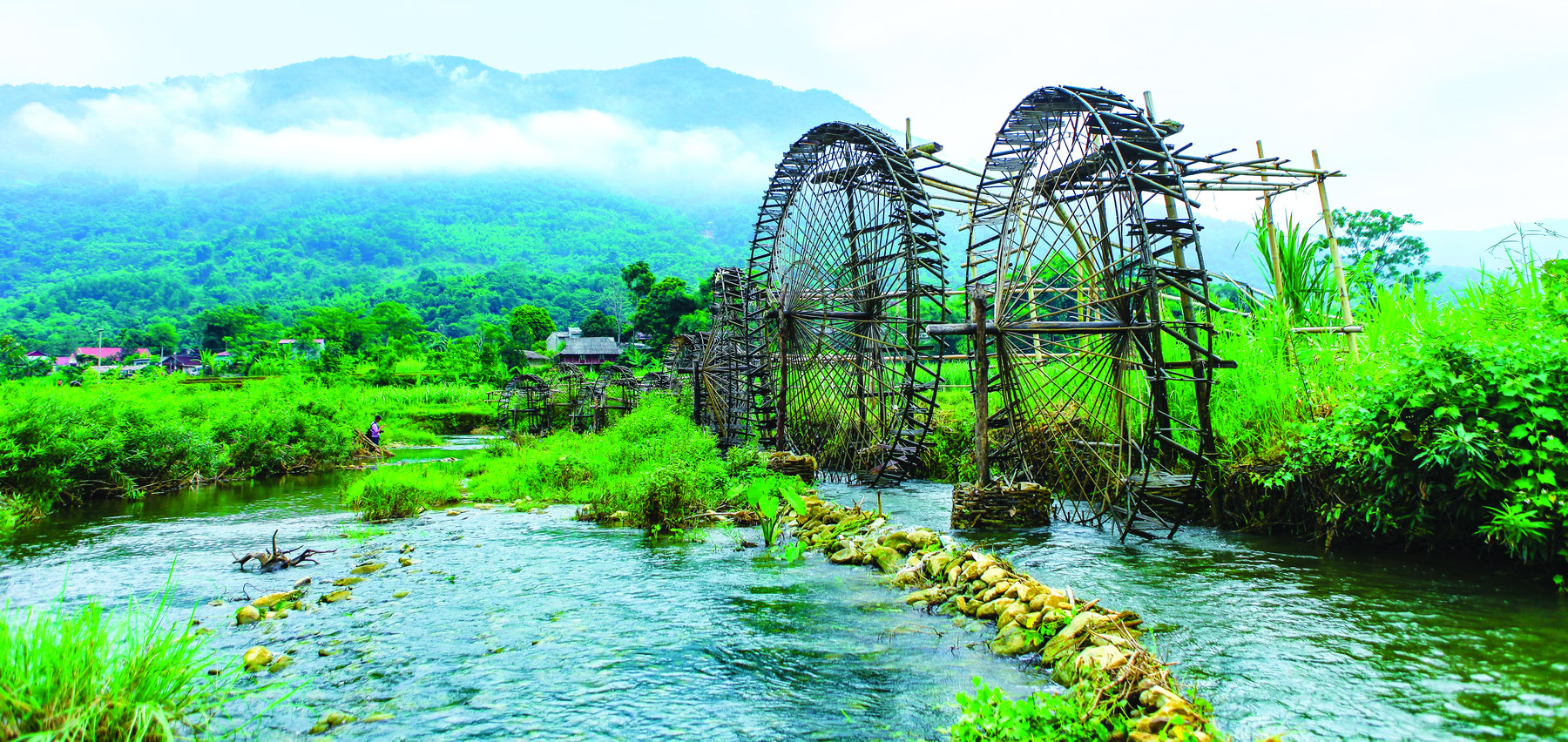




Departure date

Return Date

Thanh hoa
From the beginning of summer, Sam Son is always bustling with tourists who come to enjoy a day at the seaside. With a length of more than 9km, the beach has fine sand, a shallow water level. You can go far from the shore, but the water level will only be as high as your chest, so it’s very quite safe. The water has a suitable salinity and temperature, which is said to be beneficial for our health. The French scholar Le Breton once said: "Sam Son is the best beach to restore health.”
The sea waves here are gentle and the climate is mild. In the summertime, there’s plenty of wind and the weather is usually cool while the winter isn't as cold, compared to other destinations in the north of Vietnam. Sam Son beach has nearly 1,000 kinds of fish and shellfish. You will find delicious shrimp, crab, fish and many other kinds of seafood. Fish salads and sea snake hot pots are two of the local specialities.
More specifically, besides the beautiful beaches, Sam Son has many rocky mountains, which are rugged and beautiful. There are also shaded forests, historic temples and relics, many of which are associated with legends and folk tales. Visitors should definitely check out Doc Cuoc temple, Co Tien temple, and To temple which honours To Hien Thanh on Trong Mai island.
Beautiful nature
Located 4km from the center of Thanh Hoa city, stretching along the National Highway 1A, Ham Rong is the most attractive eco-cultural tourist destination of Thanh Hoa. You will find charming landscapes all around Rong Mountain which is found alongside the storied Ma River. At Voi Mountain, you will find many mysterious caves filled with stalactites and stalagmites.
Another fascinating destination is Nui Nit - also known as Ngoc Mountain or Hoa Chau Phong, as it looks like a pillar of fire erupting from the ground. The mountain is located on the north bank of the Ma River, opposite the Dragon Mountain.
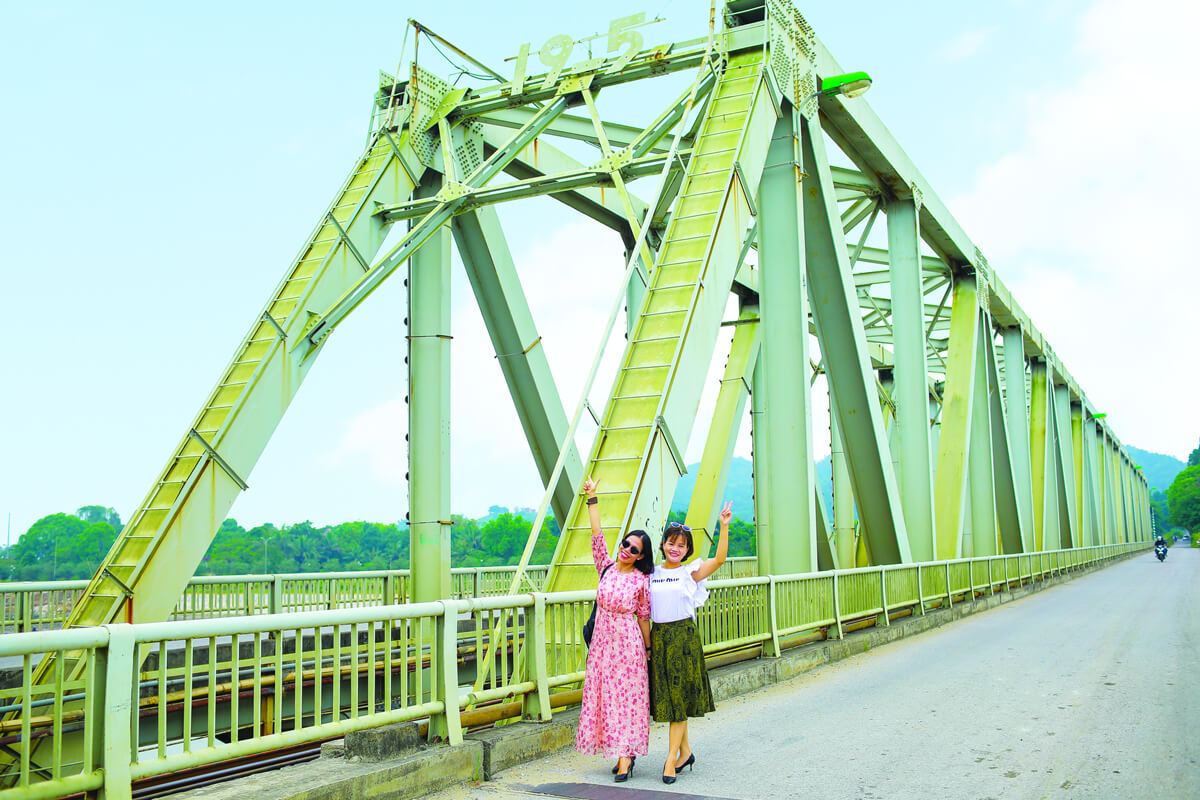
Ham Rong Bridge is the only railway bridge that runs across the heroic Ma River. The bridge witnessed and survived two wars, one against the French colonialists and one against the American imperialists. As a result it has become a symbol of the resilience and indomitable spirit of the land and the people of Thanh Hoa province.
Ham Rong bridge is still a favorite destination of locals and tourists. Right near the foot of the bridge is Long Quang Cave, also known as Dragon's Eye Cave. In the past, many great heroes of the nation such as Pham Su Manh, Le Quat, and King Le Thanh Tong came here and praised the beauty of this place.
Ancient Dong Son village

Dong Son is a small ancient village located on the south bank of Ma River, next to Ham Rong Bridge. It features many of the typical elements associated with a traditional Vietnamese village. It has been named as one of the 10 most beautiful ancient villages in Vietnam. It's also one of the country’s oldest villages.
In 1924, after a farmer named Nguyen Van Lam found some bronze items on the banks of Ma River, the French immediately excavated this area and found many valuable antiques. Later, Western researchers also discovered many archaeological remains of the Dong Son culture dating back to more than 2,500 years, along with bronze drums dating back to the first Hung King period.
In 1934, R. Heine-Geldern, an Austrian archaeologist, proposed to recognise and name Dong Son, which lasted roughly from 800BC to 350BC, as one of earliest archaeological cultures that contributed to formation of the first administrative state of Vietnam. Dong Son bronze drums have also become a symbol of the creativity of the ancient Vietnamese.
Dong Son was built in a classic agricultural village style with the main road connecting to the alleys in the style of herringbone. The three-compartment houses with yin and yang tile roofs, fish ponds, fields and hills are interspersed with a system of monuments, such as temples, pagodas, shrines, and wells, all of which combine to creating an idyllic, familiar, close-knit and poetic scene.
The construction of village also paid special attention to defence, so any enemy intrusion from the outside would be quickly detected and repelled. The small alleys in Dong Son with ancient gates bearing inscriptions such as "Kindness - Uprightness - Wisdom - Courage" still retain the imprints of Confucianism and Taoism.
All of the relics of Dong Son ancient village are considered as crucial evidence to trace the continuous development of Viet civilisations from the time of the Hung Kings until now.
Pu Luong Nature Reserve

Located about 130km northwest of Thanh Hoa city, Pu Luong Nature Reserve stretches across five communes in Quan Hoa district (Phu Le, Phu Xuan, Thanh Xuan, Hoi Xuan and Phu Nghiem) and five communes in Ba Thuoc district (Thanh Son, Thanh Lam, Co Lung, Lung Cao and Ban Cong).
The primary forest in Pu Luong is a tropical, seasonal, evergreen forest with rich abundance of flora and fauna and 598 species of animals, belonging to 130 families of vertebrates, including: 51 rare and precious species; 84 species of mammals (including 24 species of bats), 162 species of birds, 55 species of fish, 28 species of reptiles and 13 species of frogs. The insect region in Pu Luong has at least 158 butterfly species, 96 terrestrial mollusc species, of which 12 mollusc species may be endemic to the area.
This reserve is also home to clouded leopards, fire leopards, sika deers, tibetan bears, chamois and delacour's langurs, an endangered species. The limestone mountain ecosystem still preserves many beautiful caves such as Doi cave and Kho Muong.

Many people come here to discover the unspoiled landscapes, which are sometimes hidden in the mist as if there were a garden hanging overhead. Locations such as Son Ba Muoi (Lung Cao commune), Pu Luong peak, Kho Muong, Lang Don with Pu Luong Retreat resort, Uoi village, Tien Moi village, Hieu waterfall area in Co Lung commune are all popular spots. Pu Luong yearly attracts hundreds of thousands of domestic and international visitors, who love trekking, backpacking and riding motorbikes.
The new rice crop in Pu Luong starts from late May to early June. At this time, the fields and terraced fields will put on a green coat that is extremely beautiful and peaceful. Even in summertime the air and weather here are quite cool and mild as Pu Luong is located in the low sections of limestone mountains and filled with many tropical forests and not so many inhabitants.
Pu Luong is also close to famous tourist attractions such as Ca Than stream (Cam Luong, Cam Thuy, Thanh Hoa), Ho Dynasty Citadel (Thanh Hoa), Lac Village (Mai Chau) and Cuc Phuong Forest (Ninh Binh), which can create an extremely attractive tourist experience and discovery route for adventurous travelers.
Ho Dynasty Citadel

Ho Dynasty citadel (also known as Tay Do citadel) located in Vinh Long and Vinh Tien communes, Vinh Loc district, is one of the most unique stone architectural structures in Vietnam, if not the world. The citadel was built by Ho Quy Ly in 1397 and upon completion became the capital, the cultural and social center of Dai Ngu rulers under the Ho Dynasty.
This historical site is highly appreciated in terms of its construction technique, using stone blocks, which is said to be unique, not only in Vietnam but throughout East Asia and Southeast Asia. The citadel was very scientifically built, with large stone slabs chiseled squarely and interwoven in the shape of grapefruit to absorb large tremors such as earthquakes. The entire outer wall of the citadel is a combination of four main gates, all made from blue limestone slabs, which were finely chiseled and placed so they overlapped each other. Explaining how to transport these giant stone blocks, archaeologists think that people used stone balls to roll them. What’s especially interesting is that between these stones, there was no mortar, yet the citadel has stood for more than 600 years, overcoming many impacts of earthquakes and devastating bombs. In June 2011, It was recognized by the UNESCO as a world cultural heritage site.
Cam Luong Magic Fish Stream

This sacred fish stream is located in Luong Ngoc village in Cam Luong commune, Cam Thuy district, 80km from Thanh Hoa city. This destination is not spectacular, splendid but extremely special, you should not miss it. Ngoc Stream flows from a large cave of Bo Um mountain. The entrance of the cave can only be accessed by one person, but the cave is very wide and the water is deep. There are thousands of fish living in the cave. The king fishes usually weigh from 20kg to 30kg. On normal days, the king fish does not come out of the cave, but only in the flood season, when the water is high, they come out of the cave, but very few people see it.
From the cave entrance to the Ngoc temple area, Suoi Ngoc is about 150m long; the widest place section is about 6m, and the deepest water about 1m. Thousands of fish weighing from 2kg to 8kg hang around in this stream, never leaving the stream, although outside is a vast field. There are many legends that explain the appearance of fish, but almost all share the same concept that the gods of the mountains and rivers are protecting the peaceful life of the villagers. Therefore, the school of fish is named God Fish by the local people, and people do not dare to catch let alone eat these fish. And so, over time, the population of fish has grown substantially.
Ngoc stream water is always clear, both in the rainy season and in the dry season. Under the stream is a layer of pebbles, which appear iridescent when in sunlight, creating a magical beauty when the fish swim through. Above Ngoc stream is Truong Sinh mountain range, there is a large cave with many stalactites that appear to form various scenes and objects - a couple hugging each other, a girl with long hair to her heels, a statue of a mother, a milk pot, and much more. It really is amazing! Of course, I believe Professor Hoang Xuan Han was right. There really is nowhere with as many beautiful scenes as Thanh Hoa province!





Buy Baggage, meals, choose seats and more…
Luxury service
About Vietjet
Contact Center
Where to buy ticket?
Cargo
Privacy policy
Cookie Policy


